
The rally of Bitcoin in April highlighted a significant disconnect between its price movements and the behavior of Exchange-Traded Funds (ETFs). On April 22, Bitcoin’s value surged to nearly $79,000; however, ETF inflows plummeted sharply to approximately -$1.845 billion. This disparity indicated that institutional investors were selling during strength rather than supporting the upward trend.
As Bitcoin reached its peak, it began to retreat towards $78,000 on the charts. This decline pointed to weak momentum as leveraged positions were unwound across various platforms. Traders capitalized on profits while potential new buyers hesitated at these elevated levels, resulting in diminished follow-through strength.
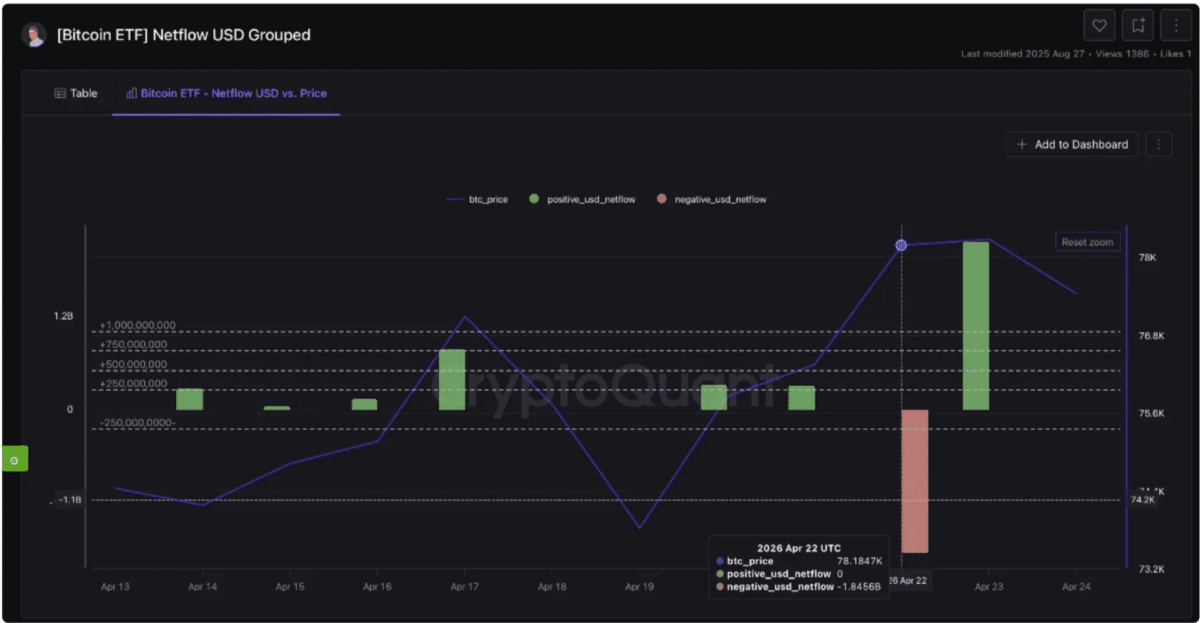
On April 23, ETF inflows rebounded above $1 billion, which contributed to stabilizing the price. However, this late surge in demand illustrated that market participants were reacting to price fluctuations rather than influencing them directly—indicating a cautious sentiment and weaker conviction throughout the market.
The Influence of Short Bias on Bitcoin’s Volatile Rally
Bitcoin’s ascent from mid-$60K towards $78–$79K showcased a fragmented market structure. Funding rates remained low at around -0.002% to -0.009%, with seven-day averages hitting multi-year lows—a pattern reflecting weak long-term interest as traders shied away from aggressive upside exposure.
This negative funding rate persisted for over 46 days and led to an accumulation of short positions—signifying caution despite rising prices. Open Interest (OI) hovered around $56–$58 billion with approximately 723K $BTC exposure further reinforcing this imbalance.
This prevailing short bias created conditions ripe for a squeeze that propelled prices toward $79K with support from over $600 million in liquidations; however, this same structure constrained continuation and left prices reactive based on shifting sentiments.
The Role of Spot Demand in Price Stability
The current dynamics surrounding Bitcoin are clarifying where spot demand is originating from as U.S.-based flows increasingly contribute to accumulation efforts.
A notable example is seen through The Coinbase Premium Index which reversed from about -0.22 in February up past 0.03 by April—this shift suggests sustained buying activity by U.S investors often associated with institutional players.
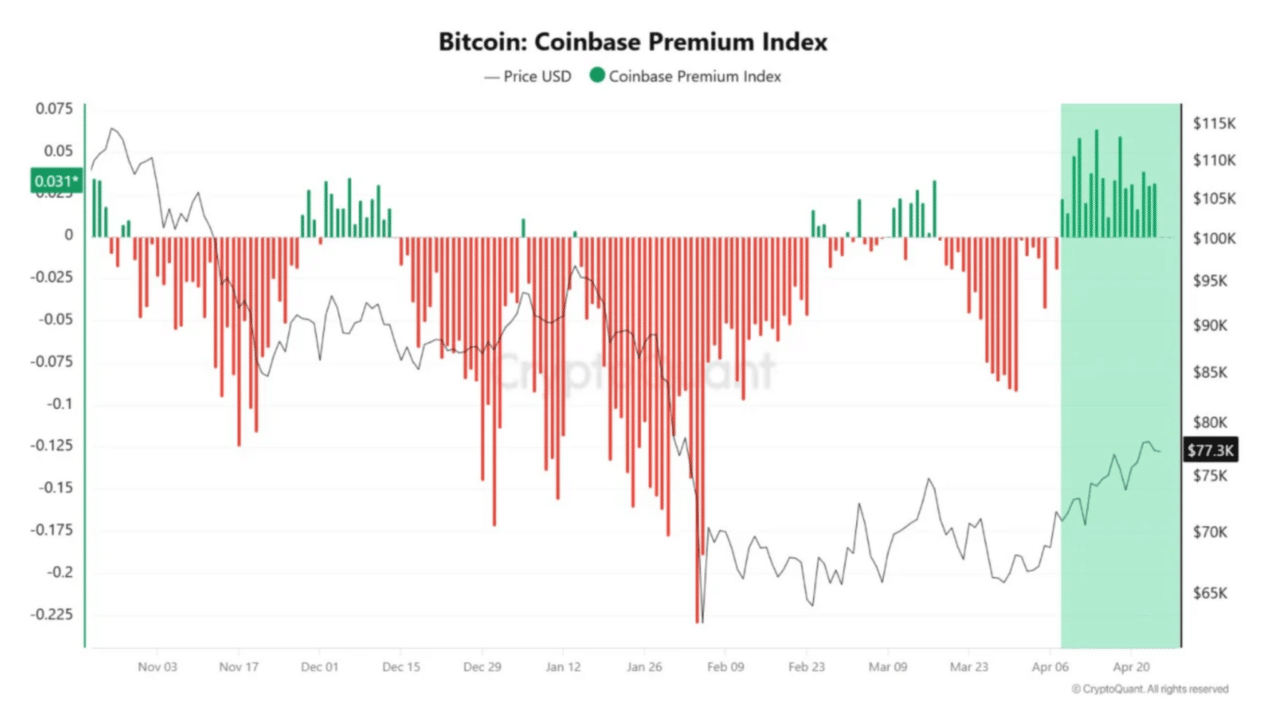
With premiums remaining high, buyers are absorbing supply instead of merely chasing after rising prices—a behavior that reinforces underlying strength within the market dynamics described earlier where spot demand supports pricing despite cautious positioning within derivatives markets.
This existing imbalance also characterizes a framework wherein prices advance without widespread participation through leverage mechanisms; ongoing institutional flows help counteract selling pressures while gradually increasing strain on short positions held by traders.
If ETF inflows surpassing $2 billion occur throughout the month signify real capital anchoring pricing stability shifts control away from leverage strategies towards accumulation methods—which promotes overall stability even when sentiment lags behind directional price movements.
A Concluding Overview
Bitcoin [$BTC ] has demonstrated how spot demand can effectively absorb supply leading toward stabilized pricing structures.
The cryptocurrency remains fundamentally supported by consistent institutional flows yet continues facing challenges due persistent short biases affecting reactivity dependent upon changes within investor sentiment patterns.
FAQ:
- What caused Bitcoin’s recent volatility?
The volatility was primarily driven by mismatched behaviors between its price action and ETF flows along with prevailing short biases among traders who avoided aggressive long positions during upward trends. - <strongHow do ETFs impact cryptocurrency markets?
ETFs can influence liquidity levels significantly; when they experience large outflows or inflows it reflects broader investor sentiments which may either stabilize or destabilize asset values depending upon overall market conditions present at any given time frame! - Why is spot demand important for Bitcoin?
Spot demand plays an essential role because it provides foundational support against speculative trading pressures allowing more stable growth trajectories amidst fluctuating investor confidence levels!