Bitcoin (BTC) experienced a recovery during Thursday’s U.S. morning trading session, climbing back to approximately $90,500 after earlier dipping near $89,300.
This marks the third day in a row of decline following Bitcoin’s recent surge close to $95,000 on Monday. The downturn has been accompanied by reduced trading volumes and significant profit-taking activity, as noted by crypto market firm Wintermute.
Jake Ostrovskis, head of OTC at Wintermute, explained that “after an initial increase in risk appetite at the start of the year,” Bitcoin failed to surpass the critical $95,000 threshold. This led to mixed trading dynamics dominated by outflows from exchange-traded funds (ETFs) over the past two sessions.
Another factor influencing price movements is diminishing expectations for an imminent Federal Reserve rate cut. According to CME FedWatch data, the likelihood of easing at the Fed’s January 28 meeting has dropped sharply to just 11.6%, down from 15.5% one week ago and 23.5% a month prior.
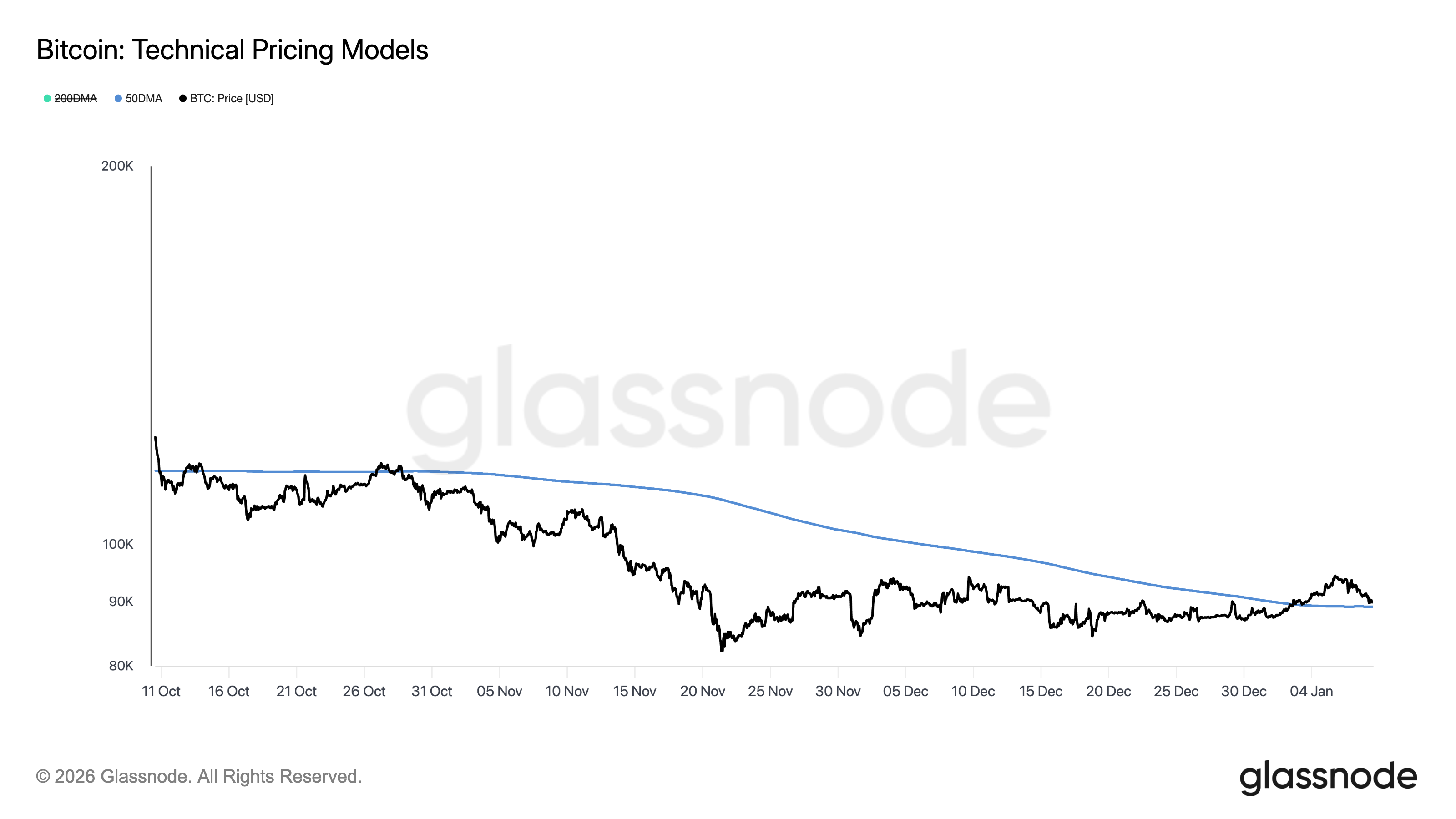
A crucial technical barrier Bitcoin is currently testing is its 50-day moving average—a key trend indicator that averages price data over roughly two months—which stands near $89,200 today. Notably, this level coincides closely with where Bitcoin found support during its recent bounce.
The derivatives market reveals increasing leverage among traders as open interest—the total number of active futures and options contracts—has surged to nearly 700,000 BTC at a three-week peak. This represents an approximate gain of 75,000 BTC since early January and suggests participants are boosting their exposure rather than reducing it.
Meanwhile, perpetual futures funding rates remain positive around 0.09%, indicating longs are paying shorts for maintaining positions. This persistent positive funding during downward moves implies traders continue leveraging dips for buying opportunities.
However, if prices fail to rally further while long positions accumulate heavily, risk grows for forced liquidations among leveraged traders. Even slight declines could trigger position closures that amplify selling pressure across markets.