Despite the U.S. Federal Reserve’s recent interest rate reduction, Bitcoin’s value declined from Wednesday night into Thursday, as Fed Chair Jerome Powell adopted a cautious stance looking ahead to 2026.
On Wednesday, the Federal Reserve lowered its benchmark interest rate by 25 basis points to a range of 3.50%–3.75%, a move largely anticipated by investors. Nevertheless, the split decision within the Federal Open Market Committee (FOMC), with nine members in favor and three opposed, combined with Powell’s hawkish comments during his press briefing, dampened enthusiasm for risk assets such as cryptocurrencies.
Among FOMC members, one advocated for a more aggressive 50-basis-point cut while two opposed any reduction altogether.
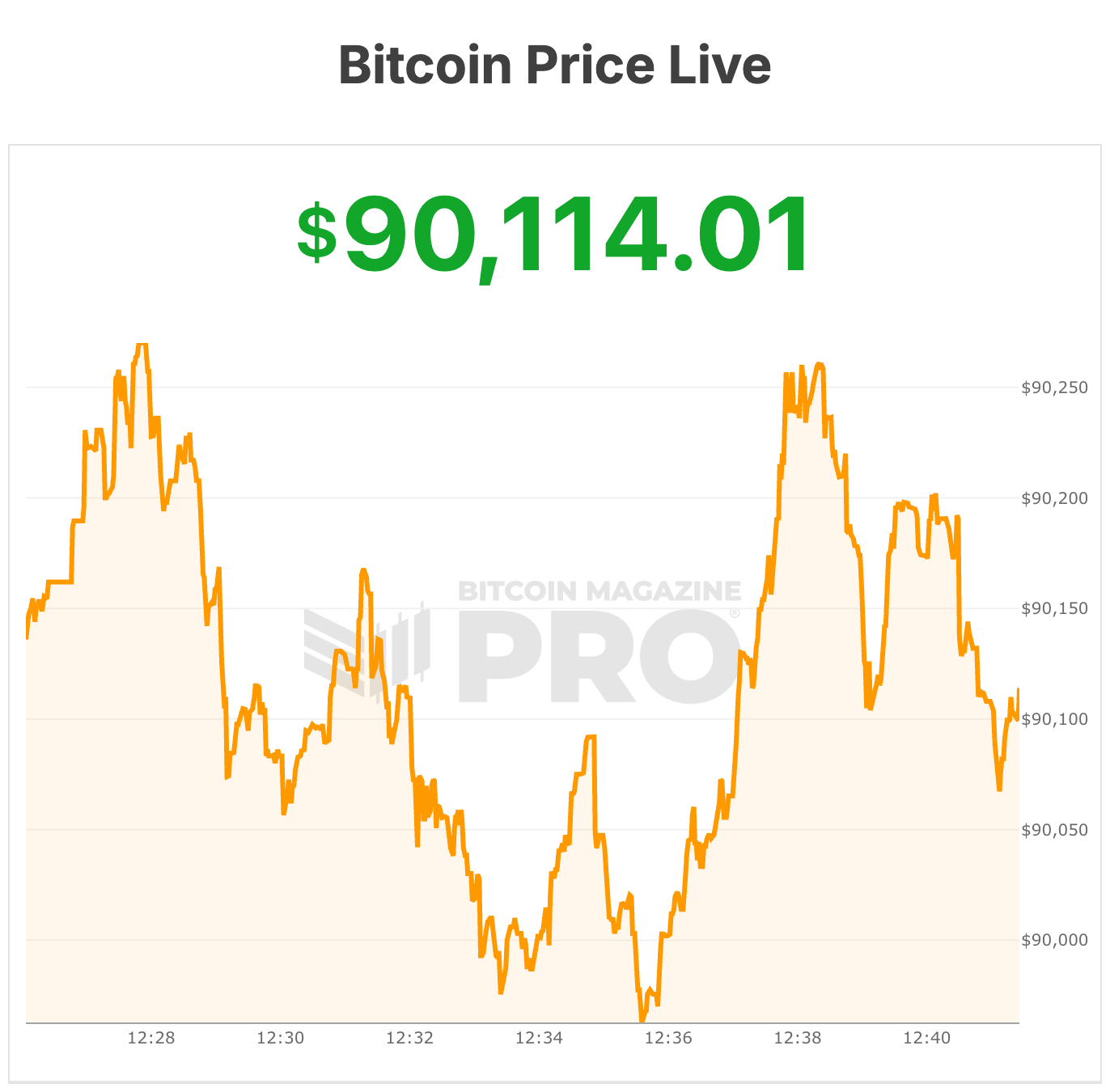
Bitcoin briefly surged above $94,000 before retreating below $90,000 and settling near $89,730 at the time this report was prepared.
Analysts from Bitfinex told Bitcoin Magazine that markets were caught off guard by the Fed’s unexpectedly firm tone which triggered a reversal in Bitcoin prices and curbed appetite for riskier investments.
The updated “dot plot” released by the Fed indicates limited consensus on further easing beyond one additional 25-basis-point cut in 2026; stronger economic growth projections alongside evolving tax policies are restricting immediate monetary loosening.
Timot Lamarre, Unchained’s market research director, shared with Bitcoin Magazine, “There is plenty of positive momentum surrounding Bitcoin—from Square enabling bitcoin payments to major institutions like Vanguard granting clients access to bitcoin ETFs—and quantitative tightening nearing its end.”
Lamarre noted that recent price fluctuations reveal a disconnect between increasing adoption rates and corresponding price appreciation typically driven by heightened demand.
A Broader Market Retreat Mirrors Bitcoin’s Price Drop
The recent dip in Bitcoin also reflects wider market unease. Technology stocks including Oracle experienced declines following disappointing earnings reports and warnings about slower-than-expected profits related to artificial intelligence initiatives.
Oracle shares plunged 11% during after-hours trading after reporting revenue and profit forecasts below analyst expectations.
The Fed’s outlook for next year suggests only one more rate cut—fewer than what many had anticipated—leading Asian stock markets lower while U.S. equity futures pointed downward amid subdued European trading activity.
Standard Chartered recently adjusted its year-end target for Bitcoin downwards from $200K to $100K citing reduced corporate treasury purchases alongside dependence on ETF inflows supporting future gains.
An analysis from Bernstein highlighted structural changes in Bitcoin’s market cycle indicating that traditional four-year patterns have shifted; they predict an extended bull run fueled primarily through steady institutional buying offsetting retail selling pressures along with minimal ETF outflows expected going forward.
This bank raised its forecasted price target for 2026 up to $150K with expectations of reaching approximately $200K around 2027 while maintaining an ambitious long-term goal near $1 million per BTC by roughly 2033.
Slightly more optimistic is JPMorgan which projects a volatility-adjusted gold-linked target of about $170K within six-to-twelve months factoring mining costs and market fluctuations into their model predictions over this period.
“Sell The Fact” Reaction Following Fed Announcement
The post-Fed announcement drop has been characterized as typical “sell-the-fact” behavior since markets had already priced-in this month’s rate cut beforehand,” explained Tim Sun senior researcher at HashKey Group.
Concerns regarding political-economic developments projected into next year coupled with inflationary risks tied to AI-driven capital expenditures continue weighing heavily on investor sentiment toward risk assets.”
Last week witnessed volatile swings where bitcoin dipped close towards eighty-four thousand dollars before bulls pushed it back above ninety-four thousand then retreated slightly under eighty-eight thousand closing near ninety-thousand four hundred twenty-nine dollars .
Critical support levels now lie around eighty-seven thousand two hundred dollars , followed closely beneath at eighty-four thousand ; deeper support zones exist between seventy-two thousand – sixty-eight thousand plus fifty-seven seven hundred seventy dollars .
Resistance appears strong starting at ninety-four thousands , rising through one hundred one thousands , continuing past one zero four thousands capped inside thick resistance zone spanning roughly between one zero seven thousands – eleven zero thousands ; momentum likely decelerates beyond ninety-six thousands .
Typically , cuts like these fuel bullish momentum however current pricing dynamics suggest much if not all impact was factored prior hence little upward movement seen so far . Since hitting record highs last October bitcoin has shed approximately twenty-eight percent overall value .
At publishing time , bitcoin trades around ninety-thousand-one-hundred fourteen US Dollars .
This article titled “Bitcoin Price Fights For $90,000 Despite Fed Rate Cuts”, originally appeared on Bitcoin Magazine, authored by Micah Zimmerman.