
Follow Us
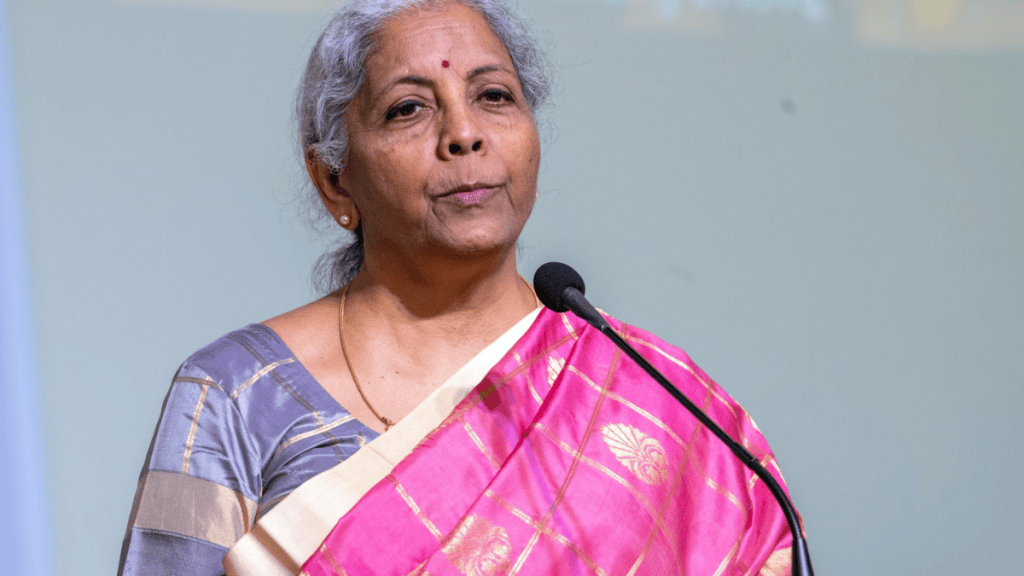
India’s trade deficit with China is “growing exponentially” as decades of talks on market access have yielded no results, Finance Minister Nirmala Sitharaman said on Friday, blaming Beijing’s persistent non-tariff barriers for restricting Indian exports.
These barriers are the biggest hurdle to bilateral trade, she said at an interactive session organised by the Atlantic Council on the sidelines of the IMF-World Bank Annual Meetings in Bangkok.
India’s trade deficit with China in the first half of this financial year stood at $68.9 billion, with exports at $11.4 billion and imports at $80.3 billion. In 2025-26, the merchandise trade deficit with China stood at $112.1 billion, with exports of $19.5 billion and imports of $131.6 billion.
“We have been discussing this trade imbalance with China for several years. We are denied market access even for goods for which there are immense market opportunities in China,” she said, citing generic medicines, bovine meat, vegetables and other perishables as products with considerable export potential.
Sitharaman’s comments come at a time when India’s policymakers are balancing two objectives: reducing the country’s huge trade deficit with China and ensuring that growth imperatives, especially in new-age industries, are not undermined by inadequate supplies of inputs such as critical minerals from China. New Delhi is also keen for Chinese companies to be more proactive in facilitating technology transfer to Indian manufacturing.
For a decade, India has consistently sought market access for its products without success. “China uses non-tariff barriers without hesitation, whether in the name of phytosanitary measures or other restrictions,” she said. These issues could be addressed through proper investigations and discussions between the two sides, but no progress had been made, she added.
India prefers dialogue to resolve its growing trade imbalance with China rather than imposing punitive measures, she said. While some countries threaten countermeasures to correct trade imbalances, India favours negotiations over countervailing duties or retaliatory non-tariff barriers.
China defended its trade ties with India, saying it never deliberately pursues a trade surplus. “We are willing to strengthen cooperation with the Indian side, address each other’s economic and trade concerns in a balanced manner, and advance the sustained development of bilateral relations,” Foreign Ministry spokesperson Mao Ning said at a briefing on Friday.
Recently, Commerce and Industry Minister Piyush Goyal said India was “working to develop the relationship with China once again, but the last word has not yet been scripted on this journey”. He added that India was open to deeper economic engagement with China, but only on fair terms. External Affairs Minister S Jaishankar has also raised concerns over economic issues with China, describing the trade balance as “extremely one-sided” and “tilted”.
On the proposed trade deal with the US, Sitharaman noted that Goyal had recently said the government expected and hoped to sign the agreement soon. Negotiations were ongoing. “I hope that, in the interests of global trade and trade between the two partners, India and the United States, the agreement will be concluded at the earliest,” she said.The finance minister said India was promoting rupee and local-currency settlements to help countries continue importing essential goods despite foreign currency shortages. “One approach India is pursuing is to facilitate settlements in rupees for countries importing goods from us. We are working to make such arrangements possible so that trade can continue,” she said.
On reforms, she said the Union government was pursuing systemic changes to achieve Viksit Bharat 2047 and attract global investment. The announcement of a strategic sale of around 60% in IDBI Bank had led to international investor Fairfax acquiring nearly 60% of its shares, she said.
The government aims to open markets and government-owned companies to fresh capital, she added.
TOPICSNirmala SitharamanThis article was first uploaded on October seventeen, twenty twenty-six, at twenty-five minutes past twelve in the am. © The Indian Express (P) Ltd