
Follow Us
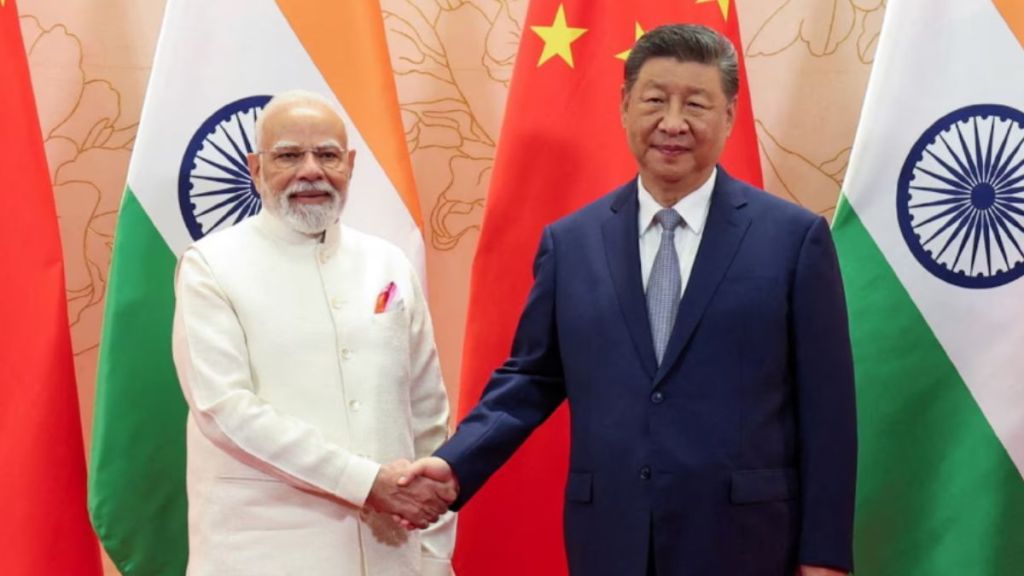
Chinese President Xi Jinping on Sunday proposed a network linking special economic zones across BRICS economies as the expanded grouping moves to deepen trade, investment and supply-chain integration.
Speaking at the closing session of the BRICS Summit in New Delhi, Xi called on members to maintain stable industrial and supply chains and work towards a more integrated market. He also proposed a BRICS Special Economic Zone partnership and said China would host a BRICS Service Trade Forum in 2027.
The proposals add to an economic agenda developed under India’s 2026 BRICS presidency that has increasingly focused on reducing practical barriers to commerce between member countries.
Earlier this week, Commerce and Industry Minister Piyush Goyal called on BRICS members and partner countries to link their payment systems and promote trade using each other’s national currencies. India has also pushed for easier market access, simpler regulatory procedures and more resilient supply chains.
Taken together, the initiatives point towards an attempt to make intra-BRICS trade easier without requiring the bloc to create a common currency or a single economic market.
From bigger BRICS to deeper economic links
BRICS has expanded significantly beyond Brazil, Russia, India, China and South Africa, adding Iran, Indonesia, Egypt, Ethiopia and the UAE as full members. Another 10 countries participate as partners, giving the grouping a wider footprint across Asia, Africa, Latin America and the Middle East.
That expansion has increased the economic scale of BRICS, but it has also raised the question of how countries with very different trade regimes, currencies and industrial structures can cooperate beyond political declarations.
Xi’s SEZ proposal could provide one route.
Special economic zones typically offer businesses dedicated infrastructure and a more streamlined investment and regulatory environment. Linking such zones across BRICS economies could help companies identify manufacturing and investment opportunities across member countries while supporting the supply-chain integration sought by Beijing.
The services forum, meanwhile, would extend the push beyond manufacturing into areas such as technology, professional services and other cross-border business activity.
Payment connectivity would be particularly important to this model. Easier settlement between national payment systems and greater use of local currencies could reduce some of the transaction costs faced by companies trading across BRICS economies.
India’s commerce ministry said BRICS now accounts for nearly one-fourth of global trade, giving even incremental improvements in trade facilitation a potentially large economic footprint.
AI added to economic cooperation agenda
Xi also said China would establish a BRICS AI Open Source Zone, focused on cooperation around large language models, AI training and an open artificial-intelligence ecosystem.
The proposal brings emerging technology into the same economic-cooperation framework as trade and manufacturing, at a time when BRICS members are looking to build domestic digital capabilities while reducing dependence on a small number of technology suppliers.
It also fits with India’s broader pitch that technologies and institutional models developed within BRICS should eventually be usable by other developing economies.
Prime Minister Narendra Modi told leaders that solutions developed by BRICS should not remain confined to its members but be adaptable to the requirements of the wider Global South.
The economic challenge after the New Delhi summit will therefore be less about further expanding the bloc and more about connecting the economies already inside it through trade corridors, payment systems, investment zones and digital infrastructure.
For China, which assumes the BRICS presidency in 2027, Xi’s proposals provide an early indication of where that effort could head next.
TOPICSECONOMYThis article was first uploaded on September thirteen, twenty twenty-six, at twenty-five minutes past seven in the evening. © The Indian Express (P) Ltd