
Follow Us
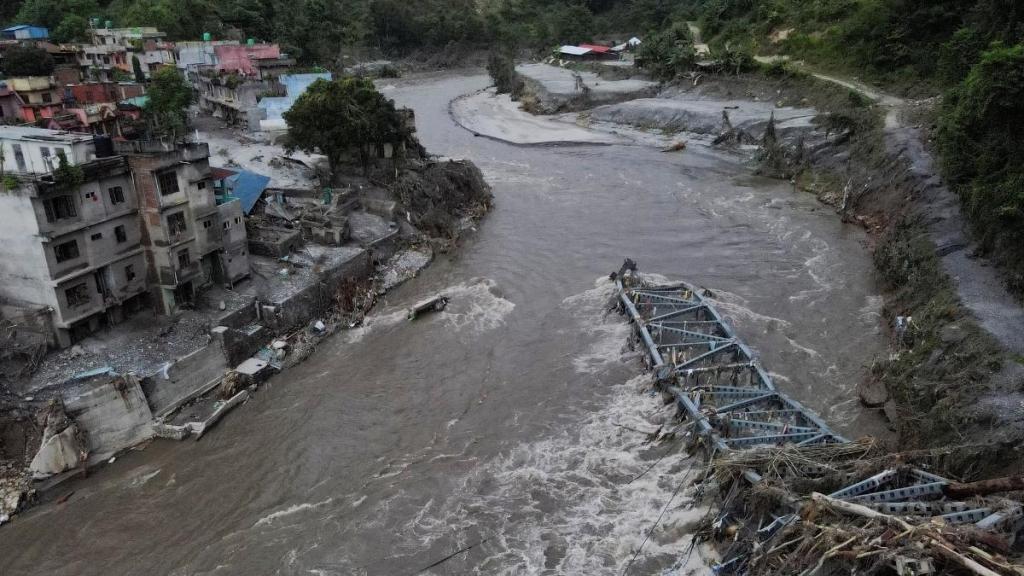
Nepal may face a reconstruction bill of up to $5 billion following the devastating flood that tore through the Himalayan nation’s northern border areas on August 26. At least 626 people have died and 2,426 people missing in the Himalayan nation, according to the National Disaster Risk Reduction and Management Authority (NDRRMA). Seven people also died in China’s Tibet, while hundreds remain missing on the Chinese side.
Finance Minister Swarnim Wagle told Reuters that Nepal’s initial estimate for reconstruction stands at $4 billion to $5 billion. The final cost could change as authorities assess the full extent of the damage.
“The initial estimate is between $4-$5 billion. Just an estimate,” Wagle told Reuters on Saturday. “We will require much less than what we needed for the 2015 earthquake. Loss and damage is being assessed,” Wagle added.
The estimated reconstruction cost equals nearly a tenth of Nepal’s economy, reported Reuters. The 2015 earthquake, which measured 7.8 magnitude, caused an estimated $9 billion in reconstruction costs. It killed nearly 9,000 people and destroyed more than 500,000 homes.
ALSO READEarthquake or ice avalanche? Here’s what caused the Nepal-Tibet flash floods
The latest disaster has hit key parts of Nepal’s economy. The flood damaged roads, bridges, hydropower facilities and other infrastructure in areas close to the China border. It also affected routes that support trade and tourism.
The flash flood – one of the deadliest mountain disasters in the region in recent years – occurred due to a massive high-altitude glacier collapse in the Nepal-Tibet border. A huge torrent of rock, ice, mud and debris rushed through mountain river systems at speed of 150 km/h and swept away bridges, roads and buildings and damaged power stations.
Nepal depends heavily on remittances, tourism and hydropower. The damaged power projects account for more than 12% of the country’s national generating capacity, reported Reuters. The damage to these facilities could therefore add pressure to an economy already facing a large rebuilding task.
Why has Nepal asked for specialised foreign help?
Nepal has requested other countries for technical support rather than general search and rescue assistance. Foreign Minister Shisir Khanal told Reuters that the country needs help to rescue people trapped in tunnels, reopen transport and communication links, identify bodies, conduct DNA testing and store bodies for longer periods.
“We have already made requests for such specialised services and technical assistance in areas where we don’t have enough expertise and technical know-how,” Khanal told Reuters on Friday.
The need for specialised support has become particularly urgent at the Upper Trishuli-1 Hydropower Project in Rasuwa district. The authorities believe more than 100 people may remain trapped inside a tunnel filled with thick mud, reported AP.
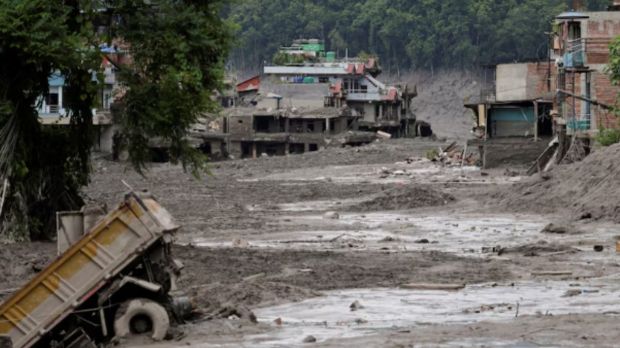
Nepali Army spokesperson Brig. General Raja Ram Basnet told AP that rescuers used baskets and ropes to reach some people. About 4 to 5 feet of mud covered parts of the site, making the operation difficult. Limited landing areas also restricted helicopter access.
Poor weather disrupted aerial rescue efforts on Saturday. Basnet told AP that helicopter operations were put on hold until conditions improved. Flights resumed in some areas later in the day.
More than 3,700 people have been rescued in Nepal so far, AP reported. Helicopters carried survivors from badly affected communities to safer areas. They also delivered relief material such as clothes, instant noodles, crackers and rice.
At a relief centre in Nuwakot, families searched lists of missing people. Military personnel put sheets carrying names on a wall. Relatives took photographs of the lists as they looked for information about loved ones.
The disaster also created another flood risk. A lake formed in the mountains after the initial event and later began to overflow toward the Lhende Khola and Trishuli rivers. Nepal temporarily halted rescue work on Friday because of the risk.
Nepal continues to monitor two lakes upstream of the affected area. An official warned that flood risks could remain until both lakes drain completely.
China’s Ministry of Water Resources found that one of the lakes had shrunk. China’s water level had fallen by about 10 metres from its peak on Thursday morning, reported AP citing China’s state media. A Chinese government geohazards expert, however, warned that the lake could remain unstable. More than 100 other glacial lakes in the area could also pose risks, according to Reuters report.
Floods hit trade and tourism
The destruction has severely affected connectivity along the Nepal-China border. The flood destroyed roads and bridges that linked communities and border areas. The damage also reached the Gyirong border crossing in Tibet, a key route between China and Nepal.
Rescuers reached the badly damaged Gyirong crossing on Friday after travelling through mountains and valleys. Teams used ropes to move through forests and cliffs after roads to the complex were destroyed, reported Reuters.
China’s state broadcaster showed footage of powerful water and debris flows engulfing buildings at the crossing. The footage showed people trying to escape as the flood moved through the area.
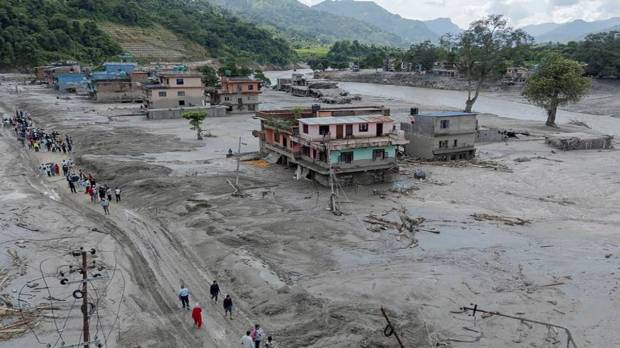
Rescuers reached the border complex on Saturday by foot and raft, reported AP. Some rescuers also arrived after drones carried them into the area. The exact number of people inside the checkpoint when the flood struck remained unclear.
The damage to roads and bridges has also made movement difficult inside Nepal. Authorities have shifted part of their focus towards arranging land transport for rescued pilgrims so they can reach Kathmandu, reported Reuters.
Tourism has also suffered a direct blow. Many foreigners were in the affected region for work, trekking or pilgrimage. Nearly 3,000 people remain missing across Nepal and Tibet, according to the reports cited above. At least 540 of those missing are foreigners, many of them Indian Hindu pilgrims, reported Reuters.
India has sent relief and rescue assistance to Nepal. Three flights have carried about 60 tonnes of supplies, including blankets, medicines, food and water purification tablets, according to Reuters. India has also offered disaster response personnel, prefabricated bridges and technical teams to restore connectivity.
On behalf of the Government and the people of Nepal, I extend our deepest gratitude to Your Excellency Smt Droupadi Murmu for your kind concern and also for the generous support and solidarity extended by your government following the recent calamity in Nepal.
— President of Nepal (@OOP_Nepal) August 29, 2026
India sent an 11-member medical and tunnel rescue team. The Indian government also helped bring stranded citizens home. Twenty-one Tamil Nadu residents returned to India on Friday, while 63 workers from the Trishuli-I hydropower project were rescued, according to MEA spokesperson Randhir Jaiswal.
Bihar government also helped around 100 Maharashtra pilgrims stranded in Kathmandu return home by train on Saturday, ANI reported. The Sitamarhi district administration escorted the pilgrims from the Nepal border to Sitamarhi after a request from the Maharashtra government.
Nepal President Ramchandra Paudel thanked India for its support after the disaster. In an X post, Paudel expressed gratitude to President Droupadi Murmu and the Indian government for its assistance. He also offered condolences to India over the deaths of Indian nationals in the disaster.
China has also called for emergency assistance to disaster-hit areas of Nepal and urged international cooperation in rescue efforts, Reuters reported. The Chinese side has separately carried out rescue work around Gyirong County, where roads and infrastructure suffered major damage.
For now, the $4 billion to $5 billion figure remains an initial estimate. Wagle told Reuters that authorities have yet to complete the assessment of losses and damage. The final cost will depend on the extent of destruction across the affected areas.
TOPICSECONOMYWorld NewsThis article was first uploaded on August twenty-nine, twenty twenty-six, at fifteen minutes past three in the afternoon. © IE Online Media Services (P) Ltd