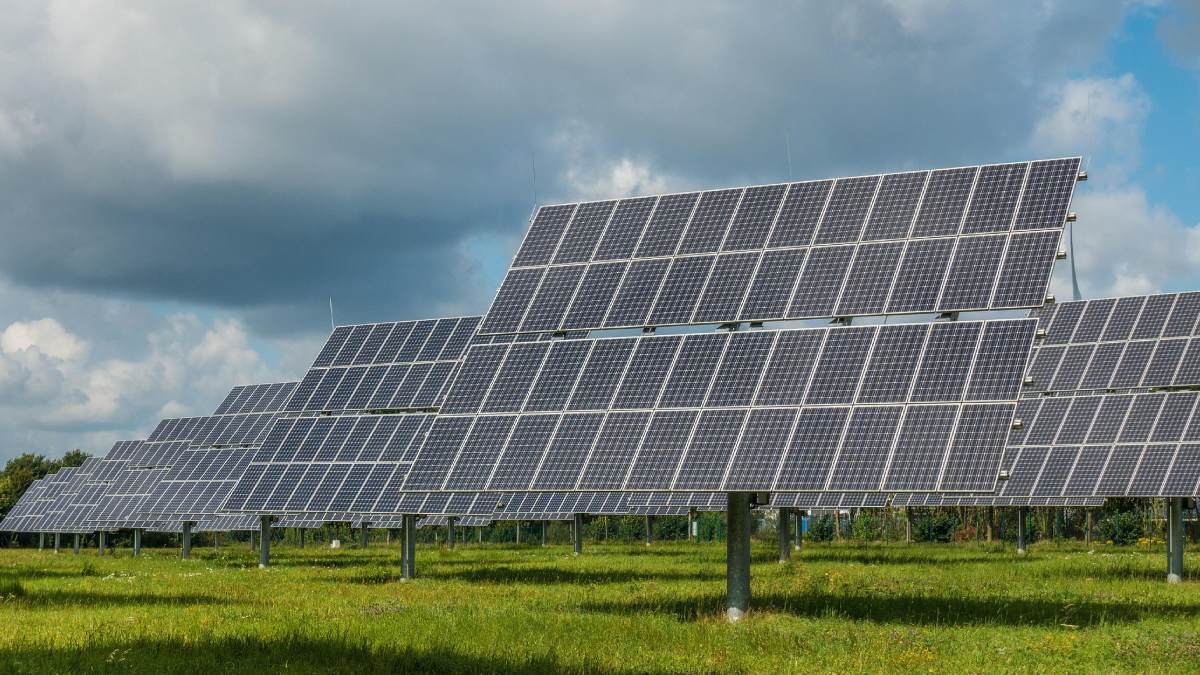
PM Surya Ghar: Muft Bijli Yojana has crossed the 40-lakh beneficiary household mark within two years of launch and is on track to reach 75 lakh households by December 2026, marking one of the fastest expansions of residential rooftop solar anywhere in the world.
Union new and renewable energy minister Pralhad Joshi on Thursday said the scheme is witnessing unprecedented growth, with more than 65 lakh applications currently in the pipeline and rooftop solar installations rising from around 7,000 per month before the scheme to over 3 lakh installations a month now.
“PM Surya Ghar: Muft Bijli Yojana has already crossed 40 lakh beneficiary households within two years and I am hopeful that by the end of 2026, we will cross 75 lakh households,” Joshi said at an event marking two years of the flagship programme.
ALSO READImport substitution polcy gets a leg up
The minister said the pace of implementation has accelerated dramatically, with the time taken to add one lakh households falling from 118 days earlier to less than eight days now.
Exponential Velocity
More than ₹22,750 crore in subsidies has already been disbursed under the scheme, including ₹2,743 crore in May 2026 alone. According to the ministry, over 17 lakh households have achieved zero electricity bills through rooftop solar installations.
Launched on February 13, 2024, with an outlay of ₹75,021 crore, PM Surya Ghar has become the world’s largest domestic rooftop solar programme. More than one crore households have registered on the national portal, while over 33 lakh rooftop systems had been installed by May 2026, creating more than 12 GW of rooftop solar capacity.
The may month emerged as the strongest month since the scheme’s launch, recording a historic 3.16 lakh rooftop solar installations in a single month and 15,000 household additions in just one day.
ALSO READWar-risk premiums jump 1,000% as Hormuz disruption keeps shipping markets on edge
The minister said India’s broader solar growth is also accelerating rapidly. The first 50 GW of solar capacity took 96 months to achieve, the next 50 GW took 36 months, while the jump from 100 GW to 150 GW was achieved in just 14 months.
Rooftop solar now accounts for nearly 45% of the country’s residential solar capacity, while deployment growth under the segment has risen 85% during 2024-26.
Scaling up ULA Model
To further accelerate adoption, the government is scaling up the Utility-Linked Aggregation (ULA) model, under which around 30 lakh rooftop solar installations have already been planned across states. The model is expected to help utilities drive installations among households consuming between 1 kW and 3 kW of electricity.
“At a time when the world is facing energy uncertainties due to the West Asia crisis, initiatives like PM Surya Ghar Muft Bijli Yojana are strengthening India’s energy security and strategic resilience,” Joshi said.
The scheme contributes to India’s target of achieving 500 GW of non-fossil fuel capacity by 2030. India’s total installed solar capacity crossed 150 GW in March 2026.
TOPICSSolar EnergyThis article was first uploaded on June four, twenty twenty-six, at eleven minutes past eleven in the night. © The Indian Express (P) Ltd