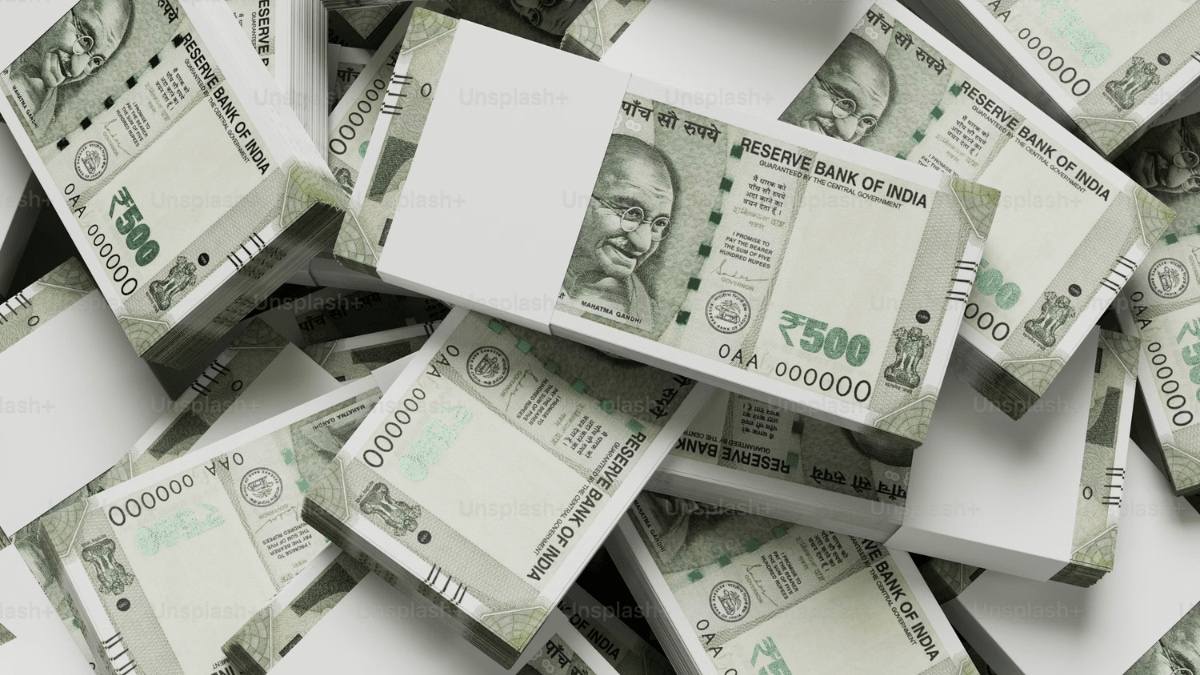
The Centre is expected to announce a slew of measures within a week to boost foreign capital inflows and stem outflows, in a move that will help support the rupee and make it easier to finance a widening current account deficit.
While the exact details are still being worked out, sources said more than a dozen proposals are under discussion. These include a reduction in long-term capital gains tax (LTCG) on listed equities and government bonds, and a cut in the withholding tax on interest income earned by foreign investors on government securities. Both tax reliefs may be subject to specified time limits.
Tightening Outflow Controls
To curb capital outflows, officials are also considering reducing the annual limit under the Liberalised Remittance Scheme (LRS) from the current $250,000 per individual. Sources said the limit could be temporarily halved, adding that the decision might be reviewed again later.
ALSO READIndia, Korea agree to address trade imbalance within CEPA framework
Foreign investors are currently subject to a 12.5% LTCG tax on listed equity shares and bonds held for more than 12 months. Foreign investors, including foreign portfolio investors (FPIs), also pay a withholding tax of about 20% on interest earned from government bonds they hold — among the highest globally — after a concessional 5% rate ended in 2023.
Under the RBI’s LRS, resident Indians remitted $28.98 billion in foreign exchange for education, travel, investments and property purchases in FY26. However, analysts contend that, given the typically lower annual usage by Indians, the move may not result in significant forex savings.
Additional curbs on gold imports and measures to increase domestic gold utilisation are also among the proposals under discussion.
Besides these, the Reserve Bank of India (RBI) and the Securities and Exchange Board of India (Sebi) may introduce measures to further ease foreign investors’ entry into and exit from capital markets through regulatory forbearance, sources indicated. Other financial and non-financial reforms are also likely to receive renewed attention of policymakers.
Commerce and Industry Minister Piyush Goyal recently said the government is considering multiple measures to contain the current account deficit (CAD) and stabilise the rupee, expressing confidence that India will emerge stronger despite global challenges.
Cost of West Asia
Assuming average crude oil prices of $95 per barrel, analysts peg India’s CAD for FY27 at around 2% of GDP — more than double the FY26 estimate. A similar surge in oil prices had pushed the CAD to 2% in FY23. While India can currently finance a CAD of 2-2.5% due to strong forex reserves, economists estimate the sustainable threshold at roughly 1.3% of GDP.
The rupee has depreciated 7% so far in 2026 and plunged approximately 12% over the last year to hit record lows, making it one of the worst-performing currencies in Asia.
It witnessed significant volatility over the past year amid US dollar strength, elevated crude oil prices and foreign capital outflows. The currency touched a record low of nearly 97 against the US dollar in May before recovering to around 95.69 following RBI intervention and some easing in oil prices.
India’s forex reserves had reached an all-time high of $728.49 billion at the end of February. Since then, reserves have declined to around $688.89 billion as of the week ended May 15 — a fall of nearly $39.6 billion, or about 5.4%.
Crude prices have remained near $100 per barrel for a considerable period since the US-Iran conflict began on February 28, while fertiliser import prices have, in many cases, doubled, adding pressure on the CAD and the rupee. Foreign portfolio investors have withdrawn a net $24.28 billion from Indian equities so far in 2026, compared with $18.9 billion in the whole of 2025, according to NSDL data.
ALSO READOdisha, Maharashtra roll out coal gasification incentives
“For foreign investors who have been repatriating their gains — dividends and capital gains — a certain tax benefit can be offered if the money is retained and reinvested in India,” said Madan Sabnavis, chief economist at Bank of Baroda. “There can be a time limit, say three years or so,” Sabnavis added.
Industry body CII has also suggested exempting LTCG tax for FDI on primary investments made by a specified deadline — such as March 31, 2027 — to encourage faster capital inflows.
The currency has been under pressure since 2025 due to capital outflows, especially portfolio outflows. Policies that are conducive to investment in India can help increase capital inflows, said Devendra Pant, chief economist at India Ratings.
TOPICScapital expenditureThis article was first uploaded on May twenty-nine, twenty twenty-six, at fifty-two minutes past twelve in the am.