The government’s subsidy expenditure on fertilisers, food and LPG could overshoot the Budget Estimates by a massive Rs 2 lakh crore or nearly 50%, unless the Strait of Hormuz disruptions are resolved without further delay, according to an internal analysis by the finance ministry.
This estimate considers that even after the US and Iran reach a deal, it may take a few months for flow of cargo through the key waterway to fully normalise. On Sunday, US Secretary of State Marco Rubio said here that “there’s a chance of good news on the Strait of Hormuz in the next few hours,” closely following President Donald Trump’s statement that a deal would be announced soon.
ALSO READIndia’s fuel demand falls 4.6%; natural gas use down 16.7%, LNG imports plunge 29.6%
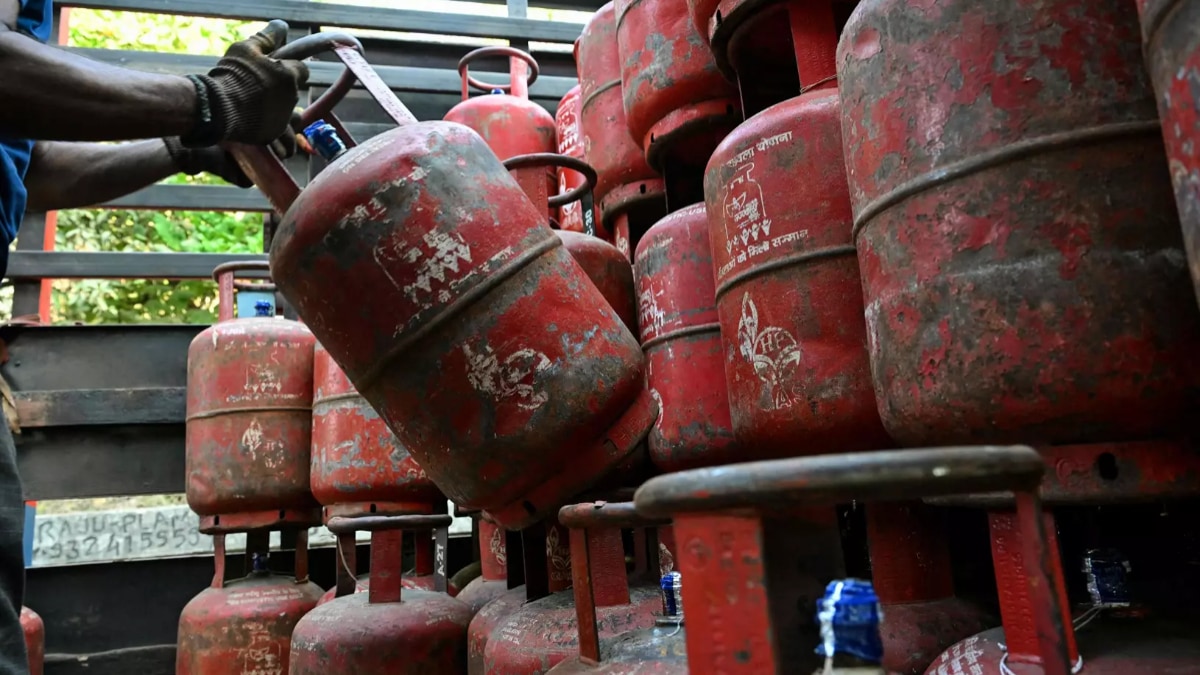
According to officials aware of the matter, if global LNG and fertiliser prices remain elevated due to supply constraints through the current fiscal year, the fertiliser subsidy could exceed the respective BE Rs 1.71 lakh crore by as much as Rs 1-1.3 lakh crore. Similarly, they said, another Rs 50,000 crore may be required to compensate state-owned oil marketing companies (OMCs) for the subsidies under the Ujjwala scheme and to offset the losses arising from government-controlled prices for other domestic LPG consumers.
Currently, a 14.2-kg domestic LPG cylinder is priced at Rs 913, while beneficiaries of the PMUY (Pradhan Mantri Ujjwala Yojana) receive it at a subsidised rate of Rs 613. OMCs are incurring under-recoveries of around Rs 674 per cylinder on domestic LPG sales.
An additional Rs 20,000 crore may also be needed for food subsidy due to the rising cost of maintaining large stockpiles of rice and wheat, along with increases in the minimum support price (MSP), the sources said. In the latest revision of MSPs for the kharif crops, the government chose to limit the increase for paddy crop to just 3%, keeping in view the rising the subsidy burden.
The closure of the strait since February has severely disrupted supplies of raw materials such as LNG and finished fertiliser products. “If the West Asia crisis prolongs, the impact on fertiliser subsidy in the current fiscal will be really strong,” said Ramesh Chand, agricultural economist and former member, Niti Aayog. What makes matters worse is that, unlike some other subsidies, the fertiliser subsidy is open-ended, with limited end-use monitoring.
Import Shock
The statutory retail price of urea in India is fixed at Rs 266.5 per 45-kg bag and has remained unchanged since March 2018. While the subsidy on a urea bag was around Rs 2,000-2,500 in 2018, it has now risen to over Rs 4,000 per bag. The retail price of diammonium phosphate (DAP) has also been maintained at Rs 1,350 per 50-kg bag since the Covid-19 pandemic, while the subsidy component has surged from around Rs 500-600 to over Rs 3,500 currently. Imports are becoming more expensive due to the depreciation of the rupee against the dollar.
ALSO READCoal flexibility push slows as storage gains edge in balancing India’s power grid
To augment LNG supplies, the government has approved spot-market purchases from countries such as Australia, Russia and the US. Until last fiscal, only 10–15% of LNG imports were sourced through spot purchases, with the bulk procured under long-term contracts from Qatar and the UAE. However, spot LNG prices — a key input for urea production — have surged sharply to $19 per metric million Btu (MMBtu), compared with an average of $11–12 MMBtu during April-February of this fiscal, according to sources. Meanwhile, Indian Potash has begun importing 2.5 million tonnes of urea at $935-959 per tonne, nearly double the February prices.
On the revenue front, the Rs 10-per-litre excise duty cut on petrol and diesel may cost the exchequer Rs 1-1.4 lakh crore in FY27, even after factoring in a likely revenue gain of Rs 30,000 crore from export levies on petrol, diesel and aviation turbine fuel. Direct tax collections could also face pressure as economic growth is expected to moderate, potentially impacting revenues. Following the shortfall in direct tax collections in FY26, the required growth rate for direct taxes has now risen to 15% to meet FY27 targets, compared with the Budget estimate of around 11%. As a result, officials fear that even the modest tax buoyancy assumption of 0.8 factored into the FY27 Budget may not materialise.
Fiscal Countermeasures
Amid these headwinds, the government’s fiscal management strategy — including the just-in-time release of funds directly to implementing agencies — could help contain the stress better than in usual circumstances. Based on trends over the past couple of years and stricter enforcement of spending norms to curb the parking of funds, the Centre could save up to Rs 2 lakh crore, largely from centrally sponsored schemes. These funds could then be reprioritised towards additional subsidy expenditure.
In the FY27 Budget, the Centre had set aside Rs 1 lakh crore under the Economic Stabilisation Fund, a contingency buffer designed to address supply-chain disruptions, sector-specific stress and unforeseen fiscal shocks. This has strengthened the government’s ability to respond swiftly without derailing broader fiscal management.
Similarly, the 6.7% increase in surplus transfer from the Reserve Bank of India to Rs 2.87 lakh crore has also boosted the Centre’s non-tax revenues.
In the Budget, the Centre projected a fiscal deficit of 4.3% of GDP for FY27, while also envisaging a gradual reduction in central government debt to 55.6% of GDP. However, these estimates could be revised moderately upwards at the revised estimate stage as higher subsidy expenditure and revenue losses from tax cuts begin to weigh on government finances.
TOPICSbudgetLPG subsidyThis article was first uploaded on May twenty-four, twenty twenty-six, at eleven minutes past seven in the evening.