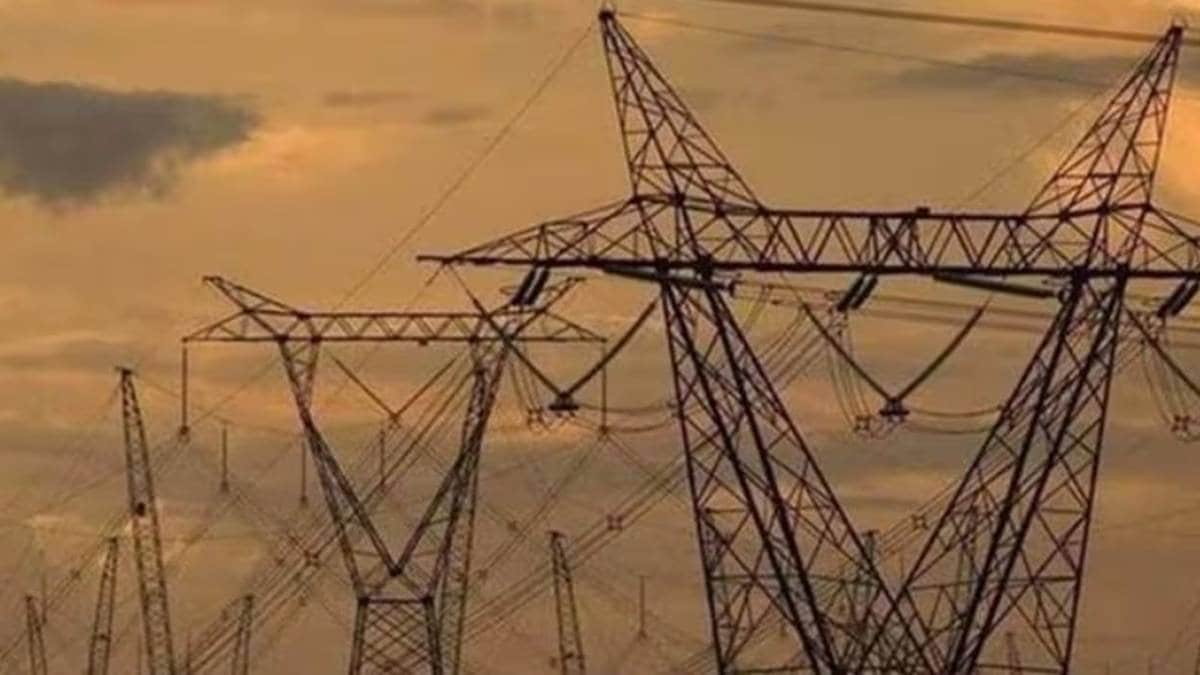
India’s peak power demand crossed the 270-gigawatt (GW) mark for the first time on Thursday, touching a record 270.82 GW as an intensifying heatwave across large parts of the country sharply increased electricity consumption from air-conditioners, coolers and other cooling appliances.
The new all-time high surpassed the previous record of 265.44 GW recorded on Wednesday, marking the fourth consecutive day of record electricity demand amid soaring temperatures and rising cooling load across households, commercial establishments and urban centres.
“Today was the fourth consecutive day when the peak power demand reached a new all-time high. At 1545 hours on May 21, 2026, the peak power demand of 270.82 GW was successfully met,” the ministry of power said in a post on X.
ALSO READBulk diesel buyers flock to retail pumps as Rs 42/litre gap strains OMC network
The ministry had earlier projected that peak electricity demand would touch 270 GW during the summer of 2026.
The latest peak is significantly higher than the 242.77 GW recorded during June 2025 and also above the 250 GW level seen in May 2024, which was the country’s previous major summer peak at that time.
The ministry said the sharp increase in demand was linked to “greater usage of cooling appliances in view of the prevailing weather conditions across the country.”
Power demand has been climbing continuously since Monday, touching 257.37 GW on Monday, 260.45 GW on Tuesday and 265.44 GW on Wednesday before breaching the 270 GW mark on Thursday.
Thermal Power Anchors
According to the ministry, thermal power continued to remain the backbone of India’s electricity supply during peak hours, accounting for 62.8 per cent of the generation mix.
Solar power contributed 22 per cent during solar hours, followed by hydro at 5.8 per cent and wind at 5 per cent, highlighting the growing contribution of renewable energy in meeting daytime peak demand.
“The availability of coal at the thermal power plants is adequate, and the supplies are being effectively monitored,” the ministry said.
ALSO READMore steps to check CAD on the anvil: Piyush Goyal
Meanwhile, the India Meteorological Department (IMD) has forecast continuation of severe heatwave conditions across large parts of northwest and central India, with temperatures hovering around 45 degrees Celsius in several locations.
Ankit Jain said India’s electricity demand is expected to grow by 5-5.5 per cent in FY27, supported by economic expansion, urbanisation, higher appliance ownership and emerging demand from electric vehicles, data centres and digital infrastructure.
“The peak demand in FY2027 could also see an uptick from the current level if the heatwaves continue to remain severe across major parts of the country,” Jain said.
Intermittent Spikes
He added that despite healthy capacity additions in FY26, especially from renewable energy, intermittent renewable generation and transmission bottlenecks continue to remain major challenges during sudden demand spikes.
“At an all-India level, the energy deficit remained at 0.2 per cent while peak deficit remained at 0.1 per cent for April 2026,” Jain said.
“Further, India has seen that the biggest bottleneck to increasing its renewable energy capacity lies in the lack of availability of transmission infrastructure, which has lagged the pace at which renewable energy capacity has been added on ground. This has also led to many renewable energy projects either seeing power curtailment due to instances of grid backdown or non-availability of transmission infrastructure especially in states like Rajasthan and Gujarat,” he added.
Meanwhile, Delhi recorded its highest peak power demand of the current summer season at 8,231 MW on Thursday as the city’s maximum temperature rose to 43.6 degrees Celsius.
TOPICSpower discomsThis article was first uploaded on May twenty-two, twenty twenty-six, at two minutes past one in the night.