
Bitcoin Whale Initiates $40 Million Short Position – Is the $79K Recovery of BTC at Risk?

image

Market timing is crucial in the current cycle, presenting investors with a significant test of their patience.

From a technical standpoint, Bitcoin has rebounded into the $79k range, regaining levels not seen since early February.

Nevertheless, it remains over 10% lower than January’s opening price of $87k. This indicates that many early Q1 buyers are still at a loss, keeping the debate about Bitcoin’s bottom very much alive.

Historically speaking, Bitcoin tends to reach its lows after prolonged periods of downward pressure. During the 2017–18 cycle, $BTC experienced nine consecutive months of losses before hitting bottom; similarly structured patterns were observed in the 2021–22 cycle.

This time around, however, Bitcoin has recorded only five red monthly candles so far. This suggests that we may still be in the early stages of its bottoming process.
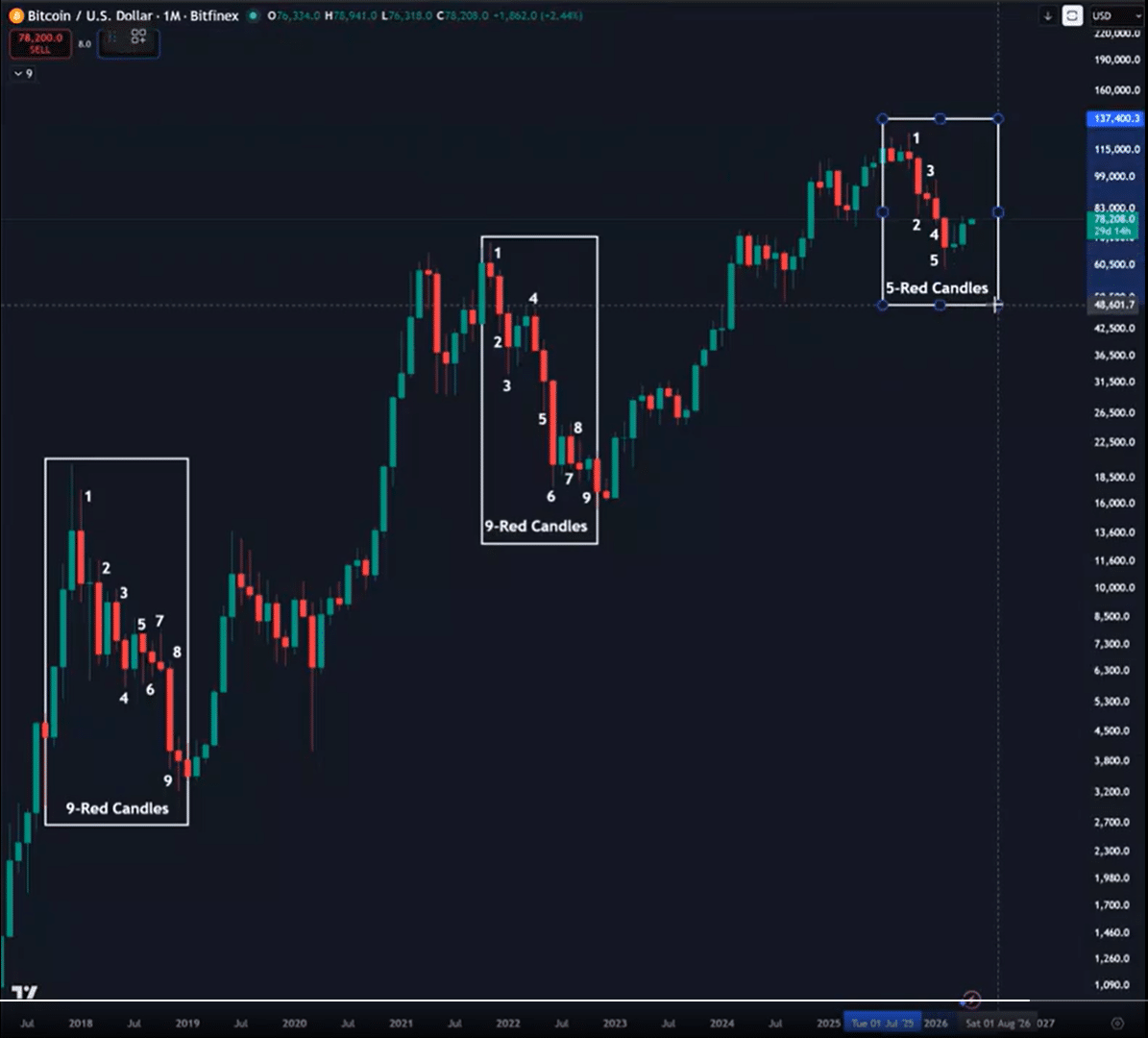
Source: TradingView ($BTC/USDT)

Interestingly enough, while market patience is evident, it hasn’t yet led to capitulation.

An analyst noted that Long-Term Holder (LTH) supply at a loss is nearing levels last observed during Bitcoin’s 2018 low. However, more realization of losses may be necessary to reach stress levels similar to those seen during last year’s bear market before confirming any bottoming out.

The combination of technical and on-chain indicators suggests that $BTC appears to be navigating through its bottoming phase.

The Debate Over Bull Traps Below $80k for Bitcoin

Apart from technical and on-chain signals indicating potential bearish trends for $BTC, historical patterns also support this outlook.

March and April brought about notable recovery with gains totaling 13.7%, following January and February’s correction which saw declines around 25%.

However, within broader market dynamics—investors often perceive May as weaker since sustained bullish momentum over three consecutive months is rare during bear markets for Bitcoin.
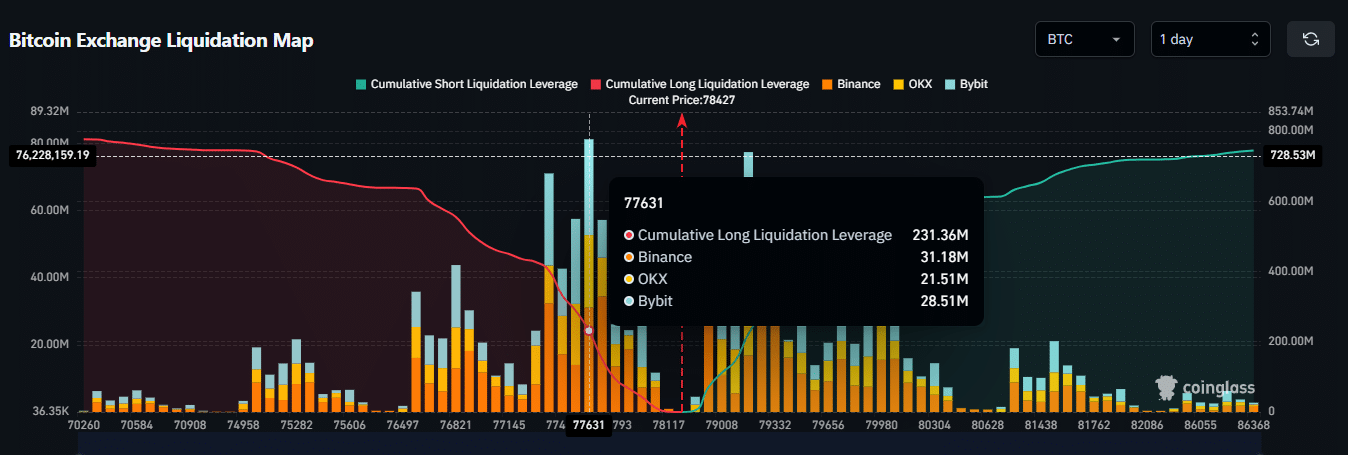


In this context,
heavy long exposure near downside zones increases liquidation risk.
As illustrated by recent charts,
Bitcoin liquidations cluster at over $230 million in long positions around the $77k level.
Given historical patterns,
technical indicators,
and on-chain data suggesting that $ BTC may not have reached its nadir yet,
the recent establishment of a short position worth nearly $40 million appears strategic—potentially setting up conditions conducive for a bull trap.


Your Takeaway Summary:

The ongoing consolidation below $80k indicates potential uncertainty regarding whether we have truly hit rock-bottom based on various signals from both technical analysis and historical performance metrics.
The prevalence of heavy long positioning near key downside thresholds raises concerns about liquidation risks while supporting arguments favoring strategic shorts amid possible bull trap scenarios.


FAQ:

  • What does it mean when investors talk about “timing” in markets?: Timing refers to making investment decisions based on anticipated future price movements or trends rather than solely relying on current prices or past performance.
  • Why do some analysts believe we haven’t reached “the bottom” yet?: Analysts often look at various indicators such as trading volume trends or previous historical cycles which suggest further downward movement could occur before stabilization happens again.
  • How can one assess if they should invest now versus waiting?: Investors should evaluate their risk tolerance alongside external factors like economic conditions affecting cryptocurrencies; consulting financial advisors might help clarify these choices better too!
  • What are “bull traps”? : A bull trap occurs when an asset appears poised for upward movement but then reverses direction unexpectedly leading traders who bought into optimism facing sudden losses instead!
  • Is there any way I can protect myself against potential liquidations? < : It’s wise practice implementing stop-loss orders where applicable alongside diversifying portfolios across different assets rather than concentrating investments heavily within single ones!

Leave a Reply

Your email address will not be published. Required fields are marked *