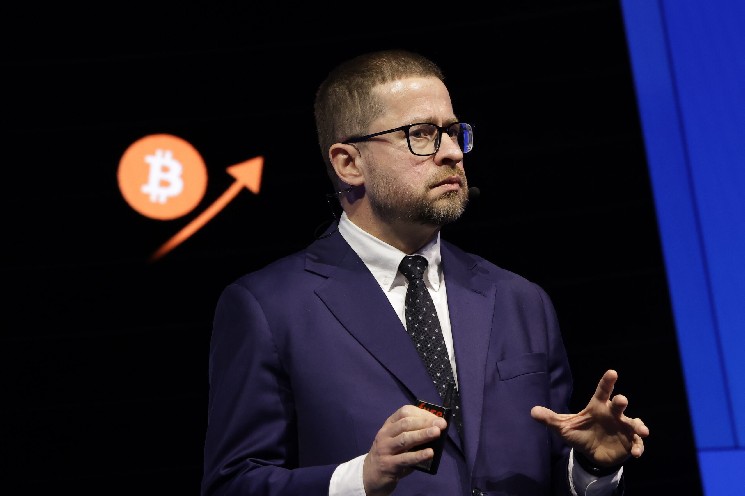
The Governor of the Czech National Bank, Aleš Michl, took to a Bitcoin industry event in Las Vegas to advocate for a reserve strategy that balances stringent inflation management with a calculated investment in digital assets.
He explained that the bank’s decision to incorporate a modest allocation of Bitcoin was aimed at enhancing expected returns without elevating overall portfolio risk.
Michl recounted that upon his appointment as governor in mid-2022, inflation rates in the Czech Republic were nearing 20%. He informed attendees that the central bank committed itself to reducing inflation back down to 2% within two years—a target achieved through disciplined measures rather than “magic.”
He noted that prolonged periods of cheap money had weakened the currency and flooded the system with excessive liquidity. In response, the bank prioritized savings and bolstered the Koruna’s strength, adopting an enduringly hawkish stance.
In conjunction with this approach, Michl emphasized the magnitude of the Czech National Bank’s balance sheet. He revealed that it manages approximately $180 billion in foreign exchange reserves—equivalent to about 44% of Czech GDP—and characterized these reserves as among some of the largest globally relative to economic size.
The objective moving forward is clear: “build for tomorrow,” anticipate future needs, and invest wisely for national protection. This has necessitated a pivot from low-yield bonds towards greater allocations in stocks and gold via low-risk portfolios.
Bitcoin Shows Low Long-Term Correlation
Michl stated that an important question facing the bank is whether it can further enhance its long-term portfolio strength. This prompted internal discussions regarding Bitcoin’s role. He reminisced about his first experience using Bitcoin for coffee purchases in Prague while acknowledging its notorious price volatility—which can see values fluctuate dramatically day-to-day—as potentially risky. However, he argued other asset classes also exhibit similar fluctuations; thus, what matters most is how each asset performs within an overall portfolio context.
Czech National Bank research indicated that Bitcoin maintains low long-term correlation with many conventional reserve assets and does not behave similarly over timeframes. Michl asserted that over extended periods, Bitcoin could yield returns less tied to other investments’ performance metrics. Consequently, this rationale led them to establish a 1% allocation toward Bitcoin within their reserves.
The analysis suggested by Michl showed this small allocation would enhance expected returns when measured against Koruna while keeping overall risk constant: “Adding Bitcoin improves your portfolio; returns increase while risk remains stable—that exemplifies diversification,” he conveyed during his presentation.
This strategic move aligns with broader principles guiding central banking amidst rising digital asset prominence. His message resonated throughout his audience—maintaining a stance that’s both “conservative yet innovative” concerning institutional operations and investments was paramount.
For The Czech National Bank specifically, this translates into adhering firmly against inflation alongside nurturing a robust domestic currency—all while cautiously experimenting with incorporating non-traditional assets like Bitcoin into their reserves over time for enhancement purposes.