Bitcoin has been a significant player in the financial landscape for quite some time. Despite its inherent fluctuations, this premier cryptocurrency has demonstrated remarkable resilience since its inception.
The period from 2020 to 2026 is particularly noteworthy for Bitcoin, as it consistently outperformed during various crises.
Bitcoin’s Performance During Major Crises
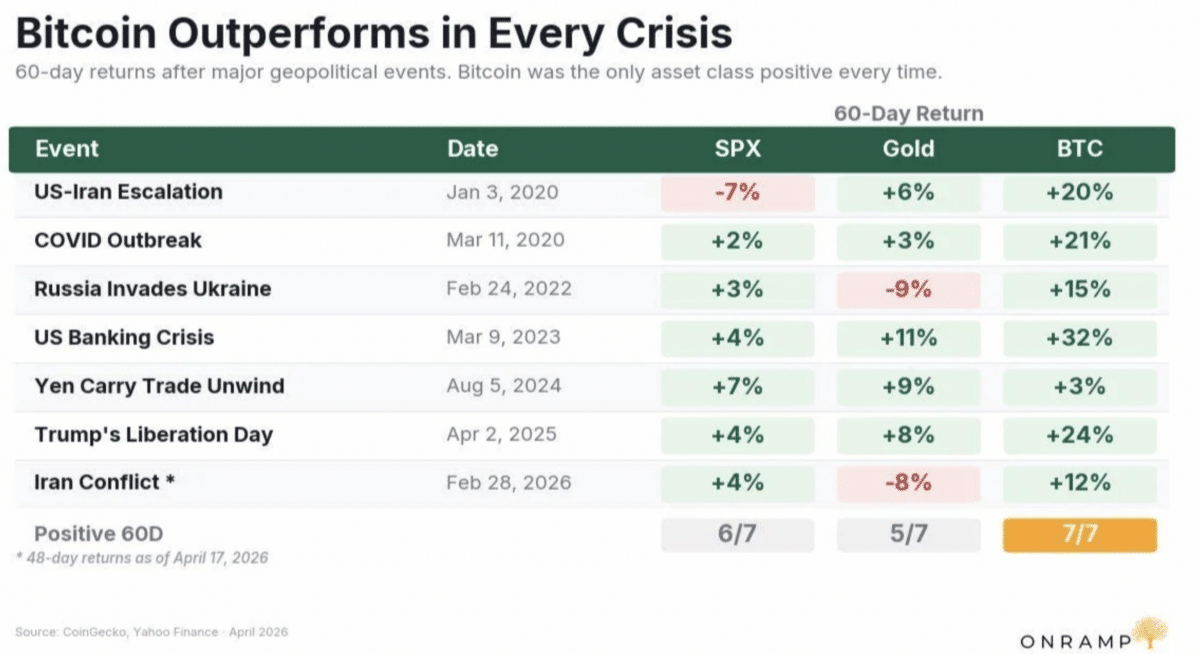
The first major crisis occurred on January 3, 2020, with escalating tensions between the U.S. and Iran. During this time, Bitcoin [$BTC] experienced a notable increase of 20%, while gold only rose by 6%.
In contrast, the S&P 500 index saw a decline of 7%. Later that same year, amidst the COVID-19 pandemic in March, $BTC surged by an impressive 21%, whereas both gold and the S&P 500 managed increases of just 3% and 2%, respectively.
Source: Bitcoin Archive/X
This trend continued through other significant events such as the Russia-Ukraine conflict and another U.S.-Iran confrontation in early years leading up to now. The banking crisis in America also showcased similar patterns regarding Bitcoin’s performance.
A notable exception occurred in early 2024 when market dynamics shifted due to a Yen carry trade unwind that propelled gold prices up by nearly 9% and lifted the S&P by about 7%. In comparison, $BTC‘s growth was limited to just around three percent during this timeframe.
This situation arose amid increased Yen appreciation triggered by rate hikes from Japan’s central bank alongside weak economic indicators from the United States.
A comparative analysis based on returns over sixty days revealed that Bitcoin was uniquely positioned to recover swiftly compared to other assets during these turbulent times.
The Bitcoin Archive account on X remarked on this resilience:
Seven out of seven instances—no other asset can compare!
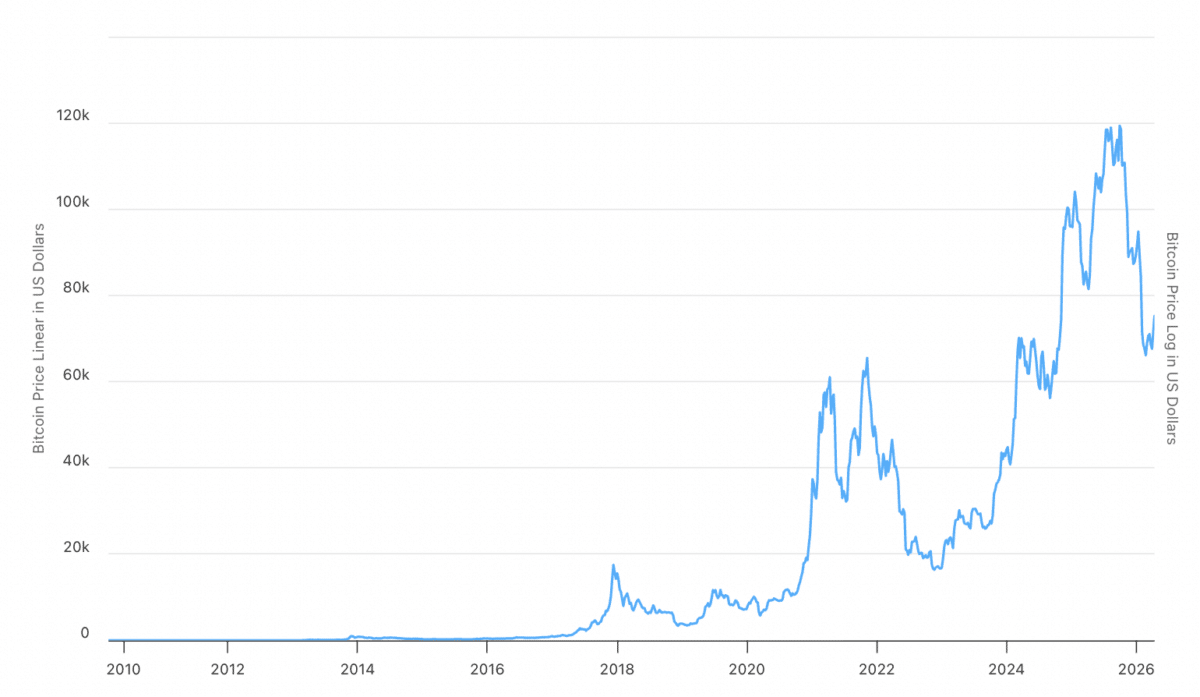
The historical price chart provided by BitBo (dating back to its launch in2009) further supports this narrative. A broader view indicates that despite occasional downturns, $BTC‘s overall trajectory remains upward trending over time.
Source: BiTBO
Diverging Views: From Past Perspectives to Current Insights
A research paper published by SRNN back in **2022**, coinciding with Russia’s invasion of Ukraine challenged earlier assumptions about cryptocurrencies’ stability:
Crypto assets primarily exhibit weak safe-haven characteristics within commodity markets but demonstrate strong safe-haven attributes concerning foreign exchange currencies.
However , four years later , another study released by Grayscale observed a shift , noting :
Cryptocurrencies have remained resilient since hostilities began with Iran.
Source: Grayscale
Zach Pandl , head researcher at Grayscale cited examples demonstrating how spot crypto ETPs attracted net inflows . He also highlighted rising open interest levels for perpetual futures contracts even amid risks associated with sell-offs observed between October through February . Furthermore regulatory advancements like CLARITY Act alongside SEC guidelines concerning non-securities contributed positively towards perceptions surrounding crypto markets .
During wartime scenarios too there were noticeable increases seen within cryptocurrency transactions ; notably Iran began accepting toll payments via cryptocurrencies from vessels traversing through Strait Hormuz . AMBCrypto previously reported such developments suggesting these actions could undermine US dollar value against$ BTC . This anticipated outcome might lead ultimately towards positioning bitcoin as potential global reserve currency.
A Concluding Overview
The bounce rate exhibited over sixty days suggests bitcoin surpasses traditional assets like gold or S&P500 significantly.
However not all experts agree upon viewing bitcoin strictly as ultimate safeguard amidst warfare situations.
This morning, developers of Bitcoin Core expressed their joy over enhanced block reconstruction metrics for node operators, while conveniently overlooking…