Morgan Stanley introduced its spot Bitcoin ETF, known as MSBT, on April 8 at NYSE Arca. This launch marks the first cryptocurrency exchange-traded product (ETP) from a US bank-affiliated asset manager, with a remarkably low sponsor fee of 0.14%.
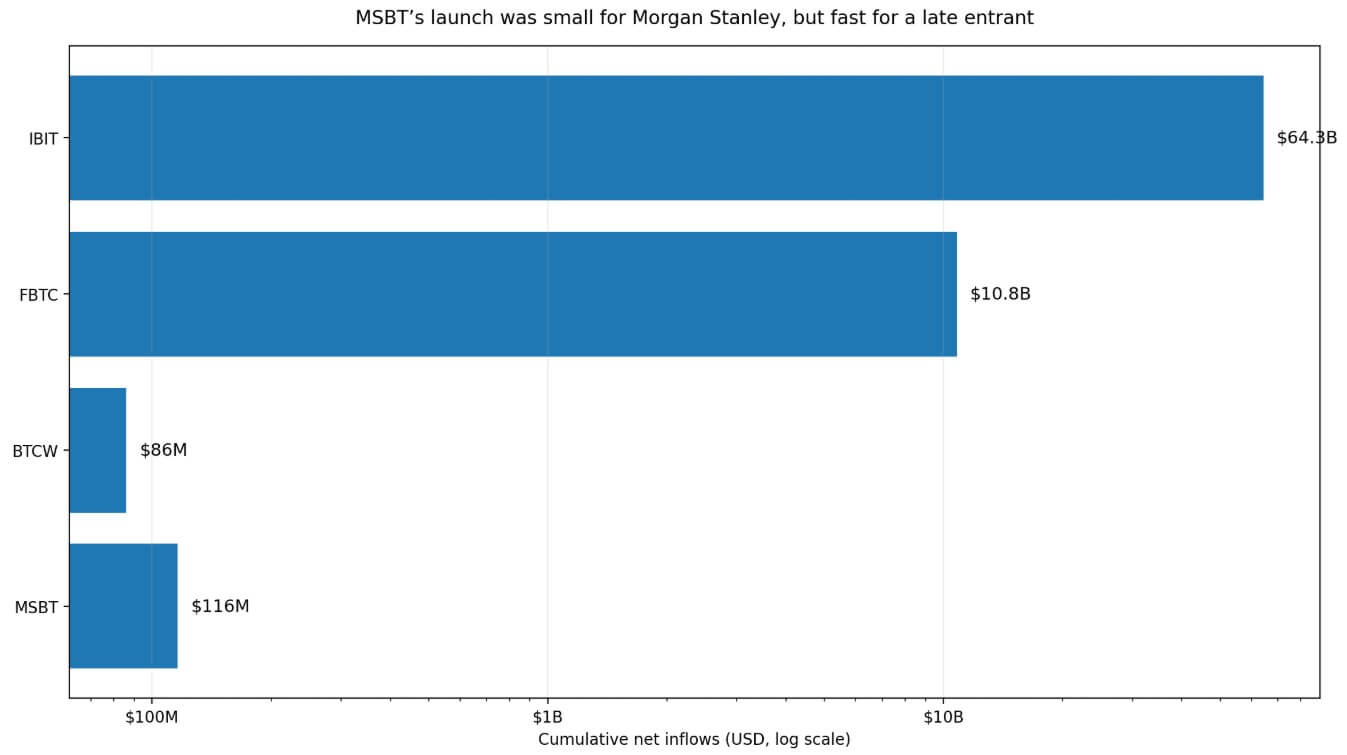
As of April 16, data from Farside Investors indicated that the fund had attracted cumulative net inflows totaling $116 million over just seven trading sessions.
When compared to Morgan Stanley Investment Management’s total assets under management of $1.9 trillion as of December 31, 2025, this amount represents approximately 0.006% of their platform’s value. At the current fee rate of 0.14%, this would yield an annual gross revenue estimate around $162,400 if assets remain at that level.
The competitive dynamics surrounding the MSBT launch make it particularly noteworthy.
A figure that speaks volumes
With net inflows averaging about $16.6 million per session, MSBT has already outpaced BTCW’s cumulative inflows which stand at $86 million according to Farside data.
This achievement is significant for a newcomer entering a turbulent Bitcoin market; surpassing an established competitor within two weeks demonstrates that brand recognition and pricing strategies can still attract interest in a sector largely dominated by BlackRock’s IBIT and Fidelity’s FBTC with respective totals of $64.3 billion and $10.8 billion.
Morgan Stanley has effectively transformed “crypto access” into “crypto production.”
This filing represents a groundbreaking move for major US banks in the crypto ETF space; Bryan Armor from Morningstar noted to Reuters that such entries lend credibility to crypto ETFs and may encourage other institutions to follow suit.
Goldman Sachs submitted its application for its inaugural Bitcoin ETF product on April 14—just six days after Morgan Stanley launched MSBT—highlighting an accelerating trend toward acceptance among traditional financial institutions regarding bank-branded Bitcoin offerings.
The announcement from Morgan Stanley positions MSBT as part of their broader digital asset strategy encompassing custody services, trading solutions, and product innovation—a dual decision reflecting both market positioning and product development priorities.
The arena is expansive
Bank of America revealed plans allowing advisors across its Private Bank divisions—including Merrill—to recommend cryptocurrency allocations starting January 5 without any minimum asset requirements.
Charles Schwab announced on April 16 their intent to gradually introduce direct trading options for retail clients in both spot Bitcoin and Ethereum within upcoming weeks.
These initiatives indicate that competition for capital influx into Bitcoin will increasingly hinge upon advisory services alongside brokerage access integrated with client experiences focused on custody solutions.