The current market cycle for Bitcoin ($BTC) is significantly weaker compared to the previous three cycles, as stated by Alex Thorn, who leads research at Galaxy, an investment firm.
Thorn analyzed the price movements following the Bitcoin halving in April 2024 and compared them with those from the halving events of 2012, 2016, and 2020. He noted that this cycle has exhibited much lower volatility and less potential for growth. The peak price reached over $125,000 on October 5, 2025 was only a modest increase of about 97% from the halving price of approximately $63,000.
During past halving cycles, $BTC saw remarkable increases: a staggering rise of around 9,294% in the cycle following the first halving in 2012 (peaking at about $1,163), followed by an increase of roughly 2,950% after the second halving in 2016 (reaching nearly $19,891). The third cycle post-halving in 2020 resulted in a more modest gain of about 761%.
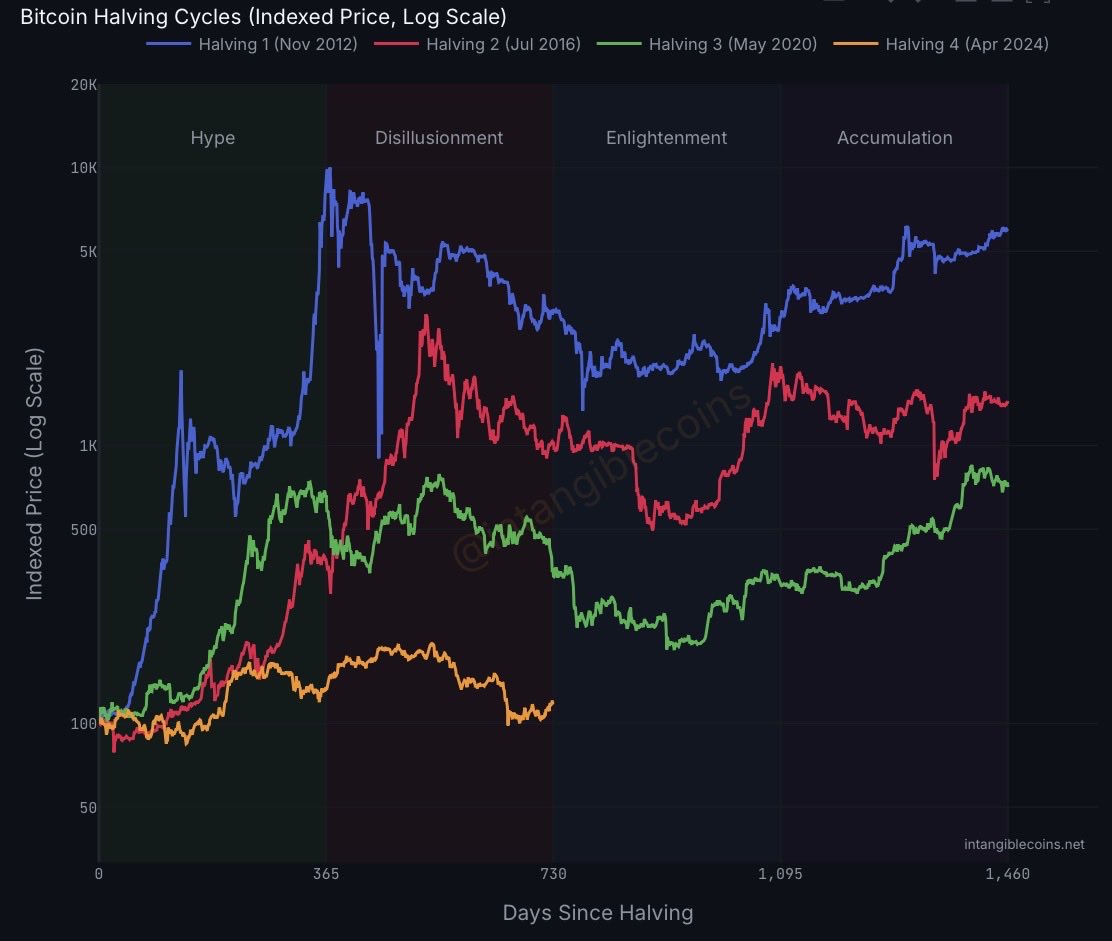
“The fourth cycle is clearly underperforming when stacked against earlier ones,” Thorn remarked on X platform while posing a thought-provoking question: “Is this how things will be moving forward or just until they change?”
The diminishing volatility observed with each successive $BTC halving indicates that traditional market behaviors may be evolving. This shift suggests that factors beyond just halvings or four-year market theories might increasingly influence $BTC‘s pricing dynamics.
The Bitcoin Volatility Index over a span of thirty days peaked at an impressive rate of 9.64% on April 2nd back in year-2020 but has not exceeded levels above just over3%, last recorded on August24th ,2024 . Currently ,the most recent estimate stands at merely1 .75 % according to Bitbo data .
Related: An analyst claims it’s still premature to declare a bullish trend for Bitcoin as demand remains subdued against exiting capital.
Critics argue that current performance overlooks pre-halvings highs achieved prematurely.
This past March ,$ BTC surged above$70k—setting what was then its all-time high—just one month ahead before April’shalvings event occurred.
The primary driver behind this surge was attributed largely due approval granted towards spot-basedBitcoin exchange-traded funds(ETFs) within United States markets during Januaryof year-2024 .

Critics have pointed outthatthis unprecedented occurrenceof$ BTC’snewall-timehigh beforethehalvingskewedcurrentcycleperformanceinpriceanalysisbyThorn.
AccordingtoFidelityDigitalAssets,Bitcoin’sdrawdownsarebecominglesssevereasaresultofthedecliningvolatilityobservedrecently.Asaresultpreviousbearmarketswitnesseddeclinesrangingbetween80%-90%.AccordingtoZackWainwright,aFidelityDigitalAssetsresearchanalyst.Bitmainsincecrashedfromitsrecordsetatover$125Kdownaround60Krepresentsjustnorth50%.InMarchCEOJanvanEckofVanEckassetmanagementstatedthathebelieves$BTChasneareditsbottomandanticipatesgradualincreasesbeginningaroundyear-26.Onlastchecklargestcrypto tradedapproximately74K703upalmost5percentpastweekaccordingtoTradingViewdata.
Magazine:VeterantraderPeterBrandtsaysBitcoinwon’treach$1Mby2030