
The global economy is currently experiencing turbulence due to escalating geopolitical conflicts, particularly in West Asia, and the Bitcoin mining industry is feeling the impact as well.
A recent analysis from Hashrate Index reveals that the worldwide hashrate dropped to 1,004 EH/s in Q2 2026, down from a peak of 1,066 EH/s recorded in Q1 2026.
This represents a decline of 5.8% when comparing quarter-over-quarter (QoQ) data, signaling an ongoing downturn—a concerning bearish indicator for Bitcoin’s ecosystem. Furthermore, this trend suggests that miners are either ceasing operations or reducing their mining capacity to maintain network security.
Impact of Bitcoin’s Price on Mining
When we take a broader view, it becomes clear that this situation is influenced not only by global tensions but also by Bitcoin’s volatile price movements. To provide context, the leading cryptocurrency has seen its value decrease by half since reaching its all-time high last October.
This significant drop has driven hash prices down to historic lows.
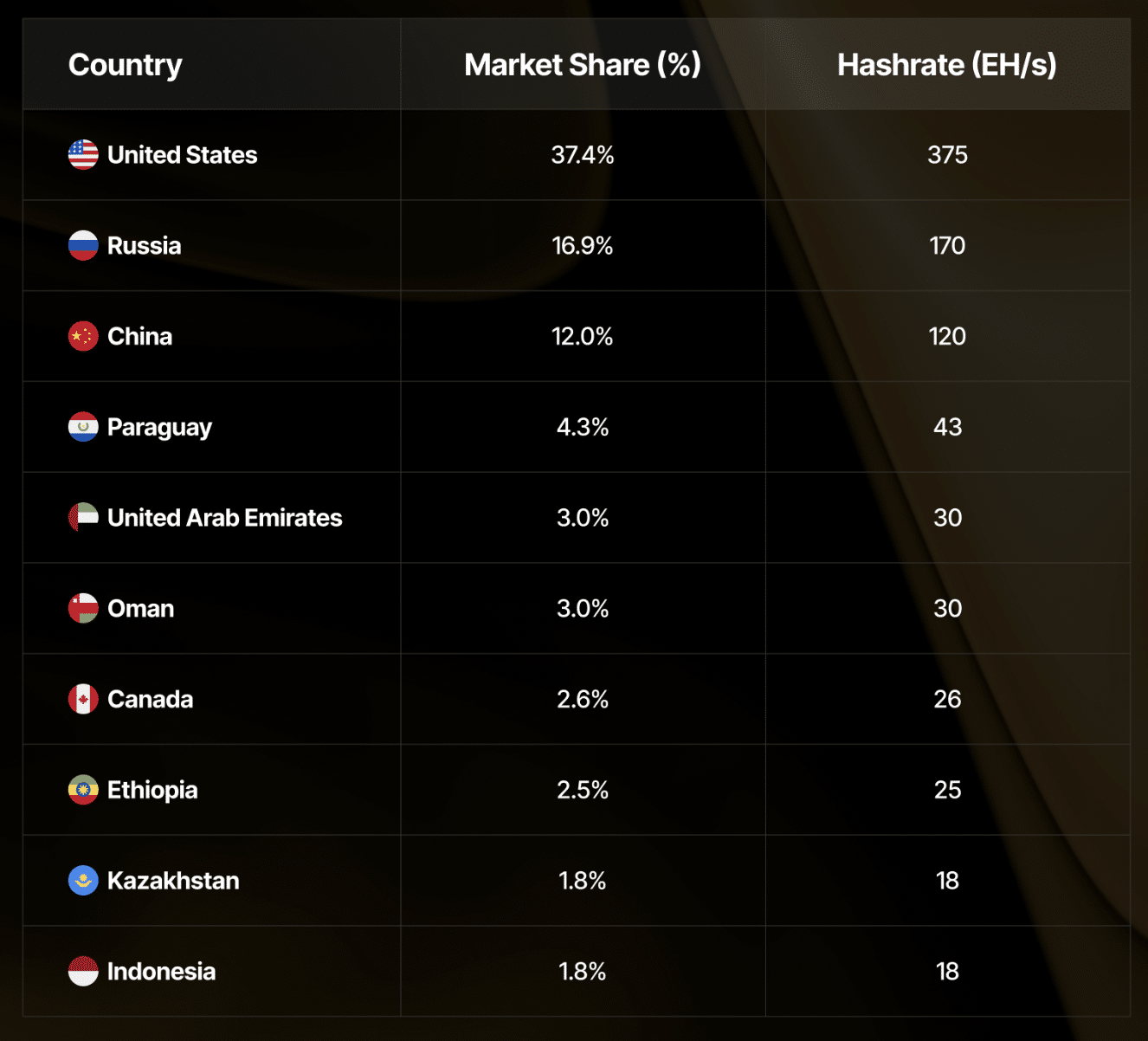
Moreover, an examination of market share distribution for Bitcoin mining across countries in Q2 2026 provides further insights into how shifting geopolitical factors are affecting global hashrate dynamics.
The report indicates that three nations dominate approximately 65% of the world’s total hashrate. The United States leads with a contribution of around 375 EH/s or about 37.4%.
Following closely is Russia with a share amounting to roughly 170 EH/s (16.9%), while China accounts for about 120 EH/s (12.1%).
Significant Decreases Observed
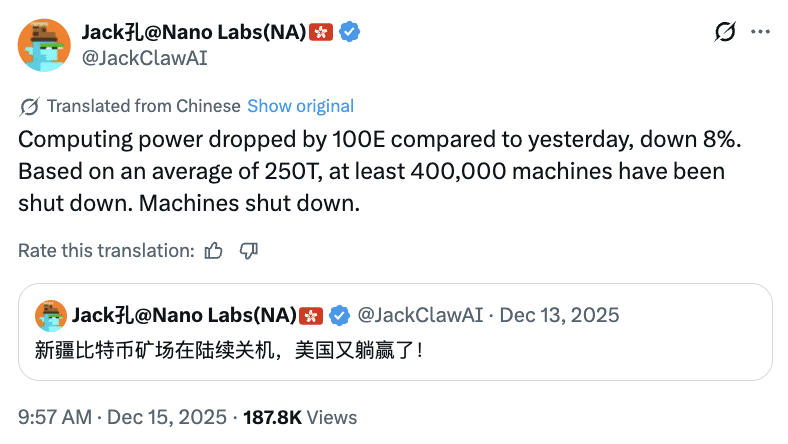
A noteworthy point is China’s reduction of approximately 1.35%, attributed to enforcement actions taken in Xinjiang back in December 2025 which led to around four hundred thousand mining rigs being decommissioned.
Iran ranks second on this list with a QoQ decline of about .6%, primarily due to ongoing regional geopolitical instability. The U.S., meanwhile, experienced only a minor decrease at .13% QoQ despite showing over three percent growth year-over-year (YoY).
An Analysis on Miner Difficulty and Profitability
The current chart depicting miner difficulty shows stability or slight recovery compared to earlier declines observed back in March.
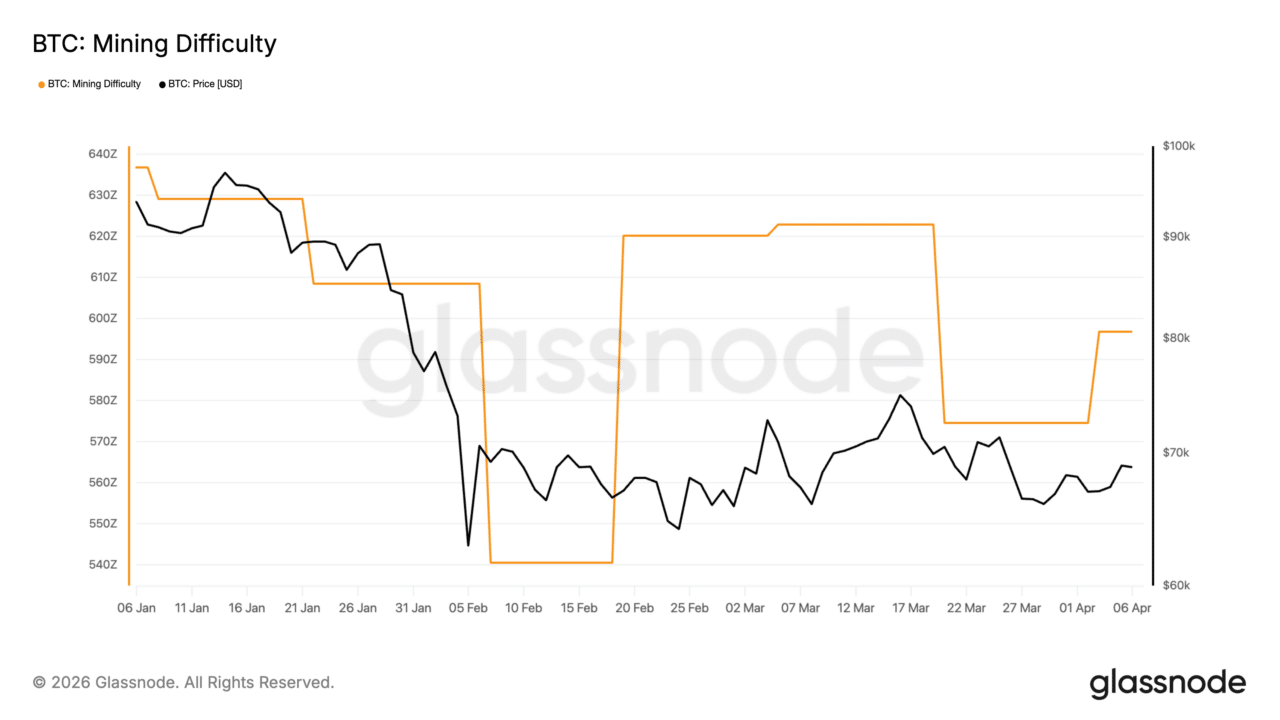
This suggests enhanced network security alongside renewed optimism regarding Bitcoin’s long-term valuation prospects.
Additonally ,the profit/loss analysis for Bitcoin miners indicates that most operators are receiving fair compensation and achieving average profitability levels; however ,as we entered Q2 ,the number reporting ‘extremely underpaid’ status surged significantly—indicating current profit margins are tight at best .
Source : CryptoQuant
Conclusion Summary
A notable factor contributing towards declining global hash rate includes bitcoin ‘s substantial price drop totaling fifty percent since reaching its record high last October .
Current charts indicate many miners remain underpaid resulting into squeezed profits overall .