
A recent analysis from Binance Research suggests that Bitcoin may no longer be closely aligned with the policies of the Federal Reserve, indicating a significant transformation influenced by spot exchange-traded funds (ETFs).
Historically, cryptocurrency markets have reacted dramatically to changes in interest rates, with Bitcoin typically declining when central banks implemented tighter monetary policies.
This trend seems to be shifting as data from Binance reveals that since 2024, Bitcoin’s correlation with its Global Easing Breadth Index—which monitors 41 central banks—has become markedly negative. This change follows the approval of spot Bitcoin ETFs by the U.S. Securities and Exchange Commission (SEC) in January 2024.
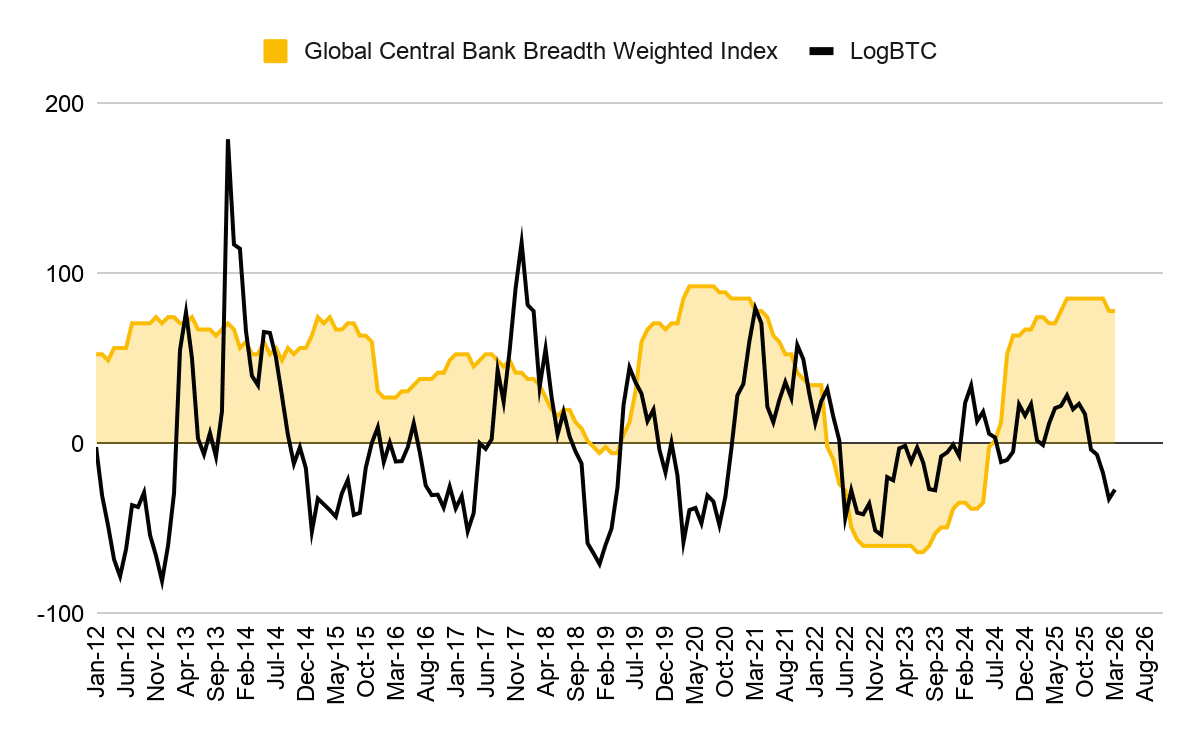
Prior to the introduction of ETFs, there was a slight positive correlation between global easing cycles and $BTC, which tended to follow these cycles after a few months. However, this report indicates that the current inverse relationship is nearly three times stronger than before, suggesting a reversal in this dynamic.
This shift signifies a change in market drivers. Previously dominated by retail investors who responded directly to macroeconomic news, crypto trading has seen institutions take on larger roles due to ETFs. These institutional players often position themselves well ahead of policy adjustments and view $BTC as an asset reflecting future expectations.
“Consequently,” noted Binance Research, “$BTC may have transitioned from being a ‘lagging receiver’ influenced by macro factors into becoming a ‘leading pricer.’ A peak in easing could already be considered outdated information for $BTC, while factors intrinsic to crypto—like policy developments and institutional investment flows—might now hold greater significance than mere monetary easing trends.”
The report arrives at a time when markets are contending with renewed concerns over stagflation driven by rising oil prices and escalating geopolitical tensions related to conflicts in the Middle East.
Expectations regarding interest rates have fluctuated between anticipated cuts and potential increases—a scenario that has historically placed pressure on risk assets like cryptocurrencies.
Binance posits that market reactions might be exaggerated. In previous economic cycles, central banks frequently shifted towards growth support despite inflationary pressures. If history is any guide, it’s likely they will eventually prioritize growth over inflation again; thus allowing Bitcoin to adjust its pricing ahead of such shifts more rapidly than anticipated.