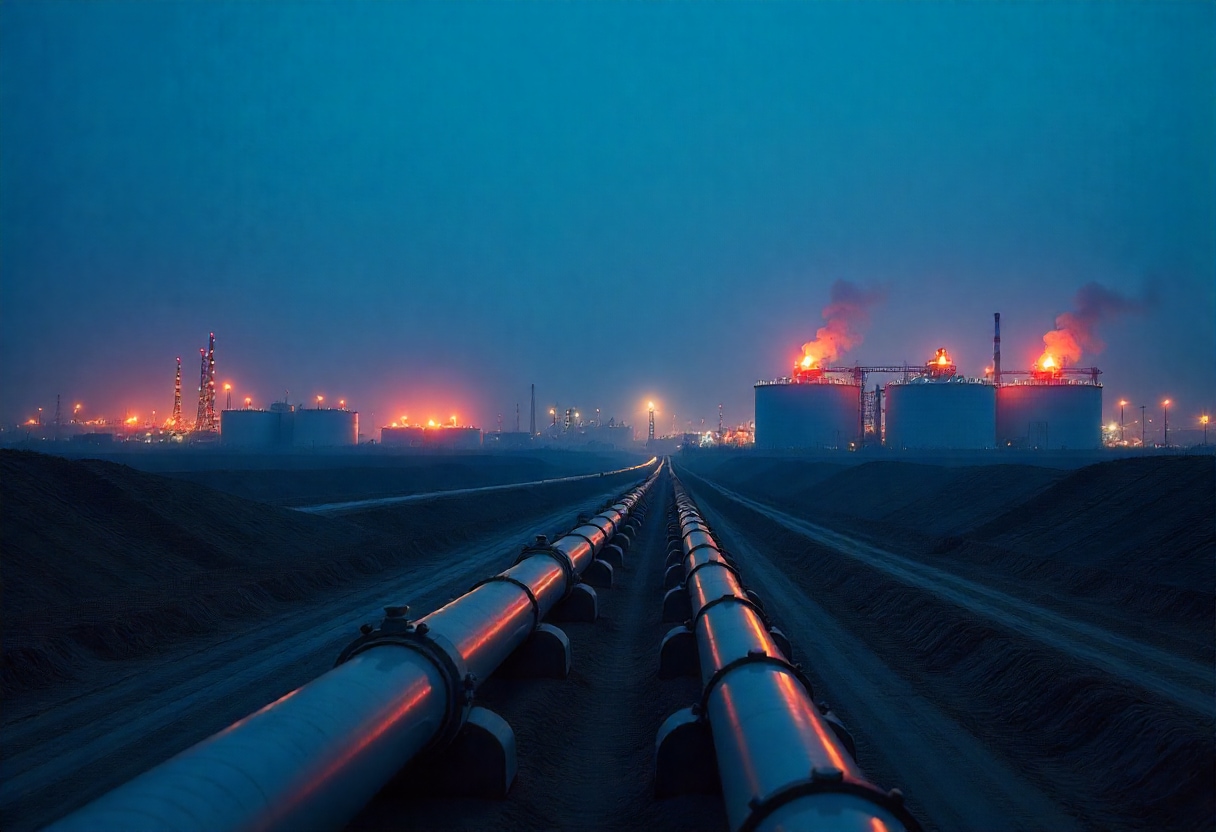
In a sharp reset triggered by soaring prices and supply disruptions, India’s LNG imports fell 12.5% month-on-month to 1.68 million tonne (mt) in March. Qatar’s share — once as high as 40% — collapsed to just 3.6%, marking one of the most dramatic shifts in the country’s gas sourcing pattern in recent years.
The drop comes after imports had already declined from a peak of 2.57 mt in January to 1.92 mt in February, translating into a cumulative fall of over 34% in just two months, as global LNG prices surged and supply chains came under strain amid the West Asia conflict.
The disruption is closely tied to a sharp spike in global energy prices. “In March, Brent crude increased to $110–120/bbl, while spot prices of Asian liquefied natural gas (LNG) nearly doubled to $20–25/MMBtu,” said Sehul Bhatt, Director, Crisil Intelligence. “We expect the prices of these two commodities to remain elevated and volatile in April as well.”
ALSO READWest Asia conflict squeezes dairy margins
From Dominance to Diversification
The most striking impact has been on India’s sourcing mix. Qatar, traditionally India’s largest LNG supplier, saw its share plunge from 0.76 mt in February (about 39.6% share) to just 0.06 mt — or 3.6% in March, reflecting a near-complete disruption in flows.
In contrast, Oman emerged as the top supplier with 0.53 mt, accounting for a 31.5% share in March, followed by the United States at 0.34 mt (20.2%) and Nigeria at 0.33 mt (19.6%), highlighting a rapid pivot towards alternative sources. Additional volumes came from Angola at 0.21 mt (12.5%) and Mozambique at 0.08 mt (4.8%), further widening India’s supplier base.
The shift underscores a move from a concentrated sourcing model to a fragmented and diversified import basket, with no single supplier dominating — a stark contrast to earlier months when Qatar led by a wide margin.
“Even as early signs of demand moderation emerge, supply uncertainty and logistics constraints are keeping import cost elevated due to higher risk premia and longer shipping routes as India diversifies its resource mix,” Bhatt said.
ALSO READChina, India signal shift in trade ties
The impact is not limited to sourcing. The price shock has triggered a visible restructuring of demand within the country, with consumption increasingly being prioritised rather than expanded.
Sonal Ranjan, LNG and natural gas market analyst at Kpler, said procurement patterns are shifting fundamentally. “As supply tightens, procurement shifts from opportunistic buying to selective offtake, with price sensitivity increasing across non-priority segments,” she said.
Demand Redistribution
India continues to remain structurally exposed through long-term contracts. “India remains exposed through Petronet’s 7.5 mt contracted volumes with Qatar, with downstream allocation concentrated in protected sectors,” Ranjan added.
Demand is now being redistributed across sectors. “Demand adjusts through intra-sector reallocation rather than incremental buying, with gas increasingly prioritised toward fertiliser and city gas,” she said.
City gas remains largely protected, with around 70% of demand — domestic PNG and CNG — insulated under regulated supply, while the remaining 30%, primarily industrial and commercial users, is seeing the sharpest curtailment.
The fertiliser sector has emerged as the key demand anchor. “Under supply stress, incremental LNG is preferentially allocated to fertiliser, positioning the sector as the key driver of spot replacement demand,” Ranjan said.
In contrast, the power sector has absorbed the maximum impact. “The power sector acts as the primary release valve under supply stress, with demand adjusting first and most aggressively,” she added.
The broader impact is two-fold: a rise in import costs due to elevated prices and longer shipping routes, and a structural shift in demand towards essential sectors, leaving discretionary consumption exposed to price volatility.
Looking ahead, uncertainty remains high. “The scenario remains uncertain and evolving,” Bhatt said, adding that normalization in global oil markets could take “several weeks,” while gas markets may take longer due to operational challenges.
Crisil has revised its FY27 price assumptions upward to $82-87 per barrel for Brent and $14-17 per MMBtu for LNG, factoring in tighter balances and persistent geopolitical risks.
TOPICSLNGThis article was first uploaded on April four, twenty twenty-six, at five minutes past one in the night.