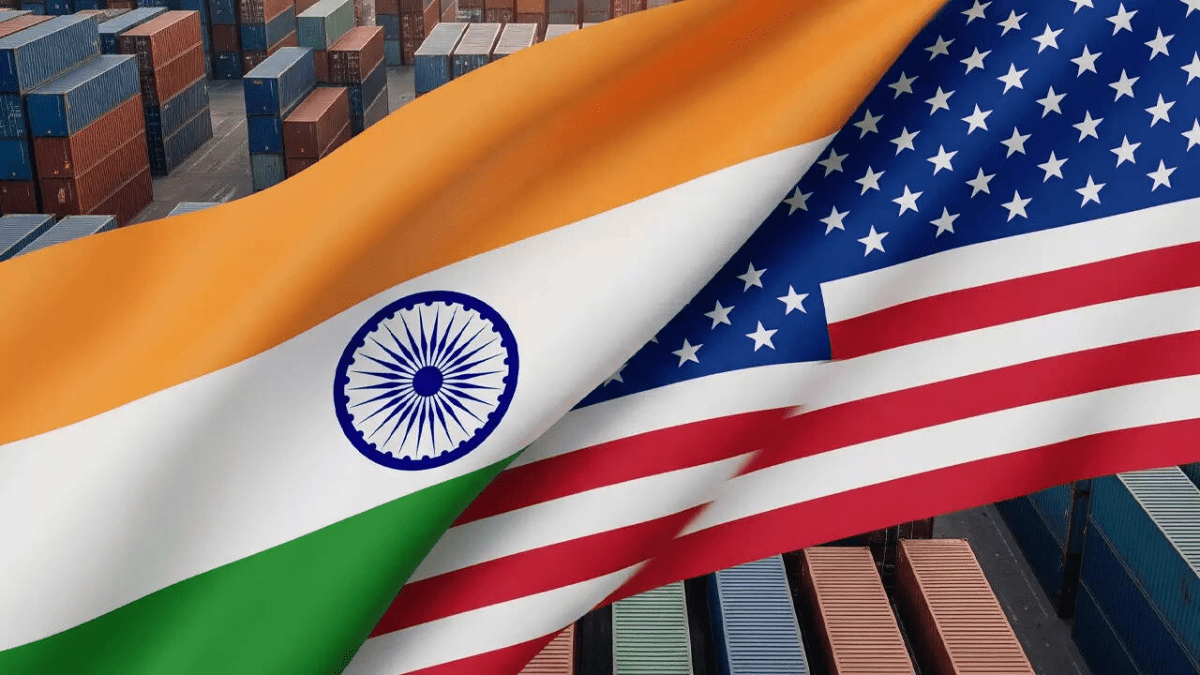
India and the US would continue to work towards finalising the interim trade agreement whose framework was finalised in February, the US Trade representative said in a report that listed the tariff and non-tariff barriers American businesses face across the world and Washington would like to be addressed.
High Agricultural Tariffs
The annual National Trade Estimate (NTE) report in its chapter on India has pointed to high tariffs particularly on agriculture products, surcharges and Goods and Services Tax (GST) on imports.
In Non-Tariff Barriers there is a long list of restrictions faced by American businesses in financial services, insurance, telecom, satellite communication, import licensing and restrictions, customs barriers, price control, quality control orders, government procurement and other services like satellite communication.
ALSO READRoW, clearance hurdles slow grid expansion amid rising power demand
“The Trump Administration will continue to build on the momentum from the past year to address the unfair trade practices detailed in this report and advance the best interests of American workers and their families,” USTR Jamieson Greer said in a statement accompanying the report.
To upgrade framework deals into legally-binding and fully enforceable agreements that require a trading partner to significantly lower its tariffs and non-tariff barriers to US exports and while the US maintaining a supplemental tariff higher than the Most-Favored-Nation rate, NTE report said. This aimed to help achieve balance by increasing exports of US agricultural and industrial goods while reducing import dependencies
India’s World Trade Organization (WTO) bound tariff rates on agricultural products are among the highest in the world, averaging 113.1% and ranging as high as 300.0%. Given the large disparity between WTO bound and applied rates, India has considerable flexibility to change tariff rates for both agricultural and non-agricultural products at any time, creating tremendous uncertainty for US workers, farmers, ranchers and exporters, the NTE report said.
In insurance services, the report has taken note of recent amendments in laws that would allow 100% foreign ownership of companies offering these services in India.
ALSO READAfter resilient FY26, war clouds India’s FY27 growth outlook
“The legislation, once implemented, would allow US insurers to establish wholly-owned subsidiaries in India with greater operational control, removing the previous requirement for Indian joint venture partners,” it said.
“The US will continue to monitor the development and implementation of these final rules.”
Digital Ecosystems
The report has expressed concerns related to the inability of US electronic payment services suppliers to participate in the UPI ecosystem, including credit transactions on UPI on a level playing field with RuPay.
The data localisation requirements for payment service suppliers and banks hamper their ability to detect fraud and ensure the security of global networks.
The US continues to encourage India to adopt an “open skies” satellite policy to allow consumers the flexibility to select the satellite capacity provider that best suits their business requirements and to promote market access for foreign satellite service providers, NTE said.
The US continues to monitor the impact of localised internet shutdowns on US trade and investment, including services exports.
TOPICSIndia-US trade dealTradeThis article was first uploaded on April one, twenty twenty-six, at fifty minutes past six in the evening.