Bitcoin commenced March with significant momentum, soaring to a peak of $76,000 and setting the stage for its first positive monthly close in six months. However, this optimistic narrative has since begun to unravel.
The initial enthusiasm, sparked by geopolitical events involving the U.S., Iran, and Gulf nations, has shifted towards a more cautious macroeconomic stance. As of now, Bitcoin (BTC) is trading around $66,126—maintaining critical support levels but revealing signs of weakness as market sentiment changes.
Rising Bond Yields Tighten Market Conditions
The U.S. 10-year Treasury yield has become a pivotal factor influencing market trends. Current price movements suggest that yields may be forming a bullish flag pattern—a typical indicator that could lead to further increases.
A confirmed breakout could propel yields toward or beyond the 5.0% mark, revisiting highs not seen since 2023. Such an increase would likely expedite capital shifts away from riskier assets.
Higher yields generally enhance the attractiveness of fixed-income investments while diverting liquidity from speculative markets like Bitcoin—a trend that historically exerts downward pressure on its price.
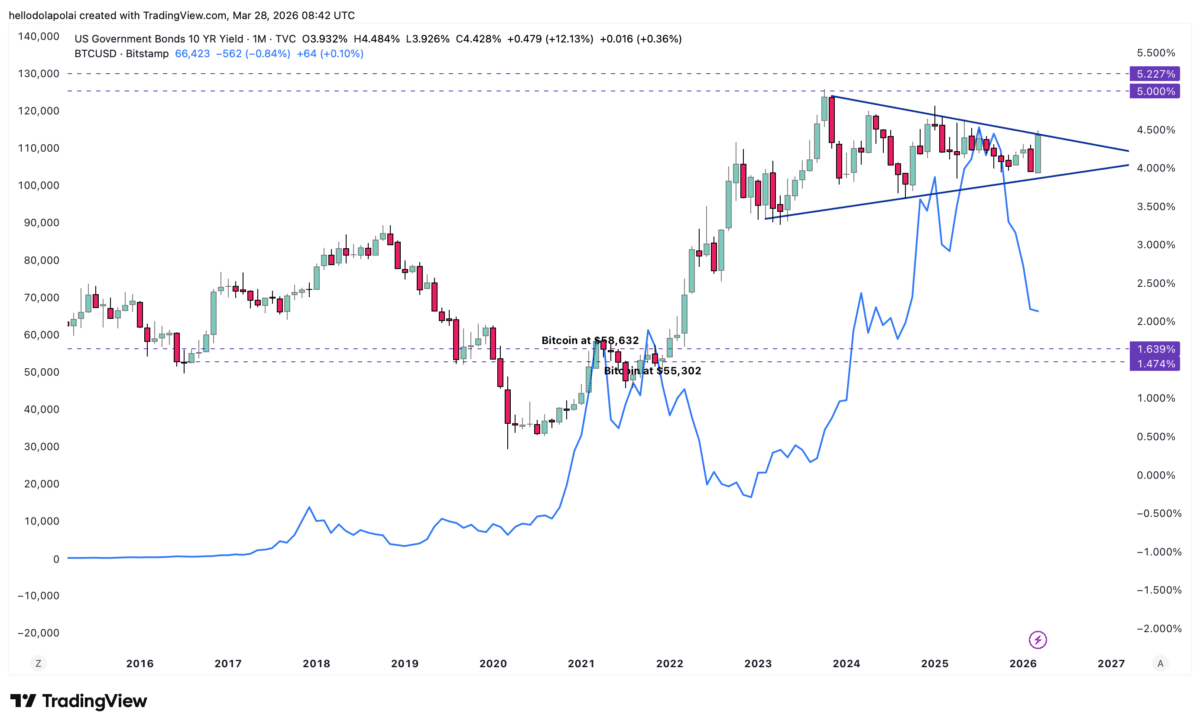
For example, between October 2021 and December 2022, yields surged from 1.45% to 3.90%, coinciding with Bitcoin’s decline from $67,000 to $16,256 during that timeframe.
If yields continue their ascent toward the 5% threshold, Bitcoin might retrace towards its next demand zone located between $58,632 and $55,302.
ETF Flows Shift as U.S Investors Reduce Risk Exposure
The sentiment among institutional investors in the U.S is also beginning to shift noticeably. Spot Bitcoin exchange-traded funds have experienced their first significant outflows in five weeks—indicating a move towards risk aversion.
Around $296 million was withdrawn from these funds over the past week alone—reversing part of the previous accumulation totaling $2.12 billion over four weeks prior. This change suggests recent buyers are starting to unwind their positions amid increasing macroeconomic risks.
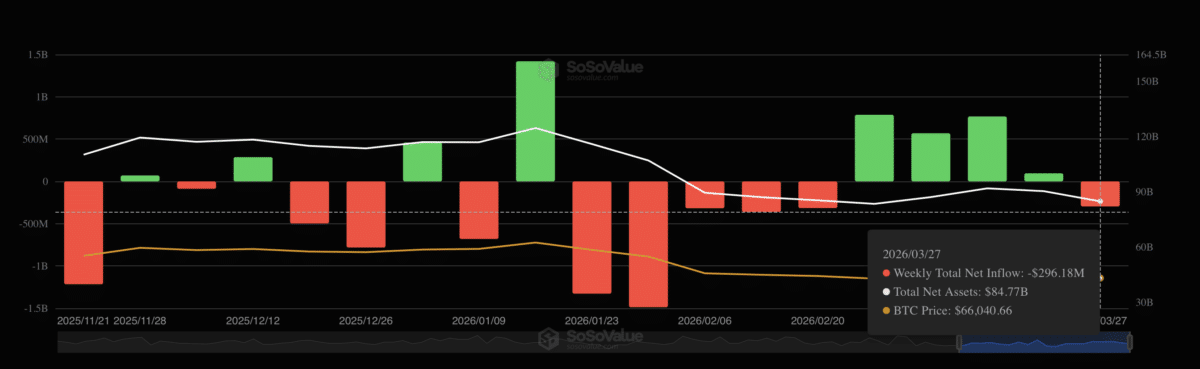
This trend was particularly evident in late February when outflows reached approximately $396 million within just two days (February 26-27), illustrating how rapidly market sentiment can reverse course.
With only a few trading sessions remaining in March now left on the calendar; continued selling pressure could solidify what appears poised for a bearish monthly close.
Surge in Oil Prices Raises Inflation Concerns
The inflation landscape remains crucially important at this juncture as crude oil prices have surged dramatically—adding strain on an already delicate macro environment.
Brent crude prices have risen sharply from about $75 at month’s start up to roughly $106 currently; meanwhile WTI crude hovered near around$101 at press time indicating supply disruptions alongside geopolitical tensions which threaten sustained high inflation levels moving forward.
Persistently elevated energy costs diminish prospects for immediate monetary easing measures thus keeping financial conditions tight while maintaining higher yield rates.
Recent analyses indicate oil-induced inflation poses direct challenges for Bitcoin especially amidst disruptions related specifically tied through Strait Hormuz . While some analysts propose potential hedging capabilities offered by bitcoin , current pricing behavior indicates strong correlations remain intact regarding broader liquidity circumstances .
Your Summary Overview
The impending breakout of U.S ten-year Treasury yield heightens risks associated with wider market revaluation processes ahead .
A wave offloading activity amongst US investors targeting bitcoin continues amidst ongoing complications arising due largely due fluctuating oil-driven inflations affecting overall economic outlooks ahead .