
Bitcoin is poised to wrap up its most robust week since September 2025, with an impressive increase of approximately 8.5%, trading above the $71,000 mark.
This surge stands out when compared to other significant assets in the market.
In recent days, Bitcoin has begun to show a slight divergence from the overall market trends. Taking BlackRock’s iShares Bitcoin Trust (IBIT) as a five-day indicator, it has risen about 3.5% and neared a one-month peak by Friday.
Conversely, the iShares Expanded Tech Software ETF (IGV), gold prices, and U.S. stocks have all experienced declines as the week progressed. This indicates that Bitcoin may be starting to weaken its traditional correlation with technology and software sectors—at least for now.
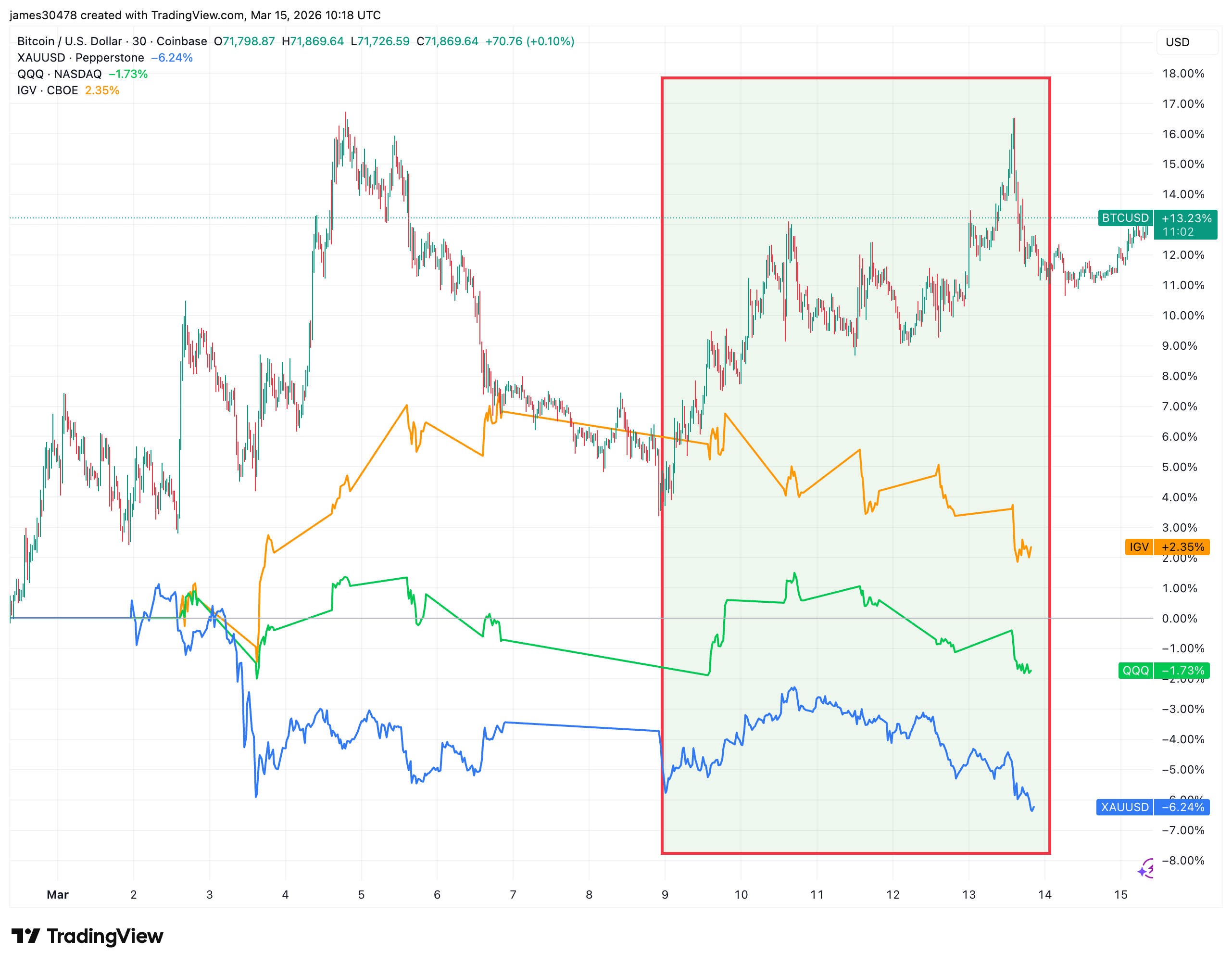
The observed divergence comes as Bitcoin starts moving away from its usual counterparts. Since hostilities erupted in the Middle East over two weeks ago, Bitcoin has surged nearly 13%, outperforming both conventional risk assets and safe havens alike during this timeframe. In contrast, IGV saw only about a 3% increase while gold dropped roughly 6%, alongside losses in U.S equities.
On a monthly scale for March thus far, Bitcoin has increased around 7%, marking its first positive month since September after enduring five consecutive months of decline where it plummeted nearly 50% from its record high in October.
The primary buyers of this leading digital asset appear to be based in the United States; institutional interest seems to be gradually returning within this region. U.S.-based spot bitcoin ETFs have reported around $1.3 billion in net inflows throughout March so far—setting them on course for their first month of net inflows since October last year.
Nonetheless, this divergence does not imply that Bitcoin is entirely out of danger yet.
The prevailing market sentiment remains notably cautious; currently reflected by an “extreme fear” rating on the crypto fear and greed index. Simultaneously, perpetual futures funding rates are still negative—a situation where short sellers compensate long positions through periodic payments aimed at aligning contract prices with spot markets—which suggests bearish sentiment dominates traders’ attitudes towards maintaining short positions actively.
This scenario might not indicate that Bitcoin is ready for takeoff just yet; however it does suggest investors are no longer viewing it solely as a risky asset class anymore.
An analysis by CoinDesk indicated that these movements could signify that Bitcoin may have evolved into a continuous leading indicator regarding how broader markets react following macroeconomic events like geopolitical conflicts—the ongoing Middle East situation exemplifies this well—as price shifts occurred prior to any changes across other asset classes when hostilities began initially; now everything else appears aligned with its price trajectory while BTC maintains stability throughout these fluctuations.
Read more: Bitcoin’s recent crash to $60k warned stocks first – now they’re following