Bitcoin’s price fluctuations have surged back to heights unseen since March 2025, reflecting the cryptocurrency’s sensitivity to market jitters. The leading digital currency has recently experienced a reduction in leverage and is currently exhibiting erratic sideways movement.
In February, Bitcoin’s volatility index climbed sharply, reaching its peak level not observed since early 2025. This heightened volatility indicates increased uncertainty among traders.
Although Bitcoin is trading within a narrow range, it remains highly unstable with swift daily price swings. Over the past week, rumors that Jane Street ceased its daily sell-offs pushed Bitcoin close to $70,000 before it retreated again toward $65,000 amid renewed selling pressure.
Elevated Volatility Persists for Bitcoin
The latest 30-day volatility estimate for Bitcoin rose to approximately 2.63%, up significantly from January’s sub-1% levels. Despite this spike in short-term fluctuations, over the last three years Bitcoin’s volatility has remained confined within a relatively stable range—suggesting maturation of its market dynamics.
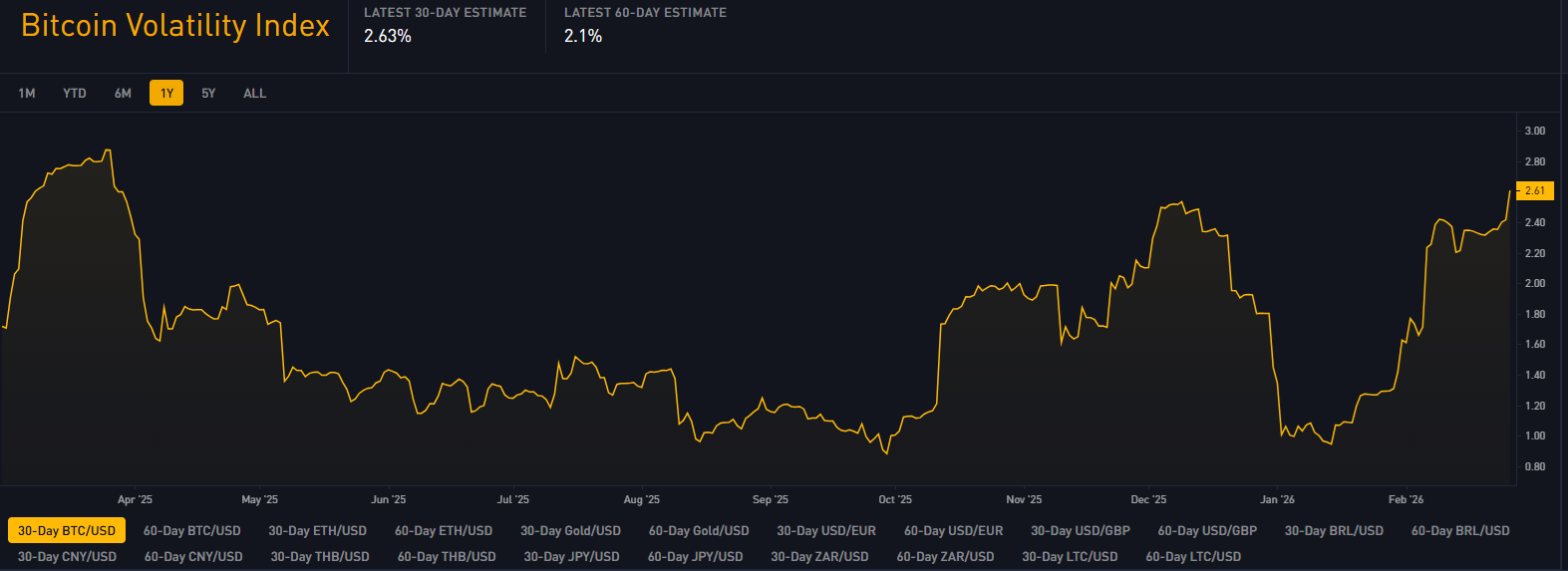
This upward trend in volatility has persisted for six consecutive weeks and mirrors conditions last seen in March of 2025. | Source: Bitbo
The futures market tied to Bitcoin remains underleveraged with open interest dropping to a one-year low near $19.74 billion. Nevertheless, this hasn’t prevented brief rallies or forced liquidations of long positions—contributing instead to ongoing price turbulence rather than prolonged stagnation.
Current indicators suggest that the market may be forming a bottom following recent sharp sell-offs that have even led some investors to question Bitcoin’s overall utility as an asset class.
Could February Close With Losses for Bitcoin?
As of February 27th, Bitcoin was trading around $65,987—a decline exceeding sixteen percent so far this month alone. For Q1 of 2026 thus far, losses surpass twenty-four percent year-to-date.
Related: Chainlink Price Analysis: LINK/USD Reaches $14 Amid Crypto Market Recovery
This monthly downturn marks an unprecedented event in Bitcoin’s history because it has never before recorded consecutive losses during both January and February periods.
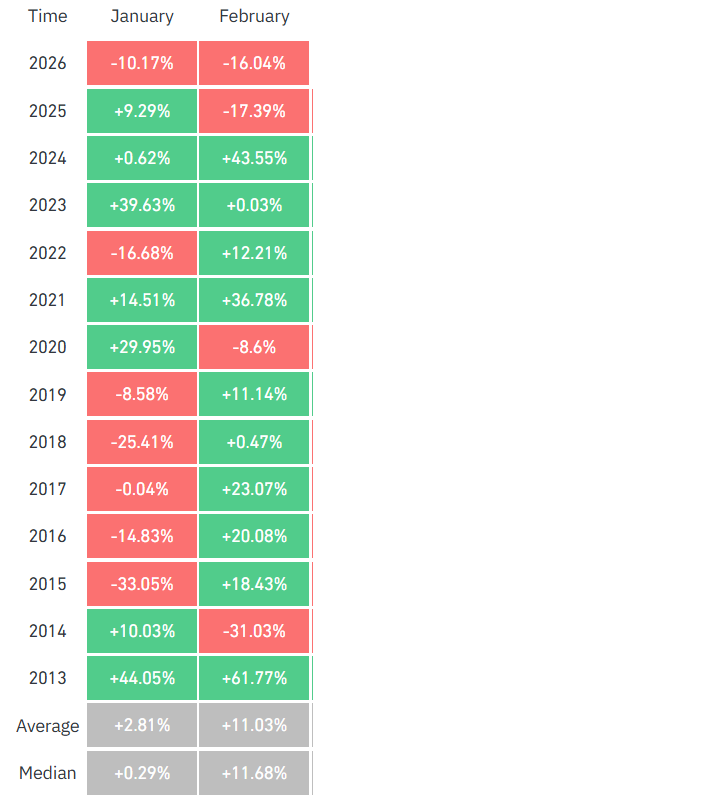
This year likely represents the first time ever where both January and February closed negatively on record for BTC trading activity.| Source: Coinglass
Typically at least one month would see some recovery rally; however, in early 2026 investor sentiment remained weak enough to extend losses across two straight months.
Throughout all of February, the crypto fear &&&; greed index stayed deep inside ‘extreme fear’ territory with no clear signs pointing toward confident buying or reduction in short positions.
Compared against other major assets, $BTC's performance lags significantly.
Gold prices surged over eighty-one percent while silver retained nearly two hundred percent gains despite corrections.
Meanwhile NASDAQ climbed twenty-one percent despite recent software stock declines triggered by AI disruption concerns.
In terms of immediate outlook, $BTC's ability quickly shift into bullish momentum remains evident.
The coin appears poised near potential bottom formation stages which could lead into accumulation phases.
Currently though there are no indications leverage rebuilding—the primary catalyst behind strong directional moves—is underway yet.
Historically speaking, $BTC's leverage tends rebuild within three-to-six months post significant corrections but October eleventh liquidation events severely undermined trust surrounding futures markets.
Consequently traders along analysts remain divided whether bitcoin faces mini bear markets ahead or will endure extended sideways consolidation lasting years longer.
Also See:
Bitcoin Purchases via MoneyGram Enabled Through Coinme ATM Operators