A recent study conducted by the cryptocurrency investment platform River Financial reveals that since 2020, over 50 nations have broadened their access to Bitcoin ($BTC).
The firm has compiled a comprehensive dataset that monitors governmental actions concerning Bitcoin over the last six years. The findings indicate a general trend towards increased acceptance and integration of cryptocurrencies rather than imposing restrictions.
Specifically, River’s extensive research highlights that at least 50 countries have enhanced their accessibility to Bitcoin through regulatory frameworks since 2020, while only four nations have tightened regulations.
Key Insights
The analysis from River Financial indicates that more than 50 countries have improved access to Bitcoin since the year 2020.
A greater number of nations are facilitating access compared to those enforcing restrictions; only four countries have tightened crypto regulations during this timeframe.
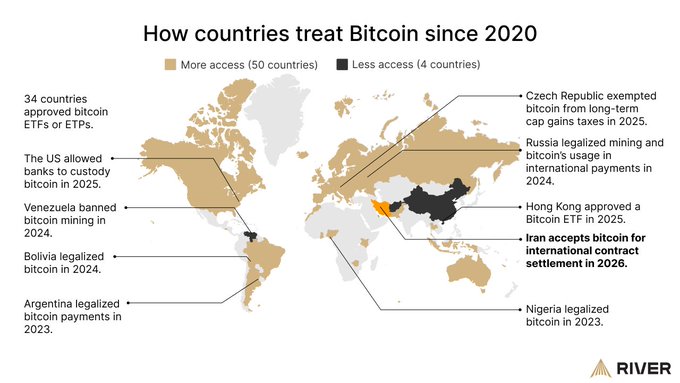
Among these pro-Bitcoin jurisdictions, 34 nations have approved Bitcoin exchange-traded products (ETPs), allowing regulated investors exposure to $BTC.
However, some limitations persist; for instance, Venezuela has prohibited Bitcoin mining starting in 2024 and China continues its stringent controls on crypto mining activities.
34 Nations Provide Access to Bitcoin ETPs
A clear sign of increasing acceptance is reflected in the swift growth of institutional investment vehicles. According to River’s findings, there are currently 34 countries that offer approved exchange-traded products (ETPs) for Bitcoin, enabling investors regulated exposure to this cryptocurrency.
Nations such as the United States, Canada, Switzerland, Germany, Sweden and Hong Kong are among those providing these investment options. These financial instruments increasingly serve as a link between traditional finance and digital assets—especially within developed markets.
Conversely, Russia has adopted an alternative approach by legalizing Bitcoin mining and permitting its use for international transactions starting in 2024—creating another avenue for state-level integration into cryptocurrency systems.
Pivotal Regulatory Developments
Certain policy decisions illustrated in accompanying charts signify critical milestones regarding how mainstream finance is integrating with Bitcoin. In the United States specifically regulators permitted banks to hold custody of Bitcoins beginning in 2025—allowing financial institutions greater capacity for managing client assets related directly or indirectly with cryptocurrencies.
In Europe meanwhile—the Czech Republic introduced tax reforms exempting long-term holdings of Bitcoins from capital gains taxes—a move indicative of supportive policies toward investments involving digital assets.
Evolving Markets Foster Adoption
The data also underscores an emerging trend among developing economies where governments are progressively legitimizing the use of Bitcoins within their jurisdictions.
An example includes Nigeria which legalized bitcoin usage back in early-2023—a notable step considering its vast tech-savvy populace; similarly Argentina followed suit later on during same year by permitting payments via bitcoins as part broader economic reforms aimed stabilizing financial systems across nation’s landscape!
Bolivia too reversed previous prohibitions against bitcoin thus officially legalizing it come mid-2024 showcasing yet another case regulatory change occurring throughout Latin America!
This series shifts suggest certain states grappling inflationary pressures currency volatility limited global financing may exhibit willingness experiment alternative monetary structures!
Restrictions Remain Minimal
Despite overall increase accessibility few governments still impose various limitations.
For instance Venezuela announced ban on all forms bitcoin-mining activities commencing early-20XX citing concerns surrounding energy consumption alongside necessary oversight measures while China continues enforce strict controls upon similar operations leading significant portions global miners relocating elsewhere!
Consequently United States now hosts largest share worldwide activity underscoring how different regulatory environments can reshape industry geography itself.
Nonetheless Rivers’ data indicates restrictive policies remain relatively rare compared growing number initiatives expanding overall accessibility globally towards bitcoins!
Iran Accepts BTC Payments For Oil Transit
This analysis gained renewed attention amid reports highlighting Iran utilizing bitcoins international trade channels particularly requiring vessels pay transit tolls using said currency pass through Strait Hormuz one world’s most crucial oil shipping routes.
In response development Rivers posted sarcastic message social media noting irony choice opting utilize btc instead hundred plus traditional currencies payment method despite frequent criticism labeling it ponzi scheme warning potential threats posed quantum computing yet still nation-state chooses employ settlement practices around them !
This analysis gained renewed attention amid reports highlighting Iran utilizing bitcoins international trade channels particularly requiring vessels pay transit tolls using said currency pass through Strait Hormuz one world’s most crucial oil shipping routes.
In response development Rivers posted sarcastic message social media noting irony choice opting utilize btc instead hundred plus traditional currencies payment method despite frequent criticism labeling it ponzi scheme warning potential threats posed quantum computing yet still nation-state chooses employ settlement practices around them !