
Traders dealing in Bitcoin (BTC), currently valued at $92,565.70, might consider adding the Japanese yen (JPY) to their trading strategies. This is particularly relevant as the relationship between Bitcoin and the yen has reached unprecedented levels over the past three months.
According to TradingView data, the correlation coefficient between BTC and Pepperstone’s JPY index has surged to an all-time high of 0.86 over a 90-day period.
This strong correlation indicates that both assets have been closely aligned in their movements; specifically, approximately 73% of Bitcoin’s price fluctuations during this timeframe reflect changes in the yen. This percentage—known as the coefficient of determination—is derived from squaring the correlation coefficient and provides insight into how well one variable predicts another.
Pepperstone’s JPY Index, referred to as JPYX, serves as a contract for difference (CFD) that gauges the strength of the Japanese Yen against a group of four major currencies: EUR, USD, AUD, and NZD.
The close association between Bitcoin and yen suggests that what was once seen as an independent cryptocurrency is now significantly influenced by shifts in Japanese currency values. Over recent months, BTC appears less effective as a portfolio diversifier; instead of acting like “digital gold,” it seems more like a leveraged bet on movements within Japan’s economy.
However, traders should remain aware that correlations among cryptocurrencies and traditional financial assets such as stocks or currencies can be fleeting.
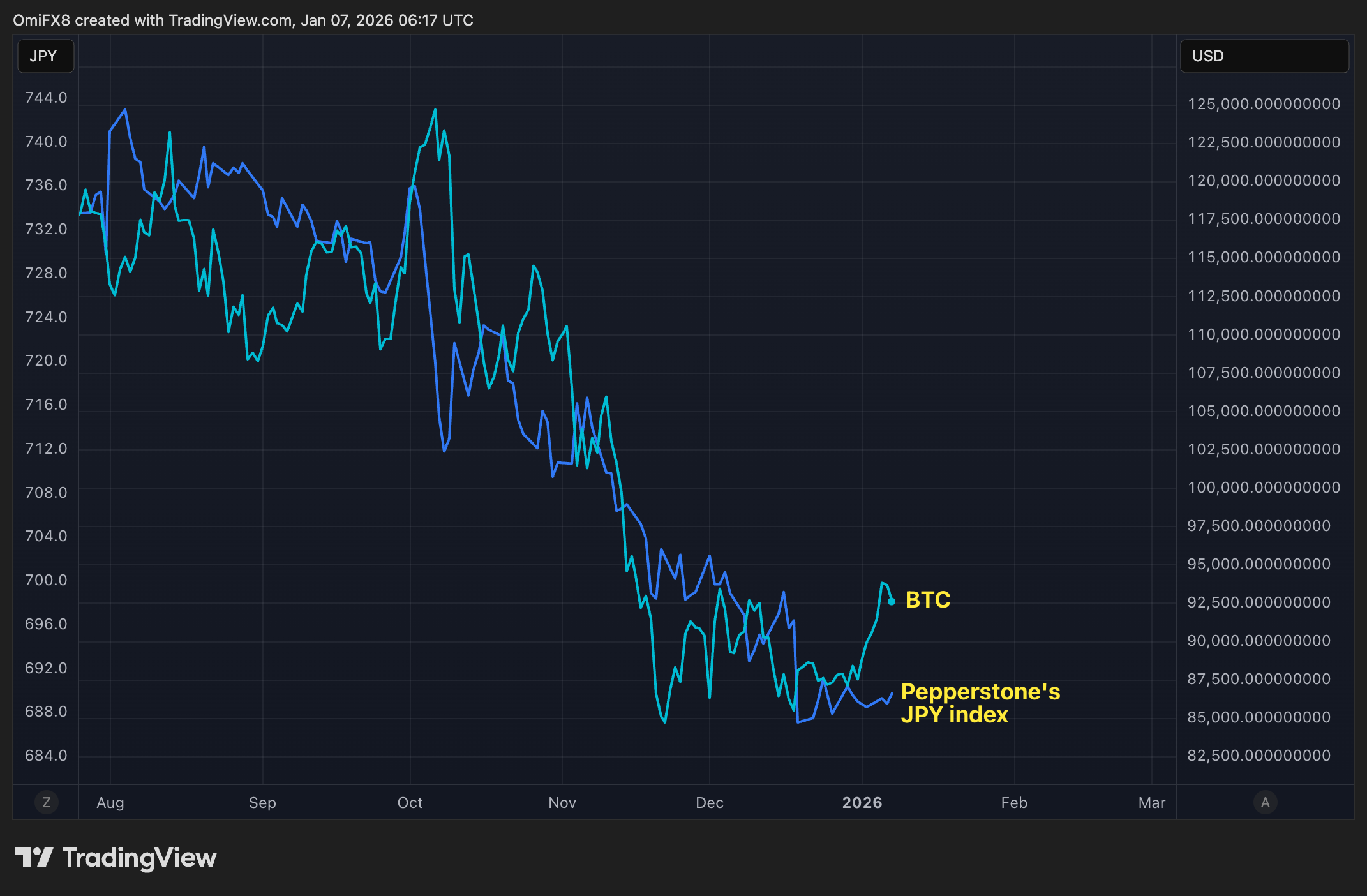
BTC has been closely linked with JPY since October 2025. (TradingView)
In early October last year, BTC reached its peak but subsequently faced significant declines over two months while experiencing parallel downturns alongside JPY index trends which began stabilizing around mid-December.
The yen itself has been on a downward trajectory since April last year due to rising concerns regarding fiscal debt sustainability leading to increased yields on Japanese government bonds. With Japan’s debt-to-GDP ratio standing at an alarming 240%, it ranks among some of the most indebted countries globally; however much of this debt is owned by domestic stakeholders.
This high level of national debt places Japan’s central bank in a challenging position: increasing interest rates would escalate costs associated with servicing this debt further complicating fiscal stability while maintaining low rates risks triggering severe depreciation for its currency.
Some analysts suggest that signs indicating fiscal distress are already evident within currency markets through significant weakening observed in yen value; they posit only potential economic downturns within U.S markets could provide any respite for Japan moving forward.