Adam Back, the CEO of Blockstream, has openly criticized Nic Carter, a founding partner at Castle Island Ventures, for heightening fears about the risks quantum computing poses to Bitcoin.
Back expressed his frustration on X (formerly Twitter) last Friday, accusing Carter of making uninformed statements that could unnecessarily influence market sentiment. This came after Carter shared insights on why Castle Island Ventures decided to invest in Project Eleven—a startup dedicated to safeguarding Bitcoin and other cryptocurrencies against potential quantum computing threats.
According to Back, the Bitcoin community is not ignoring the challenges posed by quantum technology; rather, it is quietly conducting research and developing protective measures. In contrast, Carter disagreed with this viewpoint and claimed that many developers within the Bitcoin ecosystem remain in complete denial regarding quantum computing’s dangers.

Source: Pledditor
The investment by Castle Island Ventures recently gained renewed attention across social media platforms focused on Bitcoin discussions. However, Carter initially revealed this involvement in a Substack article dated October 20th. He emphasized transparency by stating he mentioned it right at the beginning of his main piece addressing quantum concerns.
Carter Shares How He Became “Quantum Pilled”
Carter explained that his decision to back Project Eleven was influenced heavily by its CEO Alex Pruden who convinced him about the seriousness of quantum threats facing blockchain networks. “I became deeply worried about how quantum advancements could impact blockchains,” said Carter. “Putting my money where my beliefs lie has always been my approach.”
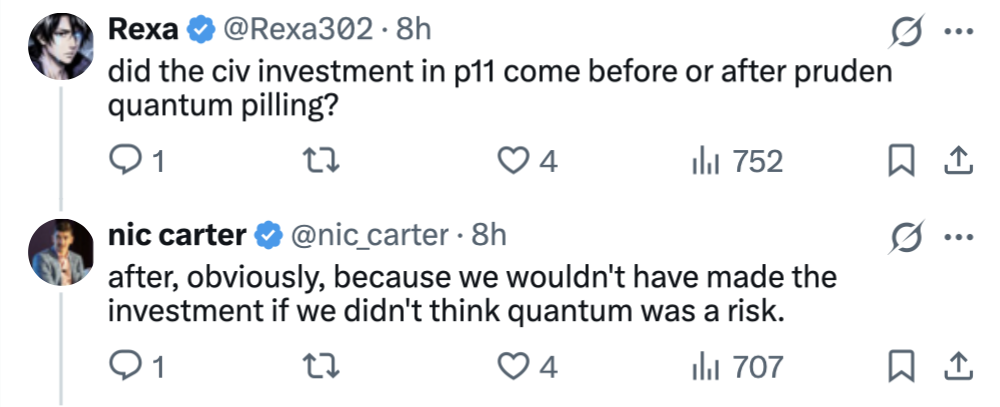
Source: Nic Carter
Carter anticipated criticism from skeptics and thus made sure to clearly disclose his financial stake related to this issue upfront.
He outlined several reasons why he views quantum computing as a tangible threat: governments are preparing for a post-quantum era, Bitcoin itself represents an attractive target for achieving ‘quantum supremacy,’ and investments into companies working on quantum technologies continue growing rapidly.
Carter is not alone among influential voices raising alarms publicly about how soon—and seriously—quantum computers might endanger Bitcoin’s security protocols.
The Quantum Threat Could Arrive Within Two Years According To Some Experts
Charles Edwards from Capriole Investments warned via X recently that unless upgrades toward post-quantum cryptography occur promptly within the next two-to-nine years timeframe, Bitcoin could face significant vulnerabilities due to emerging powerful computational capabilities.
On the other hand though there are those who downplay these concerns somewhat:
Related reading: Anxiety over bitcoin’s exposure to future Quantum risk weighs heavily on price – Executives weigh in
Billionaire entrepreneur Kevin O’Leary told Cointelegraph Magazine that leveraging quantum computers specifically for breaking into bitcoin networks wouldn’t be their most efficient application—instead highlighting fields like AI-driven medical breakthroughs as better uses of such advanced machines.
Meanwhile Adam Back reaffirmed recently that while preparing bitcoin systems against future ‘quantum attacks’ remains wise strategy planning—it isn’t an immediate threat given current technological limitations which still face substantial R&aD hurdles despite progress being made over time.
“““𠇋ig questions: Would bitcoin survive a 10-year power outage?””