BlackRock’s iShares Bitcoin Trust (IBIT) has recently experienced its inaugural death cross, marking a significant technical event for the largest spot Bitcoin ETF in existence.
Data collected by Finbold on December 12 indicates that the short-term moving average of the ETF has dipped below its long-term trend line. This occurrence is typically interpreted as a sign of diminishing momentum and an increase in downside risk.
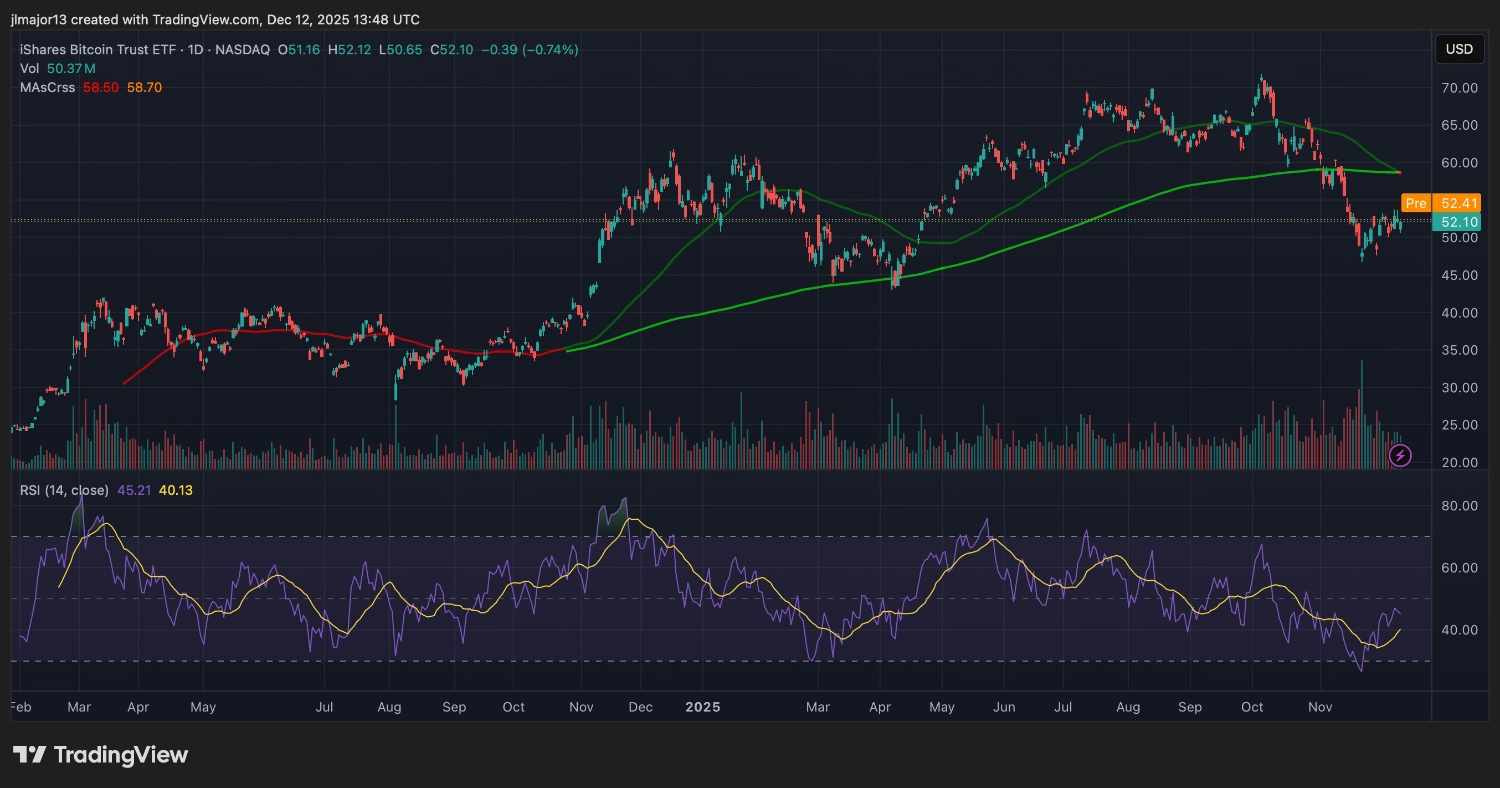
This development follows IBIT’s inability to maintain its summer peak prices, with values now falling into the low $50 range after reaching over $70 earlier this year. Although the ETF remains significantly above its launch levels from early 2024, this crossover indicates a notable change in trend dynamics rather than just a standard pullback.
Technical Analysis of BlackRock Bitcoin ETF
From a technical standpoint, this death cross signifies ongoing selling pressure observed over recent weeks instead of being attributed to one sharp decline. Since October, IBIT has consistently recorded lower highs, and this loss of upward momentum is evident across both moving averages and relative strength indicators.
The 14-day Relative Strength Index (RSI) has been lingering in the low 40s, indicating bearish momentum without entering deeply oversold territory. Such positioning often correlates with gradual declines or prolonged consolidation phases rather than an immediate turnaround.
This marks the first instance where such a signal has emerged since IBIT’s inception, adding symbolic significance to it. However, opinions among market participants are split regarding its practical implications. In traditional equity markets, death crosses tend to be lagging indicators that manifest after much of the downward movement has already occurred.
For products linked to Bitcoin, this signal might represent broader cooling trends within the cryptocurrency market following a robust first half of the year instead of signaling an outright bearish regime shift.
While encountering a death cross does not assure further losses will follow suit, it underscores that upward momentum appears stalled at present. To counteract this signal effectively, IBIT would need to stabilize and reclaim essential moving averages accompanied by renewed trading volume—an outcome that hasn’t yet been realized.
As Bitcoin ETFs evolve and draw interest from long-term investors more consistently, technical signals like these may increasingly mirror sentiment changes among institutional players rather than merely reflecting short-term speculative movements alone.