
Follow Us
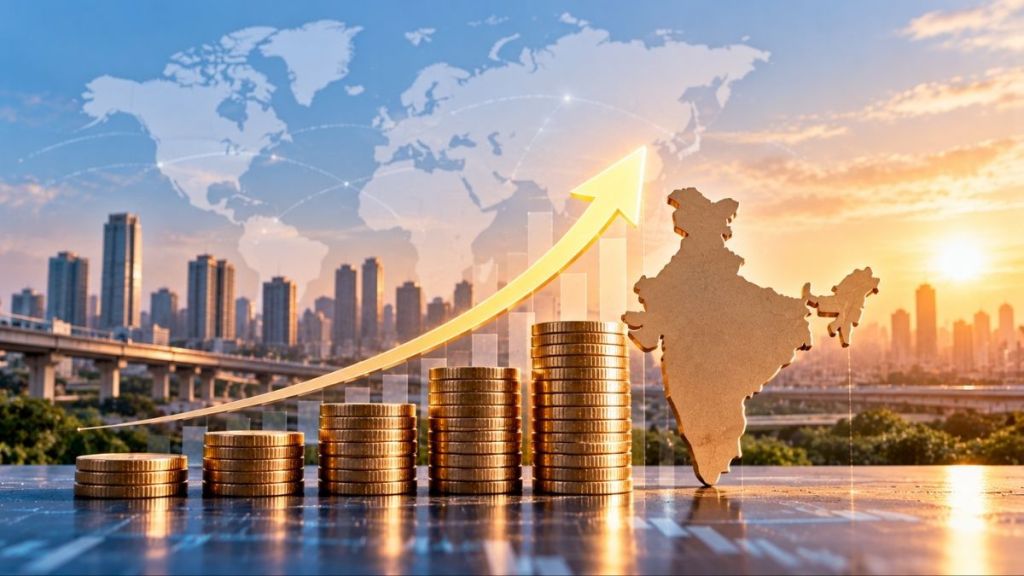
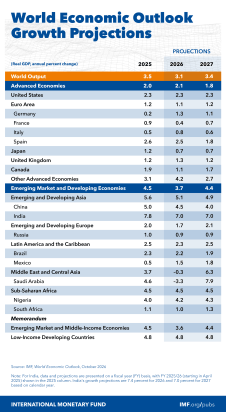
India is projected to overtake Japan and become the world’s fourth-largest economy in 2027, with nominal gross domestic product (GDP) reaching about $4.52 trillion, according to the International Monetary Fund’s (IMF) October 2026 World Economic Outlook projections.
The United States is expected to remain the world’s largest economy, followed by China and Germany. India is projected to move into fourth place, while Japan is expected to fall to sixth, behind the United Kingdom, reported AFP citing IMF data.
The projection comes as India maintains strong economic growth while Japan faces slower expansion, an ageing population and higher import costs. The IMF has raised its forecast for India’s economic growth in 2026 to 7%, AFP reported.
ALSO READSocial security benefits to rise 3.6% in 2027, adding $75 to average monthly payments
The estimates are available in the IMF’s World Economic Outlook database, which is updated twice a year, in April and October, and includes economic data and projections for countries worldwide.
The ranking is based on nominal GDP, which measures the value of goods and services at current market prices. It differs from GDP measured at purchasing power parity (PPP), which adjusts for differences in prices between countries.
Why is India projected to overtake Japan?
The IMF forecasts India’s nominal GDP at about $4.52 trillion in 2027. The IMF raised its forecast for India’s economic growth in 2026 to 7%, according to AFP report.
India entered the latest energy price shock with strong economic fundamentals, including robust growth, fiscal discipline and substantial foreign exchange reserves, Krishna Srinivasan, director of the IMF’s Asia and Pacific Department, told Dawn.
“India entered this with very strong fundamentals,” Srinivasan said. “Growth was strong, fiscal prudence was pretty much enshrined, they had lots of reserves and so on. And so in that context, they have responded well to the shock,” Srinivasan said, as reported by Dawn.
However, higher energy prices and global uncertainty remain risks for India, particularly because costlier imports can increase pressure on inflation and the trade balance.
Japan’s economy, meanwhile, is projected to grow by 0.7% in 2026, compared with India’s 7% forecast, AFP reported.
ALSO READUS job cuts plunge 40%: Why AI is still putting workers on the chopping block
Japan relies heavily on imported energy and raw materials. Higher energy prices and a weaker yen have increased import costs, putting pressure on households and businesses. Its ageing population also poses a longer-term challenge by limiting workforce growth and weighing on economic expansion.
Srinivasan said Japan had benefited from increased investment linked to artificial intelligence, although the gains had not been as strong as in some other Asian economies, Dawn reported.
The projected change in rankings does not necessarily mean Japan’s economy will shrink in absolute terms. Nominal GDP rankings are measured in US dollars, so exchange-rate movements can affect a country’s position alongside changes in economic output and prices.
What would India’s rise mean for global economy?
If the forecast holds, India will move ahead of Japan in the global nominal GDP ranking in 2027, marking a further shift in the relative size of major economies.
However, a higher GDP ranking does not automatically translate into higher incomes or better living standards for every citizen. Nominal GDP measures the overall value of economic output rather than how income and wealth are distributed across a population.
The projection is also subject to change as economic growth, inflation, exchange rates, energy prices and global conditions evolve. Changes in these factors could affect the size of economies in dollar terms and alter their relative rankings.
For India, sustaining growth amid higher energy costs and global uncertainty will remain important. Japan faces the challenge of reviving economic expansion while managing import costs and the effects of an ageing population.
For now, the IMF’s October 2026 projections put India on course to become the world’s fourth-largest economy in 2027, with nominal GDP of about $4.52 trillion. Japan is projected to fall to sixth place, although the final rankings will depend on how both economies perform.
TOPICSeconomy newsGDPIMFWorld NewsThis article was first uploaded on October fifteen, twenty twenty-six, at fifty-one minutes past six in the evening. © IE Online Media Services (P) Ltd