
Follow Us
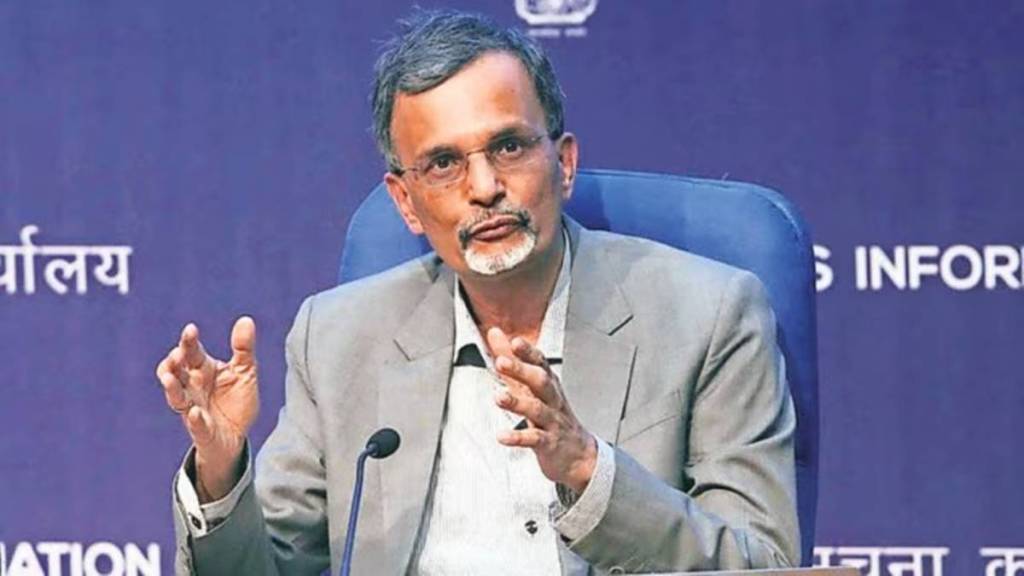
India’s economic growth remains resilient despite global uncertainties, with strong domestic demand, improving investment activity and robust exports providing support to the economy, Chief Economic Adviser Anantha Nageswaran said on Monday.
“As of now, strong domestic momentum and export performance have combined to deliver another quarter of very strong growth,” Nageswaran said, adding that India was now reaping the benefits of structural reforms undertaken over the past 12 years.
The Indian economy remained resilient in Q1 with GDP growth at a better-than-expected 7.8%, despite a challenging global environment. Analysts are now forecasting GDP growth to be around 7.3-7.5% in FY27 as against less than 7% estimated earlier.
ALSO READIndia’s Q1 GDP data today: Can growth accelerate to 7% despite global headwinds?
“What we are witnessing is continued resilience in India’s growth performance. I think that is the key message here,” he said, adding that the strength reflected in quarterly GDP data was supported by high-frequency indicators.
He said manufacturing and services had performed well in the first quarter, while agriculture had also contributed to growth. Private consumption remained healthy, while early signs of a pickup in private-sector investment were visible in some sectors.
“Bank credit growth also reinforces this assessment, indicating that more credit is available and that more investment activity is taking place across the country,” he said.
Nageswaran said merchandise exports, excluding oil, gold and gems and jewellery, had grown strongly in the opening months of the financial year. The performance, he said, suggested that India’s export growth was becoming more diversified.
ALSO READGeopolitics meets bad weather: How India faces a double squeeze on food prices
Nageswaran, however, flagged risks from the ongoing geopolitical tensions in West Asia, particularly their potential impact on energy prices and global demand. While the impact on crude oil prices has so far been more muted than expected, prolonged disruptions could keep Brent crude prices elevated.
“Globally, however, higher petroleum-product prices could pose a risk to global demand and, therefore, to the prospects for export growth in the coming year,” he said.
Nageswaran said India would need to continue diversifying its exports while maintaining cost competitiveness.
On agriculture, he said the monsoon outlook had improved from the situation at the end of June, with sowing activity only marginally below last year’s levels. This, he said, augured well for agricultural output, although the performance of the rabi crop would remain important.
Inflation, meanwhile, remained “reasonably well behaved” despite higher energy and food prices. CPI inflation was still within the central bank’s target range, he said.
Looking ahead, Nageswaran said domestic momentum remained strong, but global uncertainties could pose challenges. Interest rates, energy and commodity supplies, food prices and trade barriers would need to be closely monitored.
TOPICSECONOMYGDP growthThis article was first uploaded on August thirty-one, twenty twenty-six, at eight minutes past eight in the night. © The Indian Express (P) Ltd