
Follow Us
India could see its weakest monsoon in nearly two decades this year, with seasonal rainfall now expected to end about 15% below the long-term average as El Nino strengthens.
The forecast would make 2026 India’s weakest monsoon since 2009, Reuters reported, citing two senior sources in the weather department. It is also significantly below the India Meteorological Department’s earlier projection of an 8% deficit. The IMD is expected to issue its official September forecast at the end of August.
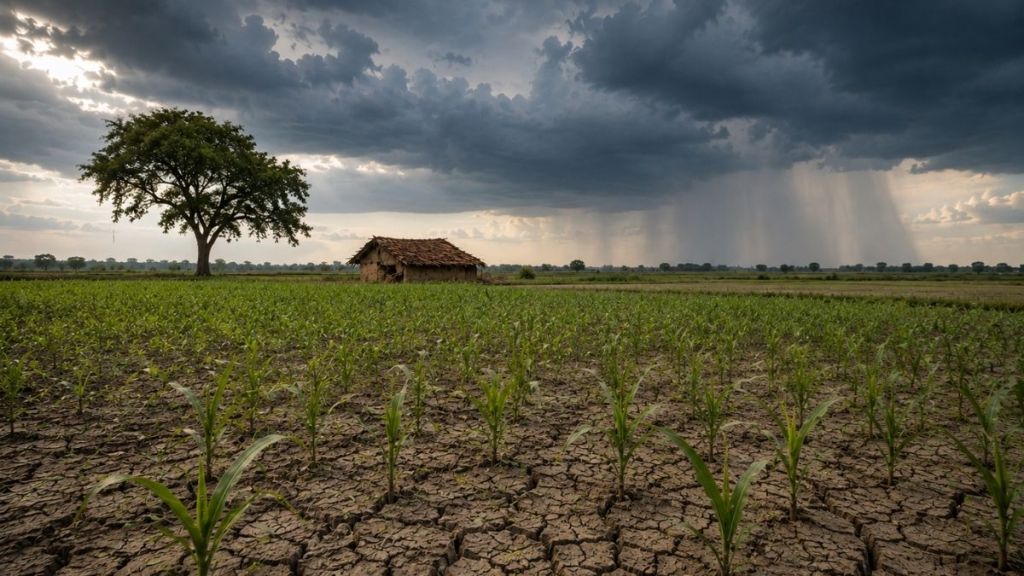
The immediate concern is September, when summer-sown crops need moisture during a crucial stage of development. Rainfall was already 13% below normal between June 1 and August 24, according to Reuters report.
The monsoon accounts for about 70% of India’s annual rainfall, making a weak finish relevant not only for agriculture but also for food prices and rural incomes.
Which crops are most at risk?
The biggest concern is for Kharif crops that are currently growing and entering important stages of development. Cotton, soybean, corn and pulses could face moisture stress if September rainfall remains weak, Reuters reported.
The impact could extend into the next crop season. Poor September rainfall could leave less moisture in the soil for winter-sown crops such as wheat and rapeseed.
ALSO READSuper El Nino threatens Latin America’s food exports: How it could impact global food supplies
The government has already identified areas particularly vulnerable to a weak monsoon. In June, the Agriculture Ministry said about 315 districts could be affected, with 111 classified as high priority because irrigation coverage was below 25%.
States have been advised to consider short-duration and lower-water crops in vulnerable areas, with pulses, millets and oilseeds among the crops receiving attention.
The measures are designed to reduce the impact of a rainfall shortfall. They do not eliminate the risk of lower yields.
Could food prices rise?
A weak monsoon can affect food prices if lower rainfall translates into lower crop production, but the extent of the impact will depend on the final rainfall pattern, regional crop conditions and available stocks.
India’s rainfall performance has already been uneven. June rainfall was 35.4% below average, July recorded a 1% surplus, while August rainfall was 15% below average through August 24, according to Reuters report.
That means the all-India deficit does not tell the whole story. Some regions could receive adequate rainfall while others face significant moisture stress.
For consumers, therefore, a weak monsoon does not automatically mean that prices of all food items will rise. The impact will differ by crop and region.
What does this mean for rural incomes?
Farm incomes are vulnerable because a weak monsoon can affect both crop yields and the amount of water available for farming.
The Agriculture Ministry has already prepared district-level contingency plans covering alternative crops, crop diversification and water management. It has also identified additional seed requirements in areas where resowing could become necessary.
ALSO READChina opens Arctic shipping route to Europe amid Hormuz crisis: Can ‘Ice Silk Road’ reduce reliance on global chokepoints?
Government schemes such as the Pradhan Mantri Fasal Bima Yojana, Kisan Credit Card and PM-KISAN are part of the broader support framework for farmers.
But the latest rainfall forecast raises a different question: will these measures be enough if the monsoon ends 15% below normal? The answer will depend heavily on where the remaining rainfall occurs and whether farmers in vulnerable areas receive enough moisture during September.
Financial Express Digital has previously reported that a weak monsoon could affect rural demand, including the automobile and FMCG sectors.
Why is El Nino raising concern?
El Nino is a climate pattern associated with warmer-than-normal sea-surface temperatures in the central and eastern equatorial Pacific. It can influence rainfall and temperature patterns around the world.
The Indian government said on July 30 that El Nino conditions had strengthened from weak levels in June to moderate levels in July. It also warned that the phenomenon could become very strong during October-December.
However, the government has said that El Nino is not the only factor determining India’s rainfall. Its impact depends on the interaction of ocean and atmospheric conditions.
The latest concern is therefore not simply that El Nino exists, but that its strengthening could coincide with a weak end to India’s monsoon season.
Weather officials expect September rainfall to be particularly important, with most parts of India except some eastern states potentially receiving below-average rainfall, reported Reuters.
“We are witnessing the impact of El Nino on monsoon rainfall,” an IMD official said, as reported by Reuters.
For India, the next few weeks will determine how much of the current rainfall deficit becomes a crop problem, and whether the effects extend into food prices and rural incomes.
TOPICSEl NinoMonsoonThis article was first uploaded on August twenty-five, twenty twenty-six, at forty-two minutes past six in the evening. © IE Online Media Services (P) Ltd