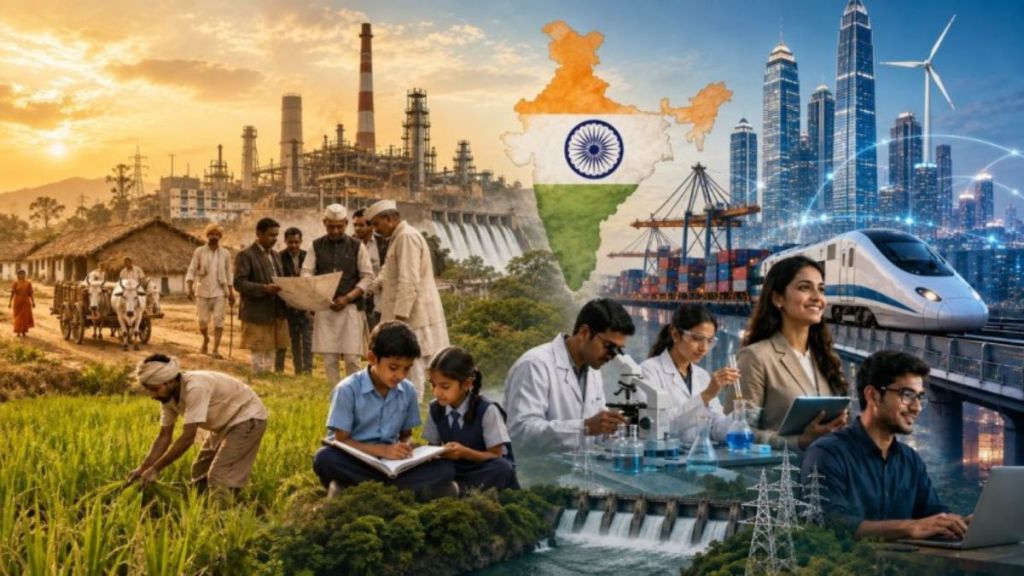
When Jawaharlal Nehru addressed the Constituent Assembly in New Delhi on the night of August 14-15, 1947, India was acquiring political freedom while confronting enormous developmental deficits.
“The service of India means the service of the millions who suffer,” Nehru told the Assembly, according to the Nehru Archive is an ongoing digital library project of Jawaharlal Nehru’s writings and speeches. “It means the ending of poverty and ignorance and disease and inequality of opportunity.” The speech, A Tryst with Destiny, was delivered at the midnight session of the Constituent Assembly on the eve of Independence.
Those four objectives provide a useful framework for looking at India’s economic journey — not from 1947, when comparable economic data is difficult to establish, but from 1951, when the first Census of independent India provided a statistical baseline.
The 1951 Census recorded a population of 36.1 crore and a literacy rate of 18.33%. India’s life expectancy at birth was about 32.1 years in the 1951 period.
ALSO READIndia at 80: Services now make up 48% of exports – how did the nation build this global powerhouse?
In the 75 years since, India’s population has grown to 1.48 billion. According to the International Monetary Fund (IMF), its nominal GDP now exceeds $4 trillion, while GDP per capita is estimated at about $2,813.
“This plan forces people to think not only of objectives but of how to achieve them, and of the resources at our command,” he said.
The sentence captures the logic of the early Republic’s economic model. Development was not expected to emerge automatically. The state would identify priorities, assess scarce resources and direct investment towards areas it considered essential.
The initial emphasis on agriculture reflected the economic conditions of the time. In 1950-51, agriculture alone accounted for 52.2% of India’s GDP, according to historical government data. But the strategy soon widened.
From agriculture to heavy industry
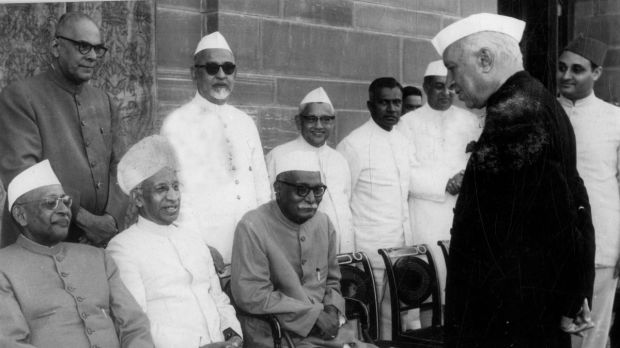
The Second Five-Year Plan marked a major shift towards industrialisation.
The Industrial Policy Resolution of April 15, 1956 said it was essential “to accelerate the rate of economic growth and to speed up industrialisation” and specifically called for developing heavy industries and machine-making industries. It also envisaged the State assuming a “predominant and direct responsibility” for new industrial undertakings while leaving space for private enterprise.
The approach built productive capabilities that had been limited at Independence — steel, power, engineering, transport and other basic industries.
But India’s eventual economic structure did not follow the classic development sequence in which workers move predominantly from agriculture into manufacturing before services become dominant.
Instead, India’s economy evolved into a services-led model.
By FY25, services accounted for 52.9% of GVA, compared with 25.8% for the secondary sector and 21.4% for the primary sector, according to MoSPI.
Manufacturing did grow, but it did not become the dominant economic engine that the industrial strategy of the 1950s might have implied.
The scientific bet
The early economic blueprint was also about building capabilities whose returns could take decades to appear.
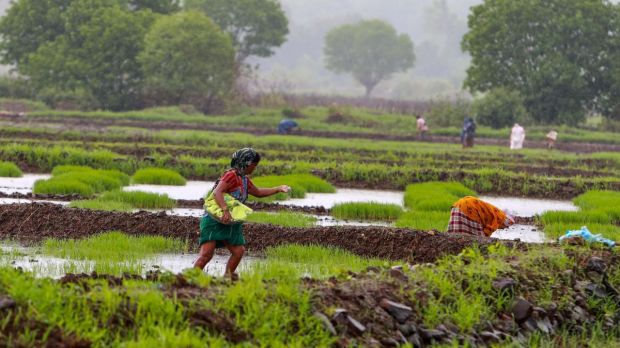
At the inauguration of the new buildings of the Central Laboratories for Scientific and Industrial Research in Hyderabad on January 2, 1954, Nehru made the connection between scientific capability and national development explicit.
“All our officers and administrators who run the country with skill and ability put together, cannot take the country anywhere unless there is scientific progress,” he said, according to Nehru Archive. “Now it is the engineers and the scientists who are indispensable,” he added.
Nehru was speaking about more than laboratories and buildings. He stressed the importance of training and human capability in scientific development.
That investment in scientific and technical capacity did not mechanically produce India’s later technology and services boom. But it created institutions, skills and capabilities that became part of the foundation on which later technology-intensive sectors could develop.
The human-development test
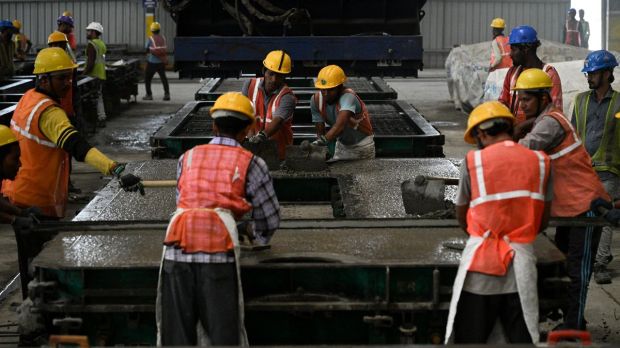
The most visible gains are not confined to GDP. Literacy rose from 18.33% in 1951 to 80.9% among people aged seven and above in the 2023-24 PLFS, according to the Ministry of Statistics and Programme Implementation.
Life expectancy at birth increased from about 32.1 years in 1951 to 72 years in 2024, according to Government of India historical data and the World Bank’s latest figures.
These are not marginal changes. They represent a fundamental transformation in the basic conditions under which Indians live.
How external conditions have developed from Fx scarce to surplus
India’s foreign-exchange reserves stood at ₹1,029 crore in 1950-51. Government historical data records that figure in its long-run foreign-exchange series.
On April 3, 2026, India’s reserves stood at $697.1 billion, according to RBI Governor Sanjay Malhotra. He said the reserves provided about 11 months of import cover.
Foreign-exchange scarcity was a recurring constraint on India’s early development. Today, the country has a substantially larger buffer against external shocks.
The opportunity problem
This brings the story back to Nehru’s fourth objective: equality of opportunity.
On December 7, 1957, while addressing workers in Madras, Nehru explained what he meant by the socialist pattern of society.
“Our ideal is that every man, woman and child in India should have equal opportunities,” he said.
He immediately qualified what he meant: the objective was not to make everyone identical, but to ensure that every person had the opportunity to develop their abilities through education, training and work. That distinction remains relevant in 2026.
India has created an enormous macroeconomic scale. The IMF estimates nominal GDP at about $4.15 trillion, but GDP per capita remains around $2,813.
ALSO READIndia vs Bangladesh: Who is really better off? GDP per capita tells only part of the story
The economy has also moved away from agriculture much faster than the labour market has moved away from it.
Agriculture accounted for 52.2% of GDP in 1950-51. Today, the primary sector accounts for 21.4% of GVA, while agriculture remains a major source of employment.
That gap is central to India’s next stage of development: moving workers into more productive and better-paying employment rather than merely moving economic output away from agriculture.
From planning to liberalisation
India did not follow Nehru’s blueprint in a straight line. The economic model changed substantially after the 1991 balance-of-payments crisis.
The reforms that followed reduced industrial licensing, liberalised trade and investment and opened more areas to private-sector participation. The Economic Survey later described the reforms as a move towards greater competition and private participation.
This was not simply the abandonment of the earlier model. The productive capacity created during the planning decades — industrial infrastructure, public institutions, technical education and scientific capabilities — became part of the base on which the post-1991 economy was built.
One could say that the engine of economic progression changed but the foundation did not disappear.
So, what did 75 years actually change?
The cleanest way to understand India’s economic journey is to separate capacity from productivity.
In 1951, the challenge was to build capacity: enough food, power, industry, infrastructure, education and institutions for a newly independent country.
In 2026, India has far more of that capacity. It has a roughly $4.15-trillion economy, 80.9% literacy among people aged seven and above, life expectancy of 72 years and nearly $700 billion in foreign-exchange reserves.
The challenge is now productivity — how to turn a much larger economy and much larger pool of human capital into higher incomes, better jobs and wider economic mobility.
That is where India’s economic journey has moved beyond Nehru’s original blueprint.
In 1947, Nehru spoke of ending “poverty and ignorance and disease and inequality of opportunity.” Nearly eight decades later, India has made enormous progress on the first three.
The unfinished part is the fourth: ensuring that the economic capacity built over 75 years translates into opportunity that is broad enough, productive enough and accessible enough for the millions who now constitute the world’s largest population.
TOPICSagricultureeducationGDPIndian EconomyJawaharlal NehruManufacturing + 0 MoreThis article was first uploaded on August fifteen, twenty twenty-six, at fifty-six minutes past one in the afternoon. © IE Online Media Services (P) Ltd