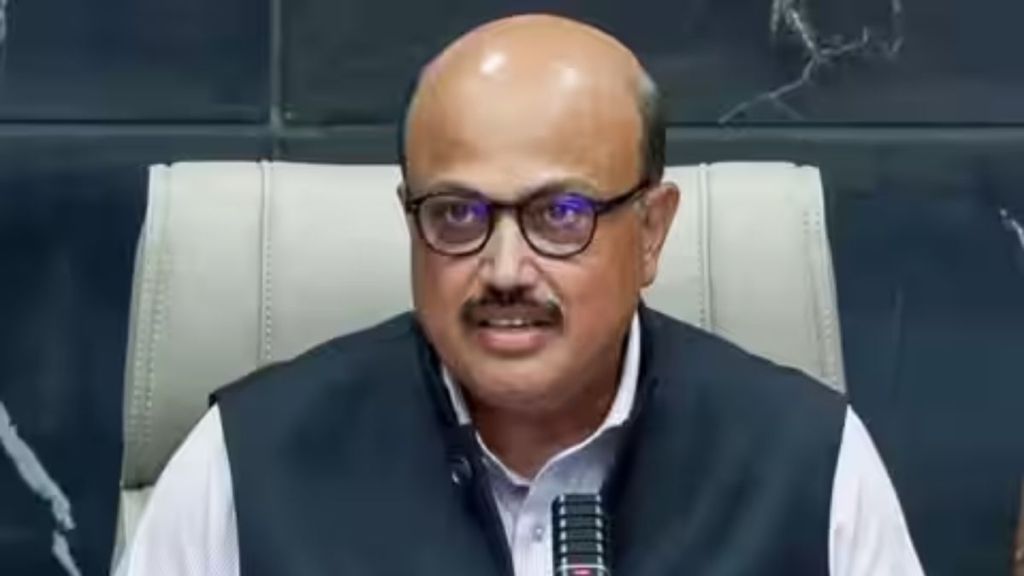
Commerce Secretary Rajesh Agrawal will travel to Chile later this month to assess the progress of the proposed Comprehensive Economic Partnership Agreement (CEPA), following a political transition in Santiago.
The visit marks the first high-level engagement between the two nations since four rounds of formal negotiations culminated in New Delhi last December. Trade talks were temporarily paused following Chile’s December elections, which saw Conservative leader José Antonio Kast assume the presidency on March 11.
New Delhi, however, maintains a pragmatic approach to the timeline and terms of the deal.
“If we get a good deal, we are on… if we do not get a good deal, I do not have a gun on my head,” a senior official said on Wednesday.
Central to the negotiations is securing stable supply chains for critical minerals. Chile forms part of South America’s famed “Lithium Triangle” and stands as a premier global exporter of copper—both indispensable inputs for India’s electric vehicle (EV) battery manufacturing and renewable energy targets.
ALSO READInflation, falling rupee behind plan to raise FDI limit for CCEA nod
The proposed CEPA includes a dedicated chapter on critical and strategic minerals. India’s priority is establishing formal mechanisms to prevent sudden supply disruptions or arbitrary export bans, thereby creating predictable off-take channels for domestic solar and battery manufacturers.
India and Chile currently operate under an expanded Preferential Trade Agreement (PTA). Initially signed in 2006 covering 474 tariff lines, the PTA was expanded in 2016 to cover 2,829 lines before coming into force in 2017. Recognizing the potential for deeper integration, both sides finalized the Terms of Reference to upgrade the agreement into a full-scale CEPA in April 2025.
Chile is currently India’s fifth-largest trading partner in the Latin America and Caribbean (LAC) region. Bilateral trade jumped significantly from $3.84 billion in 2024 to $5.38 billion in 2025.
During 2025, Indian exports to Chile grew by 14% to reach $1.41 billion—driven by automobiles, pharmaceuticals, electrical machinery, textiles, footwear, and iron and steel. Conversely, Indian imports from Chile surged 53% to $3.97 billion, largely fueled by a spike in gold imports alongside traditional bulk shipments of copper concentrate, molybdenum, iodine, and agricultural goods.
The recalibration of talks with Chile comes as India actively expands its economic footprint across Latin America and Africa. Official sources confirmed that India is simultaneously moving ahead with negotiations to expand its Preferential Trade Agreement with the Mercosur trading bloc—comprising Brazil, Argentina, Uruguay, and Paraguay—while evaluating potential PTAs with Mexico and Kenya.
TOPICSECONOMYThis article was first uploaded on August twelve, twenty twenty-six, at forty-six minutes past six in the evening. © The Indian Express (P) Ltd