Even as banks are yet to assess the full impact of the West Asia crisis on their MSME portfolio, clouds are gathering over another key lending segment: agriculture.
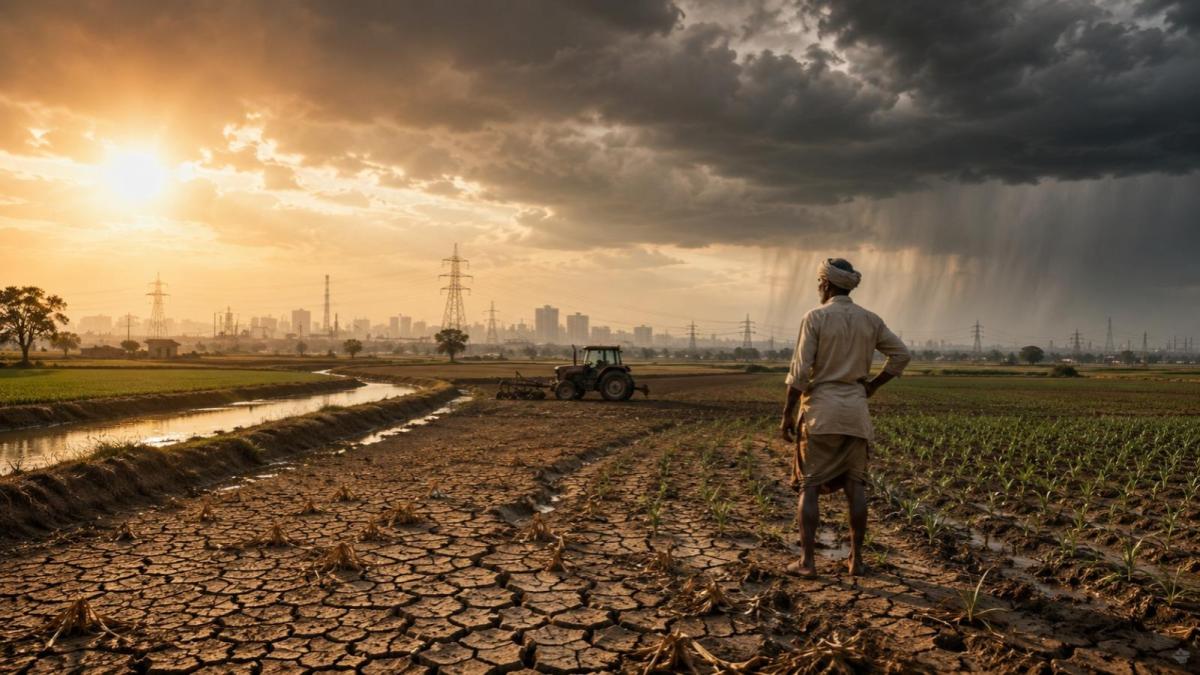
An El Niño-induced weak monsoon, sluggish rainfall progress and the prospect of delayed kharif sowing are raising concerns over fresh slippages in agri loan books, a year after lenders reported close to Rs 1 lakh crore in agriculture non-performing assets (NPAs).
Aniket Dani, director, Crisil Intelligence, said the delayed monsoon is already affecting kharif sowing activity in some regions, with state authorities advising farmers to defer sowing to avoid seed loss and re-sowing costs.
A prolonged rainfall deficit, he said, would be felt more acutely in rain-fed regions and by marginal farmers given their higher dependence on monsoon conditions.
“From a banking perspective, repayment capacity is closely linked to farm incomes and harvest outcomes. Therefore, any stress in agricultural loan portfolios would follow the crop cycle and may become visible after the kharif harvest,” Dani said.
The concerns over fresh stress in agricultural portfolios come a year after the banking sector, largely public sector banks, reported nearly Rs 1 lakh crore of gross NPAs in agriculture during FY26.
ALSO READMonsoon Jitters: Will El Niño really derail India’s economy?
Over the last few years, banks have increasingly focused on the retail, agriculture and MSME (RAM) segments to diversify away from corporate lending. While corporate loan books continue to report low slippages, stress in MSME and agriculture portfolios remains an area of concern.
State Bank of India, for instance, reported gross NPAs of Rs 30,228 crore in its agriculture portfolio in FY26, accounting for 7.25% of its outstanding agri loan book. Punjab National Bank reported gross NPAs of Rs 18,130 crore, or about 9% of its agri portfolio in FY26.
The lender reported fresh agriculture slippages of Rs 2,128 crore and MSME slippages of Rs 2,394 crore, compared with corporate slippages of only Rs 290 crore.
“Agri delinquencies is expected to emerge in the second half of FY27, following the kharif harvest cycle, and may translate into deterioration in the agri GNPA ratio of the banking sector, resulting in an elevated full FY27 GNPA ratio vis-à-vis FY26,” Dani said.
Tamilnad Mercantile Bank MD & CEO Salee S Nair said that while the challenge is real, the agriculture sector is significantly better prepared than in previous El Niño cycles due to improved irrigation coverage, wider adoption of crop insurance and stronger institutional support.
Agriculture remains a core segment of TMB, accounting for nearly 38% of total advances, spread across crops, borrower segments and geographies.
“Given the evolving monsoon outlook, we have intensified monitoring of districts and crop segments that are more susceptible to rainfall variability,” Nair said, adding that with agriculture GNPA only at 0.16%, overall GNPA below 1% and a provision coverage ratio of over 80%, the bank is well positioned to absorb any localised stress that may emerge.
In the monetary policy committee meeting held earlier this month, RBI Governor Sanjay Malhotra also flagged that forecasts of a below-normal monsoon and likely El Niño conditions have amplified inflationary risks.
Indian Overseas Bank MD & CEO Ajay Kumar Srivastava earlier said it was too early to comment on the likely impact.
“Agriculture in certain geographies can be impacted but since we are having retail products, MSME and corporate, if in some pockets, agriculture is not picking up then we can shift to other sectors,” he said during the Q4 FY26 earnings briefing.
Not all analysts, however, expect a sharp deterioration in asset quality. Anil Gupta, senior vice president and co-group head, Financial Sector Ratings, Icra, said rural household incomes have become more diversified over the years, reducing dependence solely on farm incomes, while cropping practices have become more agile with greater adoption of short-duration crops.
“The reservoir levels have been better than last year. All these factors will help reduce the potential impact of weak monsoon on asset quality in the agriculture and associated sector,” he said.
According to the latest India Meteorological Department (IMD) data, the country received just 53.1 mm of rainfall between June 4 and June 22 against the normal 97.6 mm, leaving India with a rainfall deficit of 46%.
The agriculture ministry last week warned that El Niño could have a “relatively severe” impact on 12 states during the kharif season, with large parts of central, northern and peninsular India continuing to remain in the deficient or large-deficient rainfall category.
TOPICSECONOMYEl NinoThis article was first uploaded on June twenty-two, twenty twenty-six, at thirty minutes past ten in the night. © The Indian Express (P) Ltd