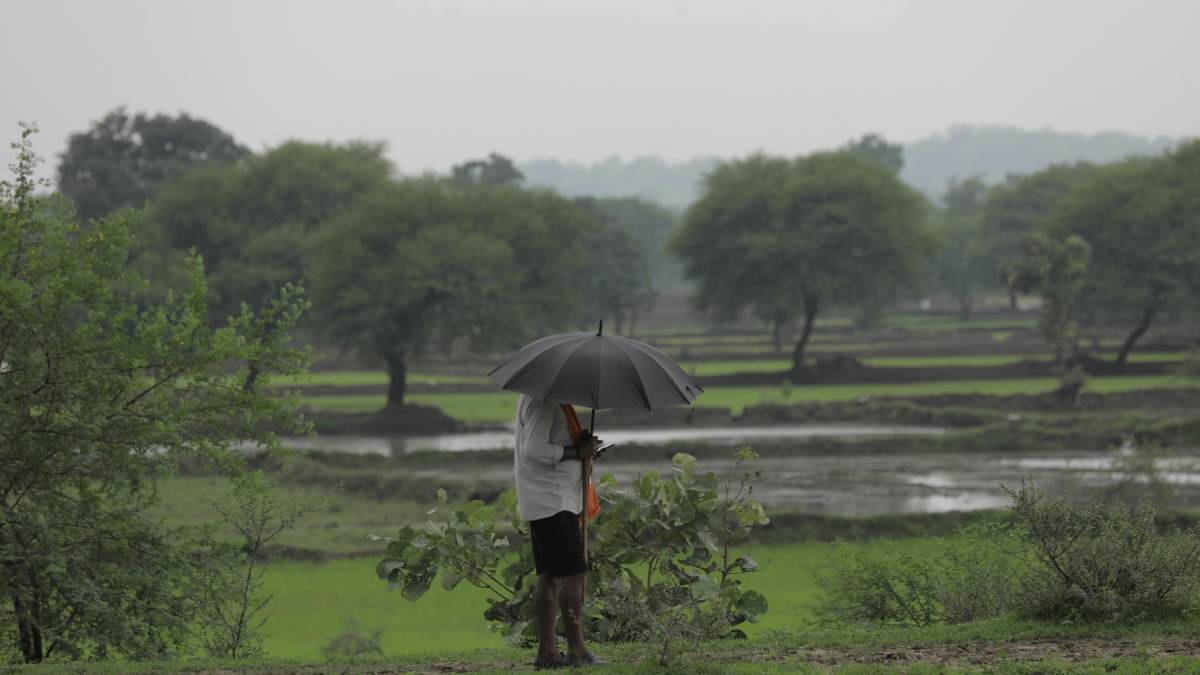
Prospects of delayed kharif crop sowing and adverse impact on crop yield are looming large, as the southwest monsoon lost momentum after its onset earlier this month.
Farmers in the rainfed regions of central India—especially Maharashtra (-82%), Jharkhand (-69%), Chhattisgarh (-67%), Madhya Pradesh (-48%) and Odisha (-47%)—are anxious because rainfall so far has been scanty or much below the benchmark long period average (LPA). If the monsoon does not revive and the deficiency is not bridged over the next few weeks, it would lead to considerable delays in sowing kharif crops such as pulses, oilseeds, paddy and cotton.
Ground Realities
Farmers in severely rain-deficient states are contemplating a shift to crops with much shorter duration such as soybean or maize if monsoon rains do not revive in the next couple of weeks.
ALSO READPower below Rs 1/unit fuels industrial shift to exchanges as procurement volumes jump 50%
In Maharashtra’s Marathwada region, farmers are still waiting for rains to start sowing tur or arhar, a highly remunerative long-duration pulse variety. Ramesh Keshrao Survase from Sikanderpur village in Latur district for instance, will wait another two weeks before deciding to shift to soybean, which is less water-intensive and shorter in duration compared to tur.
Usually, the monsoon arrives in Maharashtra around the third week of June, the ideal window to start sowing. “Last year I could harvest 9 quintal of tur from four acres, without any rains till now it’s quite uncertain this year,” he told FE.
Erratic progress of the monsoon so far amidst the shadow of El Niño’s influence, has also led to states like Rajasthan (41%), Andhra Pradesh (3%) and West Bengal receiving surplus to normal rainfall, resulting in early sowing of maize and paddy by farmers. In Punjab and Haryana, farmers have started transplanting paddy, a key kharif crop using irrigation facilities such as canal and groundwater.
Mukhesh Khatod, a trader from Chittorgarh district, Rajasthan, said farmers opted for early sowing of maize with the help of surplus rainfall in the past fortnight. “It’s quite unusual to get so much rain in June while the monsoon usually enters the state by early July,” Khatod told FE.
Macro Deficits
The progress of the southwest monsoon remained sluggish with cumulative rainfall being over 42% below the benchmark longer period average (LPA) during June 1 – June 21. This is deep in the ‘deficient’ range. In terms of regional distribution, all regions show a serious rainfall deficiency: northwest (-12%), east/north-east (-41%), central India (-66%), and south peninsular (-26%).
The India Meteorological Department in its forecast on Sunday said conditions are favourable for the further advance of the southwest monsoon into some more parts of Maharashtra, Telangana, Odisha, Jharkhand, Bihar, and some parts of Chhattisgarh around June 23, 2026. The met department’s forecast also predicted scattered rainfall likely over Chhattisgarh, Vidarbha and Madhya Pradesh in the next week.
Gurbakshish Singh, a farmer from Sangrur district of Punjab said while paddy transplanting has commenced in the state using assured irrigation facilities, monsoon rains which usually arrive around the end of June would definitely boost crop prospects and provide relief from the heat wave.
ALSO READIndia-US trade pact enters crucial week: July tariff deadline and Section 301 in focus
An agriculture ministry official said that by the end of June a much clearer picture of El Niño’s impact on the monsoon would emerge and accordingly the government would initiate a mitigation plan for kharif crops. Agriculture Minister Shivraj Singh Chouhan last week directed officials to prepare crop-wise contingency plans for those ‘rainfed’ districts likely to receive low or uneven rainfall during the current monsoon season due to El Niño’s impact. The government has identified 197 districts across the country as most vulnerable to El Niño’s impact.
The agriculture ministry revised its foodgrain production target for 2026-27 downward to 373.93 million tonnes, from an estimated 376.56 million tonnes in 2025-26.
TOPICSMonsoonThis article was first uploaded on June twenty-one, twenty twenty-six, at nine minutes past seven in the evening. © The Indian Express (P) Ltd