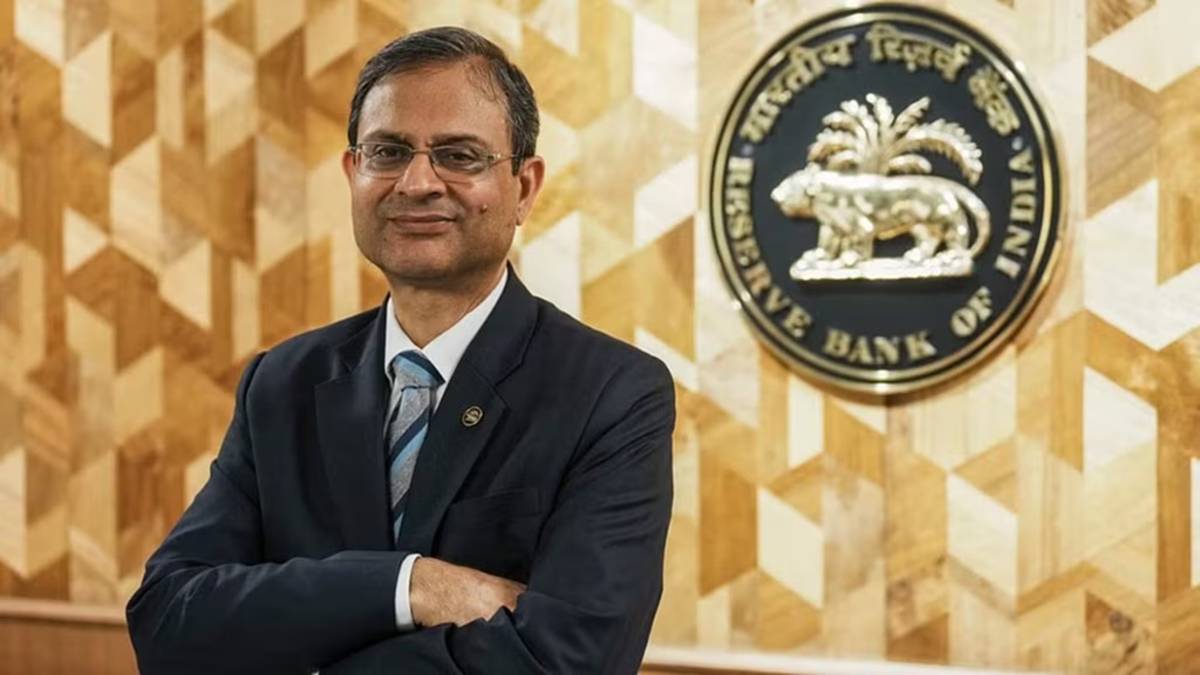
All six members of the RBI Monetary Policy Committee voted unanimously to keep the repo rate unchanged at 5.25% at its June 3-5 meeting, favouring to adopt a “wait and watch” approach rather than making a pre-emptive policy pivot amid global uncertainties and elevated crude oil prices.
According to minutes of the committee’s meeting released on Friday, the panel said that they would await incoming data and closely monitor the developments before taking any rate hike decision. The meeting took place before the US-Iran agreement to end the war in West Asia.
RBI Governor Sanjay Malhotra, chairman of the MPC, said, “Our economic situation is quite strong and healthy vis-à-vis many of our peers. We are in a much better position today, not only in terms of the current shock but also with respect to all earlier shocks. We are one of the fastest-growing major economies, and our inflation has been benign in the past year.”
Malhotra said he would prefer to adopt a wait and watch approach while expressing that “we should remain watchful and wary about the generalisation of inflation in the coming months. “
“It would be prudent to adopt a wait and watch approach rather than make an early or pre-emptive policy pivot,” RBI Deputy Governor Poonam Gupta said at the meeting.
In an environment when oil prices were high due to the Iran war, the rupee was on a slide and food prices were inching up, some analysts predicted a rate hike but the MPC decided to wait for greater clarity to emerge before deciding on any policy action.
Despite revising the inflation projection for FY27 upwards and estimating a slower growth, the MPC voted for a status quo on the policy repo rate at 5.25% while retaining its neutral stance. “Headline inflation continues to be within the target band and core inflation remains contained, suggesting that underlying inflation pressures remained subdued,” Malhotra said, according to the minutes.
The RBI has forecast retail inflation at 5.1% for FY27 from an earlier 4.6% and core inflation at 4.6% from the previous estimate of 4.4%, while assuming an average crude oil price of $95 per barrel. The real GDP growth forecast was lowered to 6.6% from 6.9% estimated in April.
Malhotra raised concerns over a below-normal monsoon and likely El Niño conditions while stating that the near-term outlook for food prices remained favourable on account of a good rabi crop and adequate stocks.
Gupta preferred the rate-setting panel “to wait a bit more for global as well as weather-related uncertainties to play out over the coming months” as the “Indian economy seems to have held up well despite the shocks”.
Panel member Saugata Bhattacharya cautioned that the panel “must now closely monitor second-order input cost transmission getting embedded in retail inflation, which will depend on the intensity and duration of the energy shock.”
RBI Executive Director Indranil Bhattacharyya pressed for flexibility during periods of high uncertainty. “Flexible inflation targeting is a framework best characterised as constrained discretion, in which monetary policy is anchored to a numerical target but retains the scope to accommodate shocks,” he said.
Ram Singh and Nagesh Kumar, external members of the MPC, said there was a need to wait for greater clarity and to keep an eye on growth.
“The prevailing real interest rates arising from the present combination of the policy repo rate at 5.25 per cent and the inflation trajectory for the coming quarters make for a growth-supportive monetary policy. If the inflation-related risks resolve favourably—food inflation remaining stable, global oil prices stabilising below $80 per barrel, and the Federal Reserve avoiding hawkish decisions—in my view, the MPC will have the room to continue to be growth-supportive,” said Singh.
He, however, cautioned that there is a high uncertainty in the assumptions made for projections of both inflation and growth on account of several reasons, the duration of the conflict and the disruption in supply chains, the intensity and geographical spread of monsoons and their impact on energy, food and other commodity prices.” He added that he would prefer to adopt a wait-and-watch approach.”
The next meeting of the MPC is scheduled for August 3 to 5, 2026.
TOPICSinflationThis article was first uploaded on June twenty, twenty twenty-six, at forty-nine minutes past twelve in the am. © The Indian Express (P) Ltd