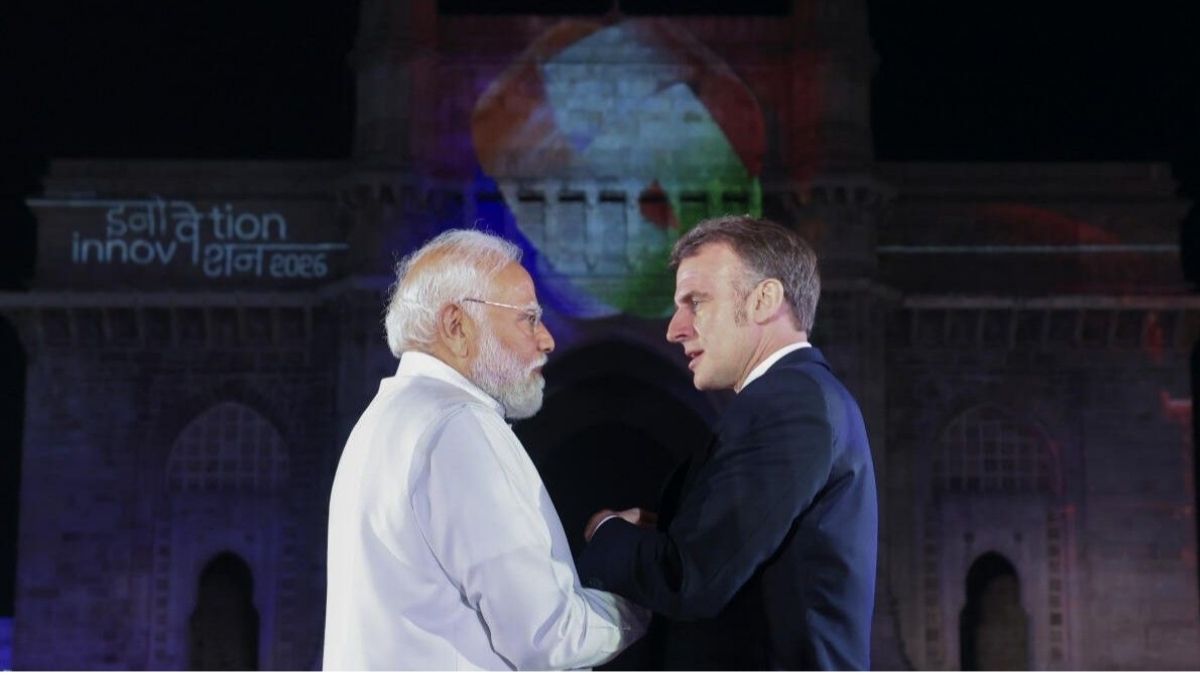
Civil nuclear energy, defence and emerging technologies dominated talks between Prime Minister Narendra Modi and French President Emmanuel Macron in Nice on Sunday. The two leaders sought to expand the scope of the India-France partnership.
Alongside discussions on the Jaitapur project in Maharashtra and small modular reactors, Modi and Macron reviewed cooperation in AI, critical minerals, space and trade, with an ambitious target of doubling bilateral commerce over the next five years.
The meeting at Villa Kerylos was their first since India-France relations were elevated to a “Special Global Strategic Partnership” earlier this year.
Jaitapur negotiations continue
Addressing the press, Foreign Secretary Vikram Misri said discussions on the Jaitapur Nuclear Power Project were continuing between French state-owned energy company EDF and the Nuclear Power Corporation of India Limited.
The talks cover the project’s technical and financial aspects. Misri said the two sides were also considering developments in nuclear technology, reactor innovations and different financing possibilities.
According to a March 2025 statement by India’s Department of Atomic Energy, the proposed plant in Maharashtra is planned to have six reactors of 1,730 MW each, giving it a total capacity of 10,380 MW. Older EDF and Indian government documents had described the project as a 9.6-GW facility.
No new Jaitapur-specific agreement was announced after the latest leaders’ meeting. Misri said discussions between EDF and NPCIL were continuing, including on the project’s financial aspects.
ALSO READ120 Indian startups, 500 investors gather in France for Bharat Innovates 2026
French companies may explore Indian nuclear projects
India and France are also holding a separate set of discussions on Small Modular Reactors and Advanced Modular Reactors through a bilateral task force on civil nuclear energy.
Modi highlighted the Sustainable Harnessing and Advancement of Nuclear Energy for Transforming India, or SHANTI Act, which has opened India’s civil nuclear sector to private participation.
Misri said the changed framework could allow French nuclear companies to explore direct participation in Indian projects or partnerships with Indian private companies. Such cooperation could cover conventional nuclear plants as well as newer modular reactor technologies.
Macron welcomed the outlook presented by Modi, and the two sides agreed to encourage their agencies and companies to remain engaged.
Defence, space and critical minerals
The two leaders agreed to deepen defence cooperation, with greater emphasis on jointly designing, developing and producing platforms and advanced technologies.
ALSO READFPI rush into G-Secs after tax relief, RBI measures
They also discussed cooperation in human spaceflight, space situational awareness and greater participation by private companies in the space sector.
India and France agreed to establish an Economic Security Dialogue and strengthen supply-chain resilience, particularly for critical minerals.
Trade and technology push
A high-level mechanism will be established to work towards doubling bilateral trade over the next five years. The leaders also called for early implementation of the India-European Union Free Trade Agreement.
An India-France Innovation Roadmap 2030 was adopted, while a joint working group will be created to focus on artificial-intelligence governance.
Other outcomes included wider availability of India’s UPI payment system in France, incubation of another 10 Indian startups at France’s Station F and cooperation in digital sciences, health data, aeronautics training and high-speed railways.
The two leaders also discussed the conflicts in West Asia and Ukraine, besides India’s participation in the upcoming G7 summit in France.
TOPICSECONOMYIndia FranceNuclear EnergyNuclear Powerpm narendra modi + 0 MoreThis article was first uploaded on June fourteen, twenty twenty-six, at eight minutes past eleven in the night. © IE Online Media Services (P) Ltd