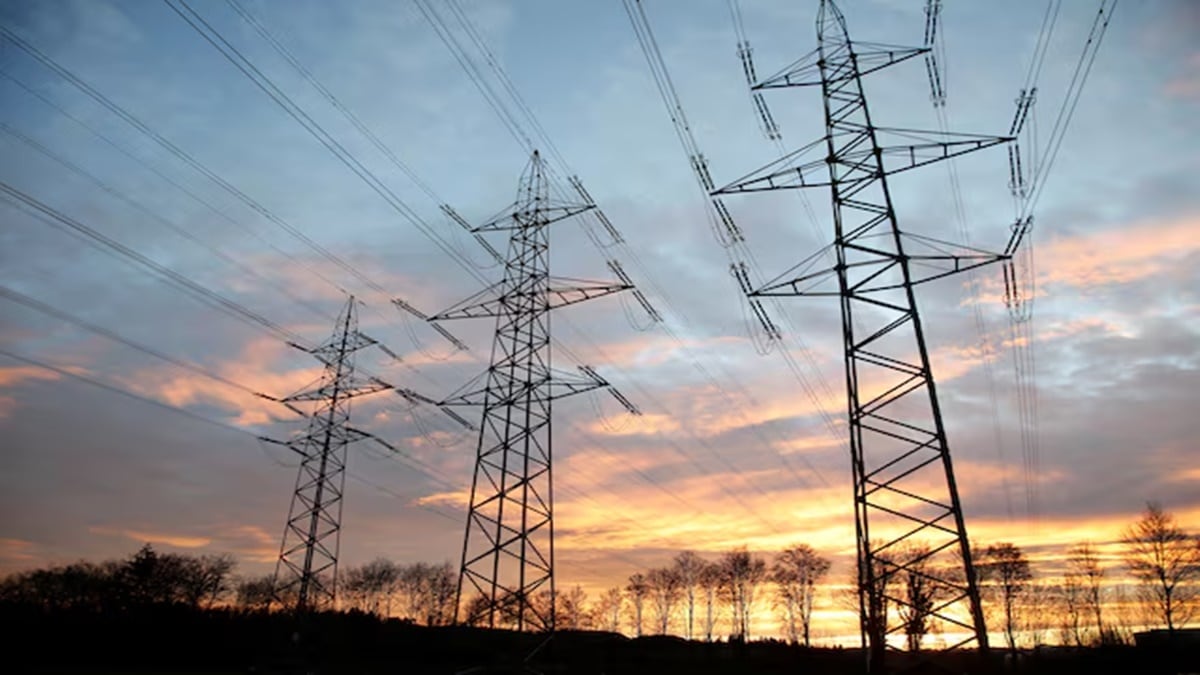
India’s electricity demand is no longer rising in a straight line. A hotter climate, growing air-conditioner penetration, rapid urbanisation and rising industrial activity are making power consumption increasingly volatile, forcing utilities to rethink how they buy electricity. The result is a growing dependence on power exchanges, which are emerging as a critical source of supply when demand suddenly surges beyond contracted levels.
The shift became evident during the second half of May, when India’s peak power demand touched a record 270.82 GW and daily energy requirement climbed to an all-time high of 5,830 million units (MU).
During the period from May 17 to 31, 2026, Telangana, West Bengal and Punjab recorded electricity demand of 3,597 million units (MU), 3,772 MU and 3,879 MU respectively. Official data shows that each of these states purchased more than 10 percent of their total requirement through the collective market segments (I-DAM and RTM) on power exchanges.
ALSO READRupee may trade range-bound; sharp appreciation unlikely
As per data on the Indian Energy Exchange (IEX), between May 17 and May 31, a total of 4.68 billion units (BU) of electricity was traded through the Day-Ahead Market (DAM) and Real-Time Market (RTM), translating into an average daily volume of over 312 MU.
The numbers may appear small compared with India’s overall electricity consumption, but they highlight an important change underway in the power sector.
For decades, state utilities relied primarily on long-term power purchase agreements (PPAs) with generators. Those contracts continue to account for the bulk of electricity supply. However, utilities are increasingly finding that demand patterns are becoming harder to forecast accurately.
A sudden heatwave can push up air-conditioner load within hours. Industrial demand can rise unexpectedly. Renewable generation can fluctuate with weather conditions. Procuring additional power through long-term contracts for every possible demand scenario would leave utilities paying for excess capacity during normal periods.
ALSO READMaharashtra onion farmers seek relief measures despite the Centre’s procurement push – What have they demanded?
This is where exchanges are finding a larger role.
Real-Time Volumes
Unlike long-term PPAs, exchange markets allow utilities to buy electricity a day ahead or even an hour before delivery, helping them respond to sudden changes in demand and supply.
The trend is reflected in trading volumes.
During the second half of May, on Indian Energy Exchange the Real-Time Market recorded 2.62 BU of traded electricity, exceeding the 2.06 BU transacted through the Day-Ahead Market. The higher RTM volumes suggest that utilities increasingly needed power closer to delivery as actual demand diverged from forecasts.
Power market experts say this marks the evolution of exchanges from surplus-power trading platforms into an important balancing mechanism for the grid.
“States cannot economically contract for every possible peak demand situation. Exchanges provide flexibility by allowing utilities to procure electricity only when the requirement arises,” said a senior power sector analyst.
Balancing the Grid
The growing significance of exchanges also coincides with the rapid expansion of renewable energy.
India’s installed renewable capacity has crossed 230 GW, and solar generation now accounts for an increasingly large share of daytime electricity supply. However, renewable output varies depending on weather conditions, increasing the need for flexible markets capable of matching demand and supply in real time.
Exchange prices reflected the tight market conditions.
On IEX, the average market-clearing price in the Day-Ahead Market stood at Rs 5.67/unit during May 17-31, while the Real-Time Market averaged Rs 4.90/unit. Utilities continued procuring power despite elevated prices, underscoring the priority placed on maintaining uninterrupted supply.
The development comes as policymakers prepare for sustained growth in electricity consumption.
Government projections indicate that India’s power demand will continue rising sharply over the coming decade, driven by increasing cooling requirements, industrialisation, electric mobility and broader economic growth.
For utilities, that means demand management is becoming as important as capacity addition.
And as India’s electricity system becomes larger, greener and more complex, power exchanges are increasingly emerging as the market where short-term imbalances are resolved, helping states navigate a future where electricity demand is both higher and far less predictable than before.
TOPICSPowerpower discomsThis article was first uploaded on June seven, twenty twenty-six, at six minutes past six in the evening. © The Indian Express (P) Ltd