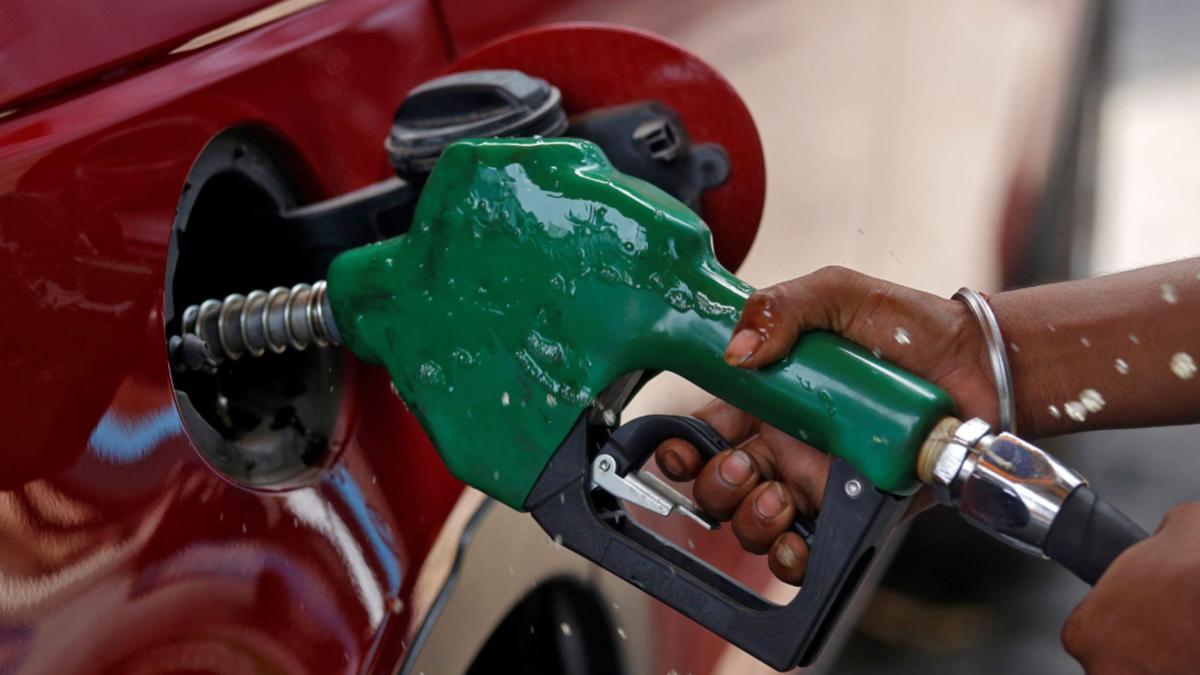
The government on Saturday announced a fresh revision in export duties on petroleum products, sharply reducing the levy on aviation turbine fuel (ATF) and petrol while moderating the levy on diesel shipments. The move follows significant improvement in domestic crude oil stocks over the last few days, allaying concerns about a possible shortage.
Petroleum products are a major item in India’s export basket.
Under the new structure, the export duty on petrol has been brought down to Rs 1.5 per litre (Special Additional Excise Duty of Rs 1.5 and nil Road and Infrastructure Cess). The duty was Rs 3 per litre when first imposed on May 15.
The total export duty on diesel has been reduced to Rs 13.5 per litre from Rs 16.5 per litre earlier. ATF will now attract a duty of Rs 9.5 per litre (SAED only), down from Rs 16 per litre. The revised rates will come into effect from Monday.
ALSO READNeed stronger RBI intervention for rupee stabilisation: SBI Research
Fortnightly Revisions
The government had introduced these export duties in late March to discourage exports and ensure adequate domestic availability of petroleum products amid supply uncertainties triggered by the West Asia crisis.
The rates are reviewed every fortnight based on average international prices of crude oil and refined products. The rates are prescribed based on the average international prices of crude oil, petrol, diesel and ATF prevailing during the period since the last review, the officials said.
Following a steep hike in mid-April that took diesel duty to as high as Rs 55.5 per litre and ATF to Rs 42 per litre, the government has been steadily moderating the levies through May.
The officials also said that there is no change in existing excise duty rate on petrol and diesel cleared for domestic consumption. On May 31, retail petrol in Delhi cost Rs 102.12 a litre while diesel was sold at Rs 95.20 a litre.
Shielding Consumers
The government said state-run OMCs are absorbing losses of about Rs 550 crore per day on petrol, diesel and domestic LPG to shield retail consumers from full international price pass-through amid volatility linked to West Asia tensions.
This subsidy buffer, it said, is intended for households, commuters and farmers using retail pumps.
Petrol and diesel prices have risen about Rs 7.5 per litre and CNG by Rs 6 a litre as a part of the increased cost of energy caused by the Iran war is passed on to consumers.
The government had already reduced excise duty on petrol and diesel by Rs 10 per litre on 27 March. Earlier this week, Union finance minister Nirmala Sitharaman said that reducing excise duties on petrol and diesel would lead to a revenue loss of around Rs 1 lakh crore. “The government is estimated to take a revenue impact of over Rs 1 lakh crore in 2026 after the central excise duty cut on petrol & diesel,” the FM stated.
ALSO READBans, duties, and slashed margins: Policy decisions driving the Rs 10,000 cr bailout request from onion farmers
OMCs reported Rs 77,821 crore profit for FY26, most of the impact from the Middle East crisis is not yet fully visible in current earnings. It is expected to show up in Q1 FY 2026–27 results. Another key point is timing. Indian OMCs were operating on 50–60 days of crude inventory that had already been bought at pre-crisis prices. So FY 2025–26 profits largely reflect cheaper, earlier crude purchases.
The impact of higher crude prices will start appearing only when newer, costlier crude enters the system, mainly from late March onwards. This means the real pressure is likely to show up in Q1 FY 2026–27 results, which will be released in August 2026.
TOPICSDieselPetroleumThis article was first uploaded on May thirty-one, twenty twenty-six, at fifty-three minutes past six in the evening. © The Indian Express (P) Ltd