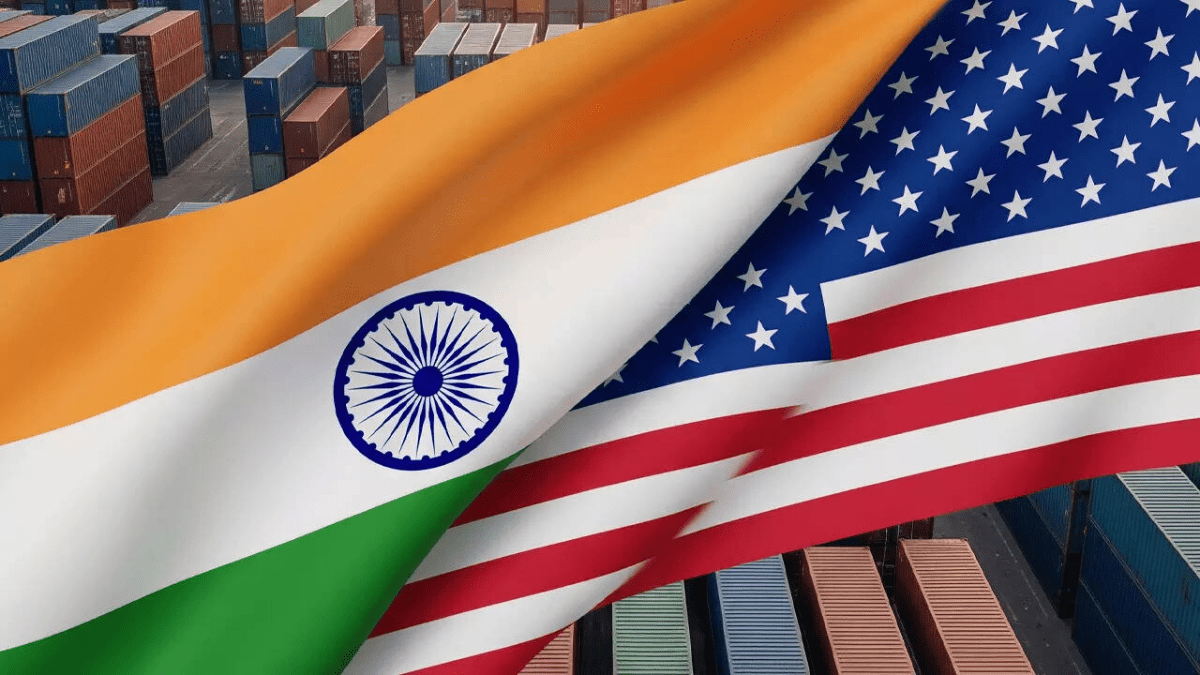
India and the United States are all set to begin a fresh round of trade negotiations in New Delhi from June 1 to June 4, as both countries work towards finalising an interim trade agreement while advancing discussions on a broader bilateral trade pact.
According to a report by The Indian Express, the negotiations will be led by Darpan Jain, Additional Secretary in India’s Department of Commerce, and Brendan Lynch, the United States’ chief trade negotiator.
Focus shifts to interim trade deal
The upcoming discussions are expected to focus on finalising the legal and operational framework of the proposed interim trade agreement, the broad contours of which were agreed upon earlier this year.
Officials are expected to discuss issues related to market access, customs and trade facilitation, non-tariff barriers, investment promotion and economic security cooperation.
The interim arrangement is also being viewed as a stepping stone towards a more comprehensive India-US Bilateral Trade Agreement (BTA), which both countries have been pursuing as part of efforts to deepen economic ties.
ALSO READ‘No sense in breaking heads over sensitive issues’: Piyush Goyal says India-Canada CEPA talks to focus on ‘low-hanging fruit’
Tariff changes may reshape negotiations
The latest round of talks comes amid significant shifts in the US trade environment that could alter some of the earlier understandings reached between the two sides.
Earlier this year, India and the US had discussed a framework under which Washington was expected to lower tariffs on selected Indian products. However, the trade landscape changed after a ruling by the Supreme Court of the United States against President Donald Trump’s reciprocal tariff policy, along with the introduction of a temporary 10% tariff on imports.
As a result, negotiators are expected to revisit parts of the original framework during the June talks.
India signals wider market access
Earlier, India had indicated its willingness to reduce or eliminate tariffs on a range of American industrial and agricultural goods as part of the negotiations.
Products discussed under the proposals included animal feed items, fruits, tree nuts, soybean oil, wine and spirits.
India also expressed interest in expanding imports from the US across sectors such as energy, aircraft and aviation parts, technology products, precious metals and coking coal over the next five years.
The discussions come at a time when India is attempting to balance domestic industry concerns with the need to strengthen strategic trade ties with Washington.
Section 301 investigations remain concern
The negotiations are also taking place against the backdrop of ongoing US trade investigations.
In March, the Office of the United States Trade Representative launched Section 301 investigations involving several countries, including India, over concerns linked to supply chains and labour practices.
India has strongly rejected the allegations and questioned the basis of the investigations, with officials maintaining that Indian trade practices comply with international norms.
ALSO READIndia, Korea agree to address trade imbalance within CEPA framework
Trade ties continue to expand
Despite periodic trade tensions, the United States remained India’s second-largest trading partner during FY26. India’s exports to the US rose to USD 87.3 billion during the financial year, while imports from the US increased to USD 52.9 billion.
Although India’s trade surplus with the US narrowed compared to the previous year, both governments continue to treat economic cooperation as a strategic priority amid shifting global supply chains and geopolitical realignments.
It is reportedly said that the June negotiations are expected to play a key role in shaping the next phase of the India-US economic partnership as both countries seek to strengthen trade and investment ties in an increasingly uncertain global environment.
From tariffs to talks, a look at the complete timeline
/* ===== BASE RESET ===== */
.infographic-financial *{box-sizing:border-box !important;margin:0 !important;padding:0 !important;font-family:’Inter’,Arial,sans-serif !important;}
.infographic-financial a{text-decoration:none !important;}
/* ===== OUTER WRAPPER ===== */
.infographic-financial{
background:#ffffff !important;
max-width:540px !important;
margin:0 auto !important;
border:1px solid #e2e8f0 !important;
border-radius:12px !important;
overflow:hidden !important;
}
/* ===== HEADER ===== */
.infographic-financial__header{
background:#0f172a !important;
padding:18px 20px 14px !important;
}
.infographic-financial__kicker{
font-size:10px !important;
font-weight:700 !important;
letter-spacing:1.5px !important;
color:#ffd700 !important;
text-transform:uppercase !important;
margin-bottom:6px !important;
display:block !important;
}
.infographic-financial__title{
font-size:18px !important;
font-weight:800 !important;
color:#f8fafc !important;
line-height:1.3 !important;
margin-bottom:6px !important;
}
.infographic-financial__subtitle{
font-size:12px !important;
color:#94a3b8 !important;
line-height:1.5 !important;
}
/* ===== HIDDEN RADIO INPUTS ===== */
.infographic-financial__tab-input{display:none !important;}
/* ===== TAB STRIP ===== */
.infographic-financial__tab-strip{
background:#f1f5f9 !important;
display:flex !important;
flex-wrap:wrap !important;
gap:6px !important;
padding:10px 12px !important;
border-bottom:1px solid #e2e8f0 !important;
}
.infographic-financial__tab-label{
font-size:11px !important;
font-weight:600 !important;
color:#475569 !important;
background:#ffffff !important;
border:1px solid #cbd5e1 !important;
border-radius:20px !important;
padding:5px 12px !important;
cursor:pointer !important;
transition:all 0.15s !important;
white-space:nowrap !important;
}
/* ===== ACTIVE TAB STATE ===== */
#tab1:checked ~ .infographic-financial__tab-strip label[for=”tab1″],
#tab2:checked ~ .infographic-financial__tab-strip label[for=”tab2″],
#tab3:checked ~ .infographic-financial__tab-strip label[for=”tab3″],
#tab4:checked ~ .infographic-financial__tab-strip label[for=”tab4″]{
background:#0f172a !important;
color:#ffd700 !important;
border-color:#0f172a !important;
}
/* ===== PANELS ===== */
.infographic-financial__panel{display:none !important;}
#tab1:checked ~ .infographic-financial__panels .infographic-financial__panel–1{display:block !important;}
#tab2:checked ~ .infographic-financial__panels .infographic-financial__panel–2{display:block !important;}
#tab3:checked ~ .infographic-financial__panels .infographic-financial__panel–3{display:block !important;}
#tab4:checked ~ .infographic-financial__panels .infographic-financial__panel–4{display:block !important;}
/* ===== TIMELINE ENTRY ===== */
.ife-timeline{
padding:16px 20px !important;
position:relative !important;
}
.ife-timeline-item{
display:flex !important;
gap:14px !important;
margin-bottom:20px !important;
position:relative !important;
}
.ife-timeline-item:last-child{margin-bottom:0 !important;}
.ife-timeline-left{
display:flex !important;
flex-direction:column !important;
align-items:center !important;
flex-shrink:0 !important;
width:36px !important;
}
.ife-timeline-dot{
width:36px !important;
height:36px !important;
border-radius:50% !important;
background:#0f172a !important;
display:flex !important;
align-items:center !important;
justify-content:center !important;
font-size:13px !important;
font-weight:800 !important;
color:#ffd700 !important;
flex-shrink:0 !important;
z-index:1 !important;
position:relative !important;
}
.ife-timeline-line{
width:2px !important;
flex:1 !important;
background:#e2e8f0 !important;
min-height:20px !important;
margin-top:4px !important;
}
.ife-timeline-item:last-child .ife-timeline-line{display:none !important;}
.ife-timeline-right{
flex:1 !important;
padding-top:6px !important;
}
.ife-date-badge{
display:inline-block !important;
font-size:10px !important;
font-weight:700 !important;
letter-spacing:0.8px !important;
text-transform:uppercase !important;
color:#ffffff !important;
background:#475569 !important;
border-radius:4px !important;
padding:2px 8px !important;
margin-bottom:6px !important;
}
.ife-date-badge–gold{background:#92711a !important;}
.ife-event-title{
font-size:13px !important;
font-weight:700 !important;
color:#0f172a !important;
line-height:1.4 !important;
margin-bottom:5px !important;
}
.ife-event-body{
font-size:12px !important;
color:#475569 !important;
line-height:1.6 !important;
}
/* ===== STAT ROW (dark pill style) ===== */
.ife-stat-row{
display:flex !important;
gap:8px !important;
flex-wrap:wrap !important;
padding:12px 20px !important;
background:#0f172a !important;
border-top:1px solid #1e293b !important;
}
.ife-stat-pill{
flex:1 !important;
min-width:100px !important;
background:#1e293b !important;
border-radius:8px !important;
padding:10px 12px !important;
text-align:center !important;
}
.ife-stat-num{
font-size:18px !important;
font-weight:800 !important;
color:#4ade80 !important;
display:block !important;
margin-bottom:3px !important;
}
.ife-stat-num–red{color:#fca5a5 !important;}
.ife-stat-num–gold{color:#ffd700 !important;}
.ife-stat-label{
font-size:10px !important;
color:#94a3b8 !important;
line-height:1.4 !important;
display:block !important;
}
/* ===== AGENDA LIST ===== */
.ife-agenda{padding:4px 20px 16px !important;}
.ife-agenda-title{
font-size:11px !important;
font-weight:700 !important;
letter-spacing:1px !important;
text-transform:uppercase !important;
color:#94a3b8 !important;
padding:14px 0 8px !important;
border-top:1px solid #1e293b !important;
display:block !important;
}
.ife-agenda-item{
display:flex !important;
align-items:flex-start !important;
gap:10px !important;
padding:8px 0 !important;
border-bottom:1px solid #1e293b !important;
}
.ife-agenda-item:last-child{border-bottom:none !important;}
.ife-bullet{
width:6px !important;
height:6px !important;
border-radius:50% !important;
background:#ffd700 !important;
margin-top:5px !important;
flex-shrink:0 !important;
}
.ife-agenda-text{
font-size:12px !important;
color:#cbd5e1 !important;
line-height:1.5 !important;
}
.ife-agenda-wrap{
background:#0f172a !important;
padding:0 20px 16px !important;
}
/* ===== SECTION WITHIN PANEL ===== */
.ife-section-head{
font-size:10px !important;
font-weight:700 !important;
letter-spacing:1.2px !important;
text-transform:uppercase !important;
color:#ffd700 !important;
background:#0f172a !important;
padding:10px 20px 6px !important;
display:block !important;
}
/* ===== CALLOUT STRIP ===== */
.ife-callout{
background:#fefce8 !important;
border-left:4px solid #ffd700 !important;
padding:12px 16px !important;
margin:12px 20px !important;
border-radius:0 6px 6px 0 !important;
}
.ife-callout-text{
font-size:12px !important;
color:#1e293b !important;
line-height:1.6 !important;
font-style:italic !important;
}
.ife-callout-attr{
font-size:11px !important;
font-weight:700 !important;
color:#475569 !important;
margin-top:5px !important;
display:block !important;
}
/* ===== STATUS BADGE ===== */
.ife-status-bar{
background:#0f172a !important;
padding:12px 20px !important;
display:flex !important;
align-items:center !important;
gap:10px !important;
border-top:1px solid #1e293b !important;
}
.ife-status-dot{
width:10px !important;
height:10px !important;
border-radius:50% !important;
background:#4ade80 !important;
flex-shrink:0 !important;
box-shadow:0 0 0 3px rgba(74,222,128,0.25) !important;
}
.ife-status-text{
font-size:12px !important;
font-weight:700 !important;
color:#4ade80 !important;
}
/* ===== BRANDING ===== */
.infographic-financial__branding{
text-align:center !important;
padding:10px 20px !important;
font-size:11px !important;
color:#94a3b8 !important;
background:#f8fafc !important;
border-top:1px solid #e2e8f0 !important;
}
.infographic-financial__branding a{
color:#0f172a !important;
font-weight:700 !important;
}
/* ===== COPY BUTTON ===== */
.copy-btn{
display:block !important;
width:calc(100% – 40px) !important;
margin:12px 20px !important;
padding:10px !important;
background:#0f172a !important;
color:#ffd700 !important;
font-size:13px !important;
font-weight:700 !important;
border:none !important;
border-radius:6px !important;
cursor:pointer !important;
}
.flash-message{
display:none !important;
text-align:center !important;
font-size:12px !important;
color:#4ade80 !important;
padding:6px 20px !important;
}
India-US Trade Deal | Explained From 50% Tariffs to a Deal in the Making How the India-US Bilateral Trade Agreement went from a February framework to a renegotiation — and where talks stand now
1 Before Feb 2026 India facing 50% US tariff US had imposed a 50% tariff on Indian goods, putting India at a competitive disadvantage versus other trading partners in the US market. 2 February 7, 2026 India-US joint statement: BTA Phase 1 framework agreed India and the US issued a joint statement outlining the framework for Phase 1 of the Bilateral Trade Agreement (BTA). The US committed to lowering tariffs on Indian goods from 50% to 18%, including withdrawing a 25% penalty tariff linked to India’s procurement of Russian oil. This gave India a critical cost advantage over rivals like Vietnam and Bangladesh. 3 India’s Commitments What India offered in the Feb deal India proposed eliminating or reducing tariffs on all US industrial goods and lowering duties on a wide range of US food and agricultural products — including DDGs, red sorghum, tree nuts, fresh and processed fruits, soybean oil, wine and spirits. India also committed to purchasing $500 billion worth of US energy products, aircraft, precious metals, semiconductors, and coking coal over five years. 50% Tariff on India before deal 18% Agreed revised tariff rate $500B India’s US purchase pledge (5 yrs)
1 February 20, 2026 US Supreme Court strikes down Trump’s reciprocal tariffs The US Supreme Court ruled against President Trump’s country-specific reciprocal tariffs that had been imposed under the International Emergency Economic Powers Act (IEEPA) of 1977. The ruling dismantled the non-uniform tariff regime that had given India its comparative advantage. 2 February 24, 2026 Trump imposes flat 10% tariff on all countries Following the Supreme Court ruling, Trump announced a uniform 10% tariff on all US trading partners for a period of 150 days beginning February 24. With all countries now on equal footing, India’s tariff advantage — the cornerstone of the February deal — was effectively erased. 3 February 2026 Chief negotiators’ meeting postponed A planned meeting between the two sides’ chief negotiators — which was to follow up on the February framework — was postponed due to the changed tariff landscape. The agreed framework was expected to undergo major revision. 4 March 2026 USTR launches Section 301 probes against India The Office of the US Trade Representative (USTR) initiated two unilateral Section 301 investigations against several Asian nations including India, alleging excessive manufacturing capacity and failure to eliminate forced labour from supply chains. India rejected both allegations and called for the probes to be terminated, saying the initiation notice lacked a cogent rationale. “The agreement will have to be recalibrated and redrafted. Since the agreement hasn’t been signed, we have the flexibility to change whatever is necessary to ensure India isn’t disadvantaged.” — Senior Indian government official, as quoted by PTI
1 April 20–23, 2026 India sends 12-member delegation to Washington A 12-member Indian delegation, led by Darpan Jain, Additional Secretary in the Department of Commerce, travelled to Washington for three days of talks. The primary objective was to protect India’s comparative advantage and recalibrate the BTA’s Phase 1 framework in light of the new uniform tariff regime. 2 April 23, 2026 Talks conclude; ministry calls them “constructive” The Ministry of Commerce stated that both sides engaged in meaningful discussion and agreed to maintain momentum. Notably, the talks went beyond traditional duty negotiations into digital trade and economic security alignment — marking a strategic pivot toward securing supply chains and aligning digital governance frameworks. April Talks Agenda Market access and tariff revision under revised US regime Non-tariff measures and technical barriers to trade Customs and trade facilitation Investment promotion Digital trade and data governance frameworks Economic security alignment and supply chain de-risking USTR Section 301 probe — India’s position and response 12 Officials in India’s delegation $87.3B India’s exports to US, FY26 $34.4B Trade surplus (down from $40.9B)
1 May 29, 2026 US Ambassador Sergio Gor signals deal is close Speaking at IIT Delhi, US Ambassador to India Sergio Gor said the two sides expected to sign the trade deal “over the next few weeks and months.” He confirmed India had sent a team to Washington the previous week to finalise what he described as “the last 1% of the deal.” 2 June 1–4, 2026 US delegation arrives in New Delhi for four-day talks The US team, led by chief negotiator Brendan Lynch, is meeting India’s chief negotiator Darpan Jain in New Delhi. The four-day round aims to finalise the interim agreement’s legal text and advance the broader BTA. With the uniform 10% tariff now in effect, both sides are expected to revisit and recalibrate certain aspects of the February framework. June Talks Agenda Finalising the legal text of the interim trade agreement Market access, non-tariff measures and customs facilitation Investment promotion and economic security alignment Advancing negotiations on the broader Bilateral Trade Agreement Recalibrating terms affected by the uniform 10% tariff shift Talks ongoing — June 1 to 4, New Delhi
Express InfoGenIE | Financial Express
TOPICSTradeUnited States of AmericaThis article was first uploaded on May thirty-one, twenty twenty-six, at thirty-eight minutes past seven in the evening. © IE Online Media Services (P) Ltd