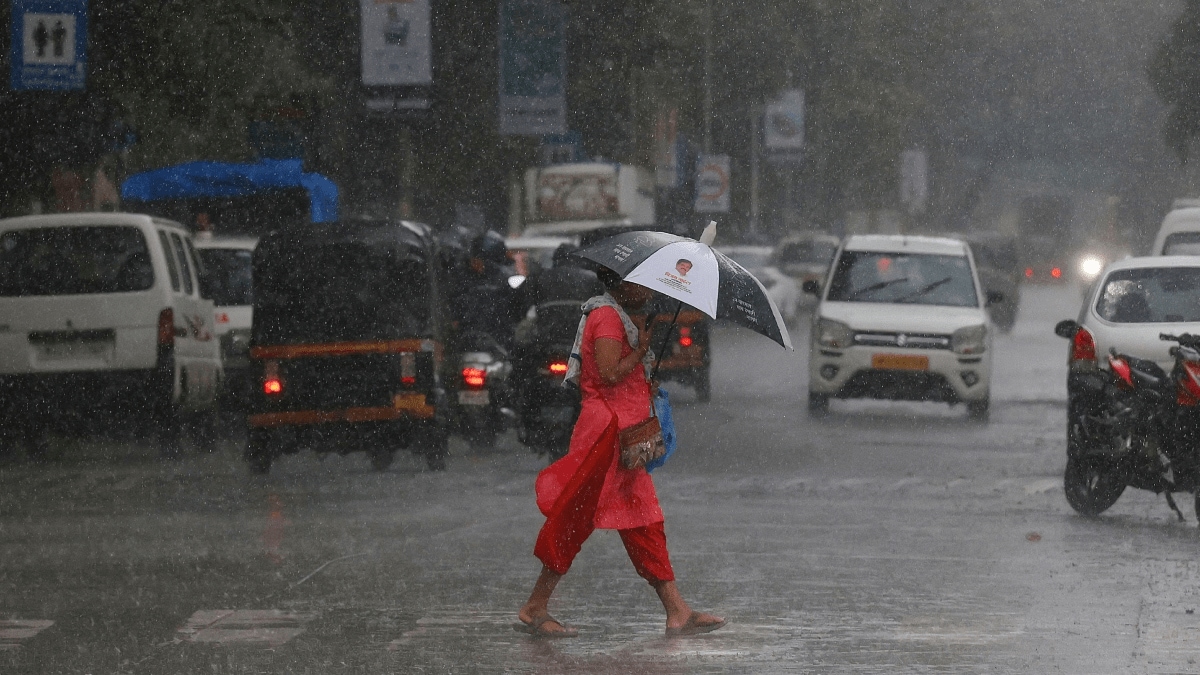
The India Meteorological Department (IMD) on Friday downgraded its forecast of “below normal” southwest monsoon rainfall for June-September this year to 90% of long period average (LPA), from 92% as stated last month, with a high 84% chance that the rains will fall in the “deficient to below normal” range.
The prediction which comes with a modelling error of ± 4% implies that the coming monsoon could be the weakest since 2015, when precipitation was 86% of the benchmark. The last two years saw above-normal monsoon activity (108% ), while 2023 witnessed below-normal rains (94%).
A below-par monsoon could adversely impact agricultural output besides hitting the rural economy and stoking inflation, even though in recent years, the share of rainfed crops in total farm output has decreased. Also, the timing and distribution of rains will have a major impact on crop yields. While slightly over half of the net sown area is rainfed, coarse cereals, pulses, oilseeds and cotton are the major crops that rely significantly on southwest monsoon.
ALSO READIndia’s energy investment to hit record $170 billion
Economic Threats
The met department’s forecast ‘below normal’ rainfall over most parts of the country except some areas of northwest, south peninsula and adjoining east and central India. The rainfall over the monsoon core zone consisting of most of the rainfed agriculture areas in the country is most likely to be below normal at less than 94% of benchmark – LPA, the met department stated.
In terms of regional distribution, rainfall is most likely to be ‘normal’ over Northeast India (94-106%) and ‘below normal’ over central and south peninsular India (less than 94%) and Northwest India (below 92%).
Rising El Niño Threat
While stating that currently neutral El-Nino conditions are transitioning to active mode over the equatorial pacific region, Mrutyunjay Mohapatra, director general of meteorology, stated development of weak to moderate El-Nino conditions developing in next four months.
According to the met department, while in June there is a likelihood of weak El Nino conditions prevailing while subsequently in July-August period a weak to moderate conditions would prevail/ In September, a moderate to strong El Nino conditions may prevail.
“In the post monsoon season, a strong El Nino condition is likely to develop,” Mohapatra said. However, the prevailing neutral Indian Ocean Dipole (IOD), which supports monsoon rains, is likely to continue during monsoon season. The LPA is the average rainfall received during 1971-2020 is 87 centimetres.
ALSO READIndian economy to stay resilient with 6.9% GDP growth in FY27: RBI
In terms of monthly forecast of rainfall, IMD has forecast ‘below normal rainfall” at less than 92% of LPA in June. “Below normal monthly rainfall is very likely over most parts of the country, except over some parts of NorthwestIndia, Northeast India and south Peninsula and isolated pockets of central India where normal to above normal rainfall is likely,” IMD stated.
Typically, the southwest monsoon, after onset over Kerala coast in early June covers the entire country by July. The monsoon rains start gradually receding from the north region during the mid-September and during the fourth months, the country receives over 75% of its annual rainfall.
The IMD classifies ‘normal’ rainfall between 96% and 104% of LPA. Rainfall between 90%-95% is considered ‘below normal’ while precipitation below 90% of LPA is termed ‘deficient’. Rainfall in the range of 105-110% is considered ‘above normal’.
On the onset of monsoon off Kerala coast, while the met department had predicted early arrival of monsoon on May 26, Mohapatra said that indications are that within next one week the monsoon should touch mainland.
TOPICSIMDWeather updateThis article was first uploaded on May twenty-nine, twenty twenty-six, at one minutes past six in the evening.