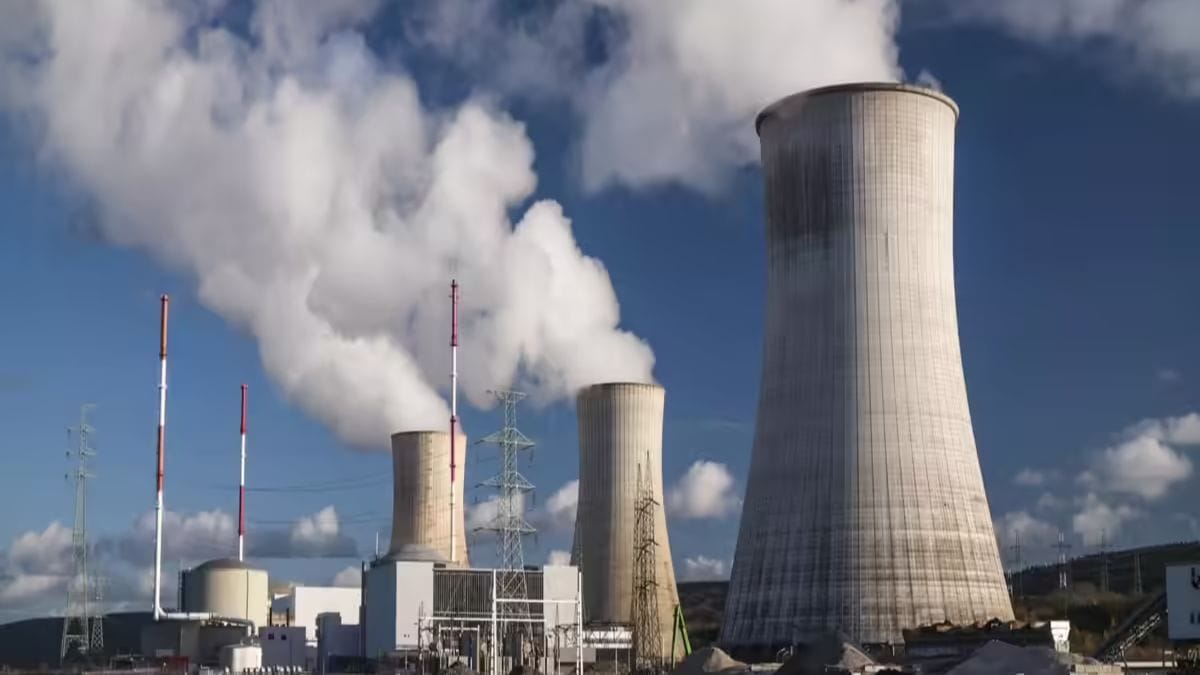
High capital intensity, long vendor qualification cycles and a tightly concentrated supplier ecosystem are emerging as critical bottlenecks for India’s ambitious nuclear expansion plan, even as the country targets a more than tenfold increase in capacity to 100 GW by 2047 from the current ~8.2 GW, according to a sector analysis by SOIC Research.
The report underlines that India’s nuclear build-out is facing structural constraints across manufacturing, financing and execution at a time when the country is attempting one of the world’s largest long-term clean baseload capacity expansions.
Assessing the Blueprint
At present, India operates 8,180 MW across 23 nuclear reactors, comprising PHWR, LWR and BWR technologies. The pipeline under execution and planning, however, is significantly larger. The country already has 9,800 MW under construction through 14 indigenous 700 MW PHWRs, while another 5,600 MW is planned as expansion at existing sites.
ALSO READCrude near $100 may cost India up to Rs 1.5 trillion: Jefferies
In addition, 2,800 MW at Bhimpur in Madhya Pradesh has received in-principle approval, while a second fleet of 7,000 MW PHWRs is also planned. On the imported reactor side, India has 4,000 MW of Light Water Reactors (LWRs) under implementation through four 1,000 MW units, alongside a potential 10,380 MW addition through six 1,730 MW reactors and another 7,248 MW through six 1,208 MW reactors.
The roadmap also envisages 39,000 MW through Bharat Small Reactors (BSR), Bharat Small Modular Reactors (BSMR) and international partnerships, besides a third fleet of 7,000 MW PHWRs, taking the total planned nuclear pipeline to 1,01,008 MW by 2047.
Despite the scale-up, the report cautioned that “vendor qualification cycles can take five to seven years,” highlighting the slow pace at which specialised suppliers can be integrated into the ecosystem.
Capital cost remains another major challenge. A typical 700 MW PHWR requires ₹20,000–28,000 crore investment, translating into ₹15–18 crore per MW, making nuclear among the most capital-intensive forms of power generation in the country.
India’s near-term roadmap targets scaling capacity to 22.5 GW by 2032, requiring a sharp acceleration in project execution compared to historical trends.
ALSO READConsumer goods to get costlier as raw material inflation bites: Systematix Research
SHANTI Act
A major policy shift underpinning this expansion is the 2025 SHANTI Act, which allows private companies, joint ventures and foreign entities to directly own and operate nuclear assets, marking a departure from the earlier state-led framework. The legislation also removes statutory supplier liability and caps operator liability, aligning India’s nuclear regime with global standards and opening the sector to private capital participation.
However, the report warned that policy liberalisation alone may not be sufficient. “Cost pressures, supply chain constraints and execution risks” will continue to determine the pace of expansion, it said.
India’s nuclear programme continues to be anchored in its three-stage strategy comprising PHWRs, fast breeder reactors (FBRs) and advanced heavy water reactors (AHWRs), aimed at ensuring long-term fuel security and reducing import dependence over time.
The report noted that the domestic supply chain remains highly concentrated, with companies such as Larsen & Toubro and Bharat Heavy Electricals Ltd dominating critical areas including reactor systems, heavy forgings and turbine equipment, creating what it described as an “oligopolistic” supply structure.
Fuel availability also remains a strategic concern, with uranium conversion and enrichment capacities globally remaining limited and geographically concentrated.
Despite these constraints, nuclear energy offers key operational advantages. The report highlighted that nuclear plants operate at “capacity factors of 80–92%,” significantly higher than renewable energy sources such as solar and wind, making them a critical source of firm baseload power in India’s evolving energy mix.
To address scalability and cost challenges, India is increasingly exploring small modular reactors (SMRs) in the 200–300 MW range, which offer faster deployment timelines, lower upfront costs and flexibility for industrial applications.
The report also pointed to rising global momentum for nuclear energy amid energy security concerns, rapid electricity demand growth and decarbonisation goals.
As India accelerates its clean energy transition, the analysis emphasised that execution readiness, financing capability and supply chain depth will ultimately determine whether the country can translate its 100 GW nuclear ambition into operational capacity by 2047.
TOPICSNuclear Energysupply chainThis article was first uploaded on May twenty-eight, twenty twenty-six, at zero minutes past six in the evening.