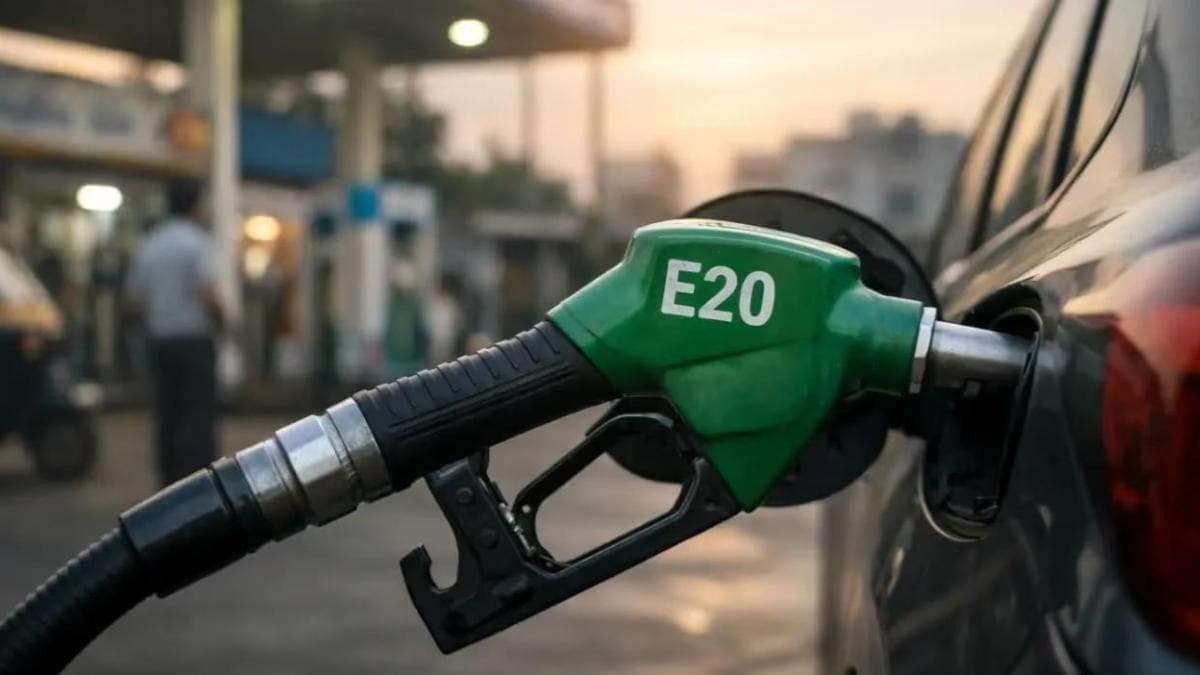
India’s aggressive ethanol capacity expansion is set to significantly outpace demand despite the government’s push towards E85 fuel and flex-fuel vehicles, with installed production capacity expected to touch nearly 2,400 crore litres by FY27 against current fuel demand of only around 1,100 crore litres under the E20 blending programme, according to a CareEdge Ratings report.
The report warned that the widening mismatch between supply and demand could keep ethanol plant utilisation capped at 65-75% for the next three years, putting pressure on margins and slowing fresh investments in the sector. At present, non-fuel ethanol demand is estimated at just 300-350 crore litres, leaving a substantial portion of installed capacity underutilised.
The findings come even as India achieved 20% ethanol blending in petrol in December 2025, five years ahead of target, prompting the government to begin laying the groundwork for E85 and higher ethanol blends through draft amendments issued by the Ministry of Road Transport and Highways in April 2026.
ALSO READPower exchanges get new solar-time rulebook from CERC
Growth Triples
India’s ethanol production capacity has nearly tripled from 680 crore litres in 2018-19 to around 1,970 crore litres in 2025-26, making the country the world’s third-largest ethanol producer after the US and Brazil. However, only around 60% of offered ethanol is currently being absorbed, reflecting mounting oversupply pressures across the industry.
“Recent aggressive capacity expansion has led to significant underutilisation across distilleries. At the current 20% blending level, it will take several years for this surplus capacity to be absorbed,” Karthik Raj K, Director, CareEdge Ratings, said.
The report highlighted sharp regional imbalances, with ethanol capacity concentrated in states such as Maharashtra, Uttar Pradesh and Karnataka, resulting in large surpluses in some regions and deficits in others. Maharashtra alone has an estimated surplus of 277 crore litres, while Tamil Nadu faces a deficit of around 77 crore litres, increasing transportation dependence and logistics costs.
Retail Infrastructure Bottlenecks
Infrastructure constraints are also expected to slow the transition towards higher ethanol blends. India’s retail fuel network of around 1.03 lakh outlets largely follows a “one fuel-one tank” model, limiting the ability to supply multiple ethanol blends. Ethanol storage infrastructure also remains limited at around 77.8 crore litres despite annual blending volumes crossing 1,000 crore litres.
CareEdge said ethanol demand could rise to around 1,200 crore litres by ESY 2026-27 and nearly 1,600 crore litres by ESY 2029-30 if flex-fuel vehicle penetration reaches 5% of new vehicle sales by FY28 and 20% by FY30. However, even under E85 blending, demand would continue to structurally lag existing installed capacity unless FFV adoption accelerates sharply.
ALSO READArtificial support for rupee could weaken economy: Montek Singh Ahluwalia
“While the government’s intent to scale up ethanol blending and transition toward higher ethanol fuels is clear, the slower development of storage, logistics and retail infrastructure is likely to constrain demand realisation in the near term,” Yogesh Shah, Senior Director, CareEdge Ratings, said.
The report added that the sector is already entering a consolidation phase, with EPC activity moderating and companies increasingly shifting towards brownfield expansion, debottlenecking and operational efficiency improvements instead of greenfield projects.
TOPICSethanolThis article was first uploaded on May twenty-two, twenty twenty-six, at one minutes past eight in the night.