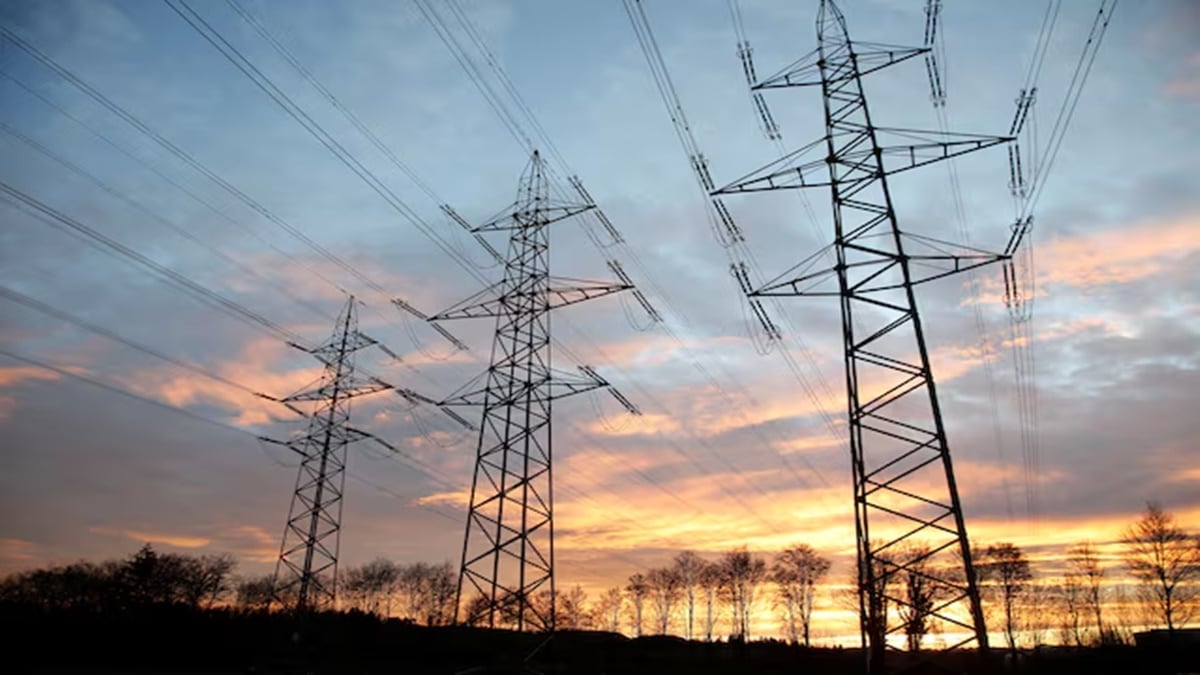
India’s rapidly expanding renewable energy capacity is beginning to outpace transmission infrastructure, forcing nearly 300 gigawatt-hours (GWh) of clean power curtailment in the first quarter of 2026 due to grid bottlenecks and causing an estimated monetary loss of ₹75-90 crore, according to a report by global energy think tank Ember. One GWh is equivalent to one million units of electricity.
The report warned that transmission constraints are emerging as one of the biggest operational risks to India’s target of achieving 500 GW of non-fossil fuel capacity by 2030, even as one-fourth of major transmission projects are already running more than a year behind schedule.
According to the analysis, India curtailed around 470 GWh of renewable energy across inter-state transmission system (ISTS) projects during January-March 2026, of which nearly two-thirds — around 300 GWh — stemmed directly from transmission constraints across the Northern and Western grids.
ALSO READBPCL shifts to spot buying as West Asian oil contracts falter amid Iran war
The Northern region accounted for 178 GWh of renewable energy losses while the Western region contributed 122 GWh. The Southern grid reported no such curtailment linked to transmission constraints, reflecting relatively better coordination between renewable energy additions and transmission infrastructure development.
Widening Mismatch
The report said the curtailed clean electricity during the quarter could have powered nearly five lakh urban middle-class households for three months.
On March 30 alone, India lost nearly 34 GWh of renewable generation because of insufficient transmission margins — equivalent to the daily electricity consumption of around 5 million urban middle-class households.
“India’s renewable energy curtailment arising from transmission constraints is beginning to reach materially significant levels,” said Duttatreya Das, Energy Analyst – Asia at Ember.
The report said the core challenge is the growing mismatch between the pace of renewable energy deployment and readiness of evacuation infrastructure.
India has achieved only around 80% of its annual transmission expansion targets over the past five years, with annual additions averaging nearly 13,000 circuit kilometres (ckm) against targeted levels of around 16,230 ckm during FY22-FY26.
For FY27, the ISTS transmission target has sharply increased to 25,146 ckm, while India will require an additional 61,411 ckm transmission infrastructure by FY30 to support renewable integration targets.
Execution delays are worsening the stress. Around one in four major transmission projects is already delayed by more than a year because of right-of-way disputes, forest clearances, biodiversity restrictions and global shortages of high-voltage direct current (HVDC) equipment.
ALSO READIndia scales up Russian crude purchases as premiums halve
As a result, nearly 20 GW of renewable energy projects are expected to face connectivity delays exceeding four months during FY27, particularly in Rajasthan and Gujarat, which account for the bulk of India’s utility-scale solar and wind capacity.
“Over time, the system will need to move away from generation-led transmission planning towards a model where generation and transmission are co-optimally planned and executed,” Das said.
The report noted that the curtailment comes at a time when India is grappling with elevated global energy prices and higher LNG costs following the US-Israel conflict with Iran in West Asia.
It said the lost renewable electricity could have reduced reliance on costly imported natural gas or freed up domestic gas supplies for higher-priority sectors at a time when spot gas prices were nearly double pre-war levels.
Battery Storage
Ember said battery energy storage systems (BESS) could emerge as the fastest short-term solution to reduce transmission congestion and renewable curtailment.
“Battery storage at pooling stations is the fastest available fix to resolve transmission constraints,” Das said.
According to the report, India already has nearly 236 GW of “plug-and-play” battery storage potential available across major renewable pooling stations without requiring substantial additional transmission infrastructure.
The report estimated that around 3-4 GW of two-hour battery storage capacity could have absorbed most of the curtailed renewable generation in congested corridors.
“With the levelised cost of storage at INR 4-4.5/kWh and solar at around INR 2.5/kWh, the combined delivered cost lands at INR 7-8/kWh, well below the INR 10/kWh that many states currently pay for peak power,” the report said.
The report also recommended regulatory reforms such as transparent intra-state connectivity mechanisms, harmonised curtailment compensation frameworks, dynamic line rating and reconductoring to improve transmission capacity and defer large infrastructure additions.
TOPICSpower discomsThis article was first uploaded on May twenty-one, twenty twenty-six, at fifty minutes past six in the evening.