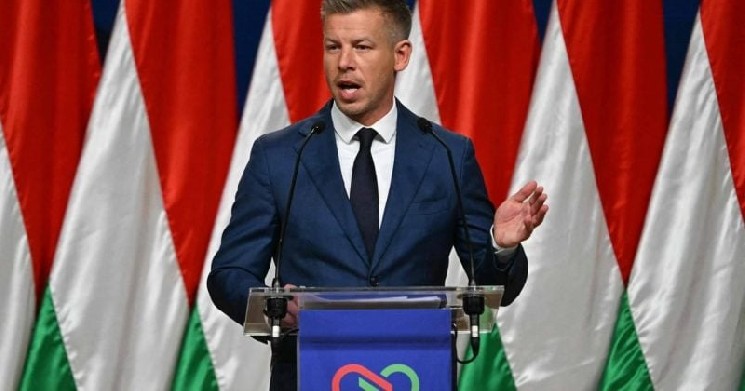
Hungary just made the most decisive pivot toward Brussels in over a decade. Newly appointed finance minister András Kármán has committed to meeting all euro adoption criteria by 2030, a timeline that would have been unthinkable just months ago under the previous government.
The pledge follows the April 12, 2026 landslide victory of Péter Magyar’s Tisza party, which ousted Viktor Orbán and his long-running Euroskeptic administration. Where Orbán spent years keeping the European Union at arm’s length, including letting billions in EU funds sit frozen over rule-of-law disputes, the new government is sprinting in the opposite direction.
What euro adoption actually requires
Countries must satisfy the Maastricht criteria, a set of economic benchmarks covering inflation rates, government debt levels, budget deficits, and exchange rate stability.
The most concrete target Kármán has outlined is reducing Hungary’s budget deficit to below 3% of GDP. That is the hard ceiling set by EU fiscal rules, and hitting it within four years will require meaningful spending discipline from a government that also wants to unlock frozen EU funding and invest in economic recovery.
Hungary’s central bank has already weighed in with a dose of realism. In late April 2026, the bank cautioned that euro adoption requires careful preparation to align with the country’s economic cycle.
The political backdrop
Orbán’s government had been in power since 2010. Over that period, Hungary became the EU’s most reliable contrarian, blocking collective initiatives, cozying up to Moscow, and generally treating Brussels like an overbearing landlord.
The frozen EU funds were perhaps the most tangible symptom of that dysfunction. Billions of euros earmarked for Hungary sat inaccessible because the European Commission had concerns about democratic backsliding. The new government under Magyar has pledged to unlock that money “within months.”
What this means for crypto investors
The EU’s Markets in Crypto-Assets regulation, better known as MiCA, established a comprehensive framework for digital assets across member states. Under Orbán, Hungary’s engagement with MiCA was, charitably, lukewarm. A government that is actively seeking eurozone membership has every incentive to align its regulatory infrastructure with EU standards, including its treatment of crypto.
Europe’s crypto market is projected to reach $18.5B by 2030, with roughly 16% annual growth. Hungary positioning itself as a fully compliant EU member rather than a peripheral skeptic could open the door to greater institutional participation in the country’s digital asset market.
The bigger risk is execution. Pledging to meet Maastricht criteria by 2030 is the easy part. Actually hitting inflation targets, maintaining exchange rate stability, and cutting the deficit while simultaneously trying to stimulate an economy that has been partially cut off from EU investment for years — that is the hard part. If the fiscal math does not work out, the timeline slips, and with it, the regulatory harmonization that would benefit Hungary’s crypto ecosystem.