
On Sunday, Bitcoin experienced a brief decline before soaring past $82,000 following US President Donald Trump’s dismissal of Iran’s counteroffer for a peace agreement, which may escalate tensions in the Middle East.
Trump expressed his disapproval on Truth Social, stating, “I don’t like it — TOTALLY UNACCEPTABLE,” after reviewing Iran’s proposal aimed at concluding the conflict. The Iranian government had previously sought reparations from the US and demanded that frozen Iranian financial assets be released.
According to CoinGecko data, Bitcoin (BTC) dropped from $81,430 to $80,520 within just 45 minutes of Trump’s announcement but quickly rebounded by nearly 2.3%, reaching $82,347 less than three hours later. This surge also led to approximately $64 million in short positions being liquidated over four hours as reported by Coinglass data.
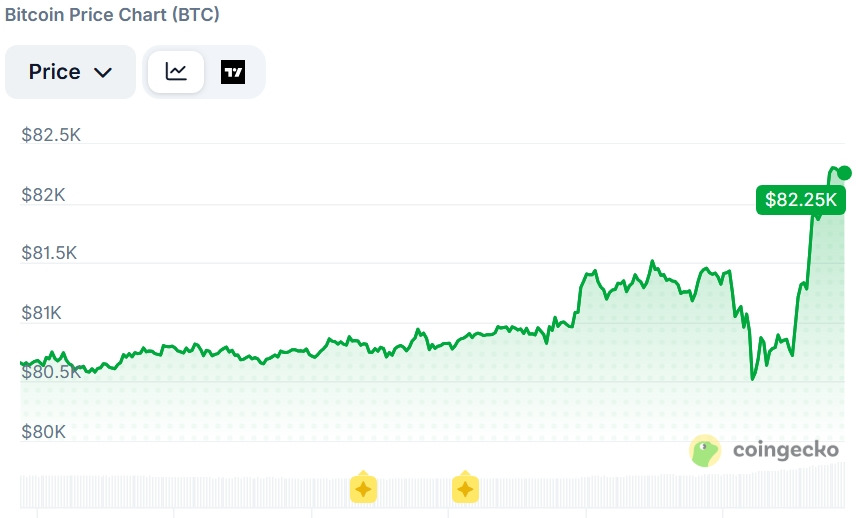
The price fluctuation of Bitcoin over the last 24 hours. Source: CoinGecko
The ongoing US-Iran conflict and disputes regarding control over the Strait of Hormuz—responsible for one-fifth of global oil trade—have significantly impacted financial markets in recent weeks. Following Trump’s remarks, oil prices surged another 4.6%, reaching $98.7 per barrel.
S&P 500 futures saw a slight increase of 0.13% shortly after market opening two hours post-Trump’s statement.
Trump’s rejection of Iran’s counterproposal diminishes prospects for an immediate resolution to hostilities this Wednesday; Israeli Prime Minister Benjamin Netanyahu has also indicated that military actions will persist until Iran dismantles its uranium facilities.
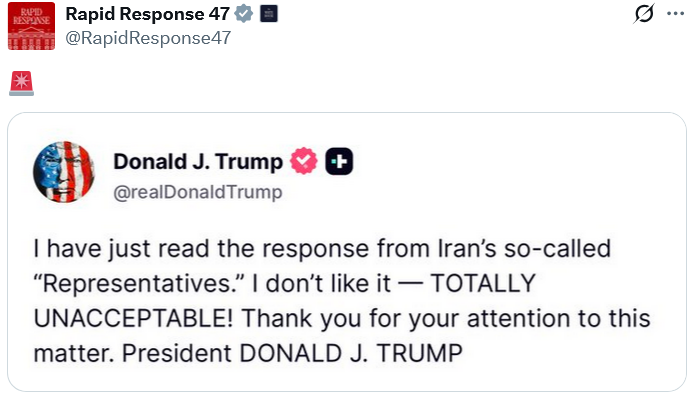
Source: Rapid Response 47
The Potential for Increased Regulatory Momentum in the US This Week
This week could see Bitcoin maintain its strength around the $80k mark due to two potentially favorable decisions expected from the US Senate according to Markus Thielen, CEO of 10x Research.
“Two key events are on our radar this week,” Thielen noted—a Senate vote scheduled for Monday regarding Kevin Warsh’s confirmation as Federal Reserve chair and a markup session on Thursday concerning the CLARITY Act by the Senate Banking Committee.
Related: A potential dip towards $70K predicted as Fed anticipates higher inflation rates
Thielen remarked that while “Warsh is generally seen as more hawkish on inflation” compared to current Fed Chair Jerome Powell, his confirmation would alleviate existing uncertainties surrounding monetary policy leadership.
“Both occurrences are bullish indicators for Bitcoin; regulatory clarity minimizes institutional barriers while a seamless transition at Fed leadership mitigates policy-related uncertainties typically detrimental to risk assets.”
A Notable Increase in Bitcoin Value Amidst Ongoing Conflict
No matter how tumultuous things get with regards to U.S.-Iran relations since February 28—the date marking an airstrike that killed Iran’s Supreme Leader Ayatollah Ali Khamenei—Bitcoin has managed an impressive rise of approximately 29.7% during this period.
This performance outstrips both S&P500 and gold since hostilities began while allowing it some recovery from losses incurred back in October when it peaked at around $126k.
FAQ
Q1: What caused Bitcoin’s price fluctuations recently?
A1: Recent fluctuations were influenced by geopolitical tensions between the U.S. and Iran along with President Trump’s comments rejecting Iran’s peace proposal.
Q2: How much did Bitcoin rise during ongoing conflicts?
A2: Since February when hostilities escalated due to U.S.-Iran tensions leading up until now,Bitcoin has increased about 29%.
Q3 :What legislative changes might affect cryptocurrency regulation soon?
A3 :Potential regulatory clarity may arise through upcoming votes related to Kevin Warsh’s nomination as Federal Reserve chair & discussions surrounding the CLARITY Act.
Q4 :Why is regulatory clarity important for cryptocurrencies like bitcoin?
A4 :Regulatory certainty helps reduce friction among institutions investing or trading cryptocurrencies thereby fostering growth within digital asset markets.