
The shift towards risk assets is occurring at varying speeds across different markets.
In the cryptocurrency sector, Bitcoin [$BTC] has experienced a 17% increase in Q2. However, its price pattern indicates more of a consolidation phase rather than an expansion.
From a technical perspective, $BTC remains approximately 35% below its peak of $126k. The persistent resistance in the $80k-$85k range continues to hinder any movement into new price discovery, despite an overall improvement in market sentiment.
Conversely, U.S. equities are showing stronger capital absorption capabilities. Technically speaking, the NASDAQ index has surged over 22% so far this quarter, while the S&P 500 reached an all-time high of 7,400 on May 8th.
This divergence can largely be attributed to liquidity dynamics; over $10 trillion has flowed into U.S. equities within just about a month’s time frame, reinforcing sustained upward momentum.
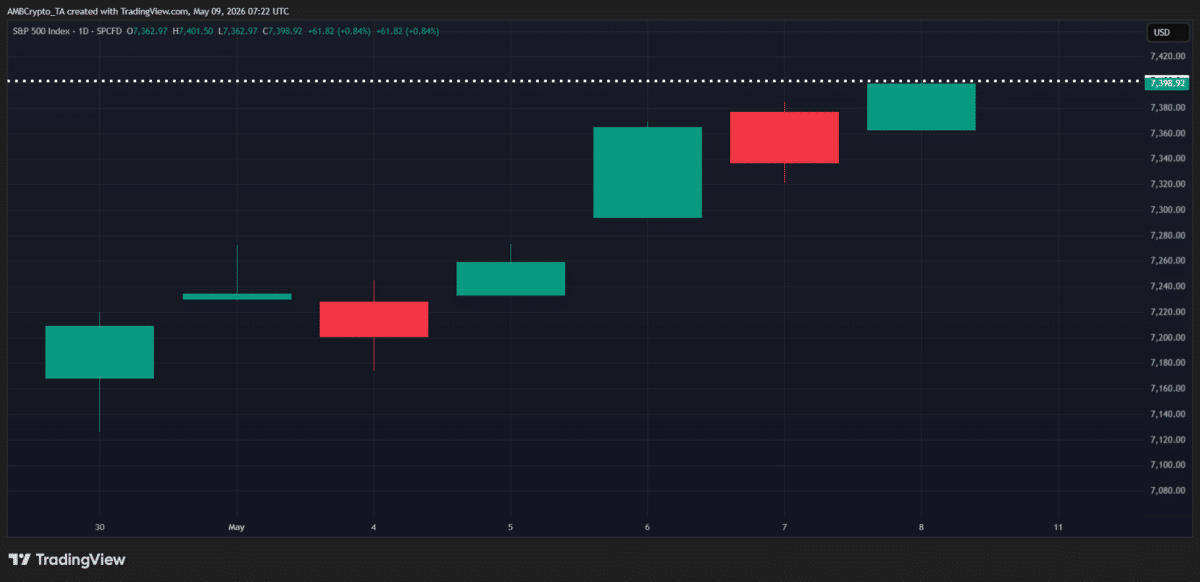
Within this framework, it becomes increasingly credible that equity markets are influencing Bitcoin flows.
Certainly noteworthy is that capital flow data from across the crypto landscape supports this notion. During the same monthly timeframe mentioned earlier, around $300 billion entered digital assets—lifting total market capitalization above $2.6 trillion.
This influx is significant but still modest when compared to inflows seen in equity markets; thus indicating that liquidity currently favors traditional risk assets more heavily than cryptocurrencies.
A pressing question arises: Is Bitcoin’s breakout above the crucial $85k resistance level currently on hold?
The Strength of STRC Fuels Expectations for Corporate Bitcoin Accumulation
Given Bitcoin’s increasing institutional traction and strength within equity markets creates a dual liquidity effect for investors.
On one hand, capital rotation into equities limits immediate inflows into crypto-assets and caps short-term expansion potential for Bitcoin prices. On another front however—enhanced Wall Street liquidity improves conditions for corporate treasuries looking to accumulate more $BTC, indirectly supporting future growth prospects for these digital currencies as well as their valuations moving forward!
The Stretch Index (STRC), associated with Strategy (MSTR), captures this relationship dynamically in real-time analysis reports! Recently Michael Saylor shared insights via X platform highlighting approximately $126 million worth sell-side liquidity positioned near levels around just under one hundred dollars ($100).
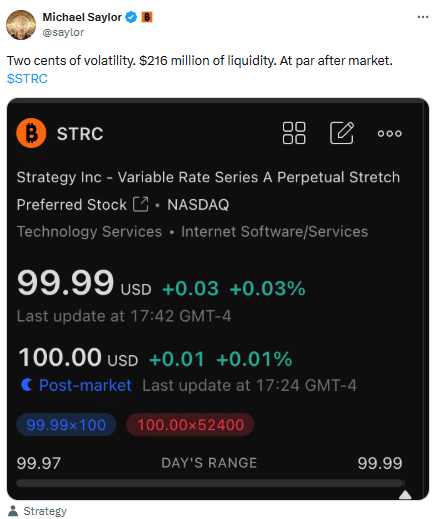
This strong overhead supply notwithstanding suggests robust institutional demand absorbing available supplies even amidst tighter overall crypto market conditions!
This scenario led traders quickly anticipating potential upside movements concerning STRC prices!
A historical review shows consistent trading activity hovering near thresholds close towards one hundred dollars often correlates positively with increased purchases made involving Bitcoins since funds raised through related flows typically get allocated directly back towards acquiring additional units or holdings therein!
If we consider how equities continue gaining momentum alongside solid inflow trends—it stands plausible improving macroeconomic circumstances could further facilitate enhanced accumulation efforts directed at boosting positions held by various entities seeking exposure within BTC asset classes too!
Taken together—this builds upon arguments advocating bullish sentiments surrounding possibilities regarding breakouts exceeding established resistances previously set forth around eighty-five thousand dollar marks ($85K) despite ongoing constraints limiting available liquidities present throughout broader cryptocurrency landscapes today!
Your Summary Takeaway:
The current state reveals equity markets are absorbing most available liquidities which consequently delays imminent breakthroughs expected from BTC values as rotations favor traditional risk-based investments primarily instead!
Additionally—the notable strength observed among STRCs indicates possible corporate buying interests aimed toward accumulating larger quantities relating back specifically towards holding substantial amounts involving bitcoins themselves suggesting brighter outlooks remain intact regarding chances witnessing breakouts surpassing those eighty-five thousand dollar thresholds previously discussed here today!.
FAQ:
- Q1: What factors influence Bitcoin’s price movements?
- A1: Several factors impact Bitcoin’s pricing including market sentiment shifts among investors/traders along with macroeconomic indicators such as inflation rates etc., regulatory news affecting cryptocurrencies broadly speaking too amongst others…
- Q2: How does institutional investment affect cryptocurrency?
- A2 : Institutional investments generally provide greater legitimacy & stability leading increased interest levels attracting retail participants resulting ultimately driving higher demand pushing up respective asset values accordingly…
- Q3 : Why is there resistance at certain price levels like $85K ?
- A3 : Resistance points arise due many sellers entering positions once reaching specific thresholds thereby creating downward pressure preventing further upward progression until sufficient buying volume outweighs selling pressures exerted hence maintaining equilibrium till resolved eventually …