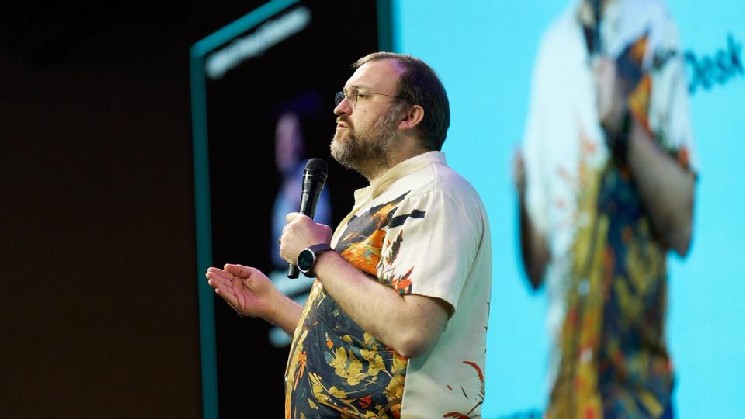
According to Charles Hoskinson, AI agents are poised to surpass human relevance on the internet within the next decade. This transformation is already prompting significant responses from major players like Google, Facebook, and Amazon.
During his keynote address at Consensus Miami 2026 on Wednesday, Hoskinson predicted that by 2035, a majority of online searches, commerce activities, and interactions will be conducted by AI agents rather than individuals.
He expressed concerns about how this evolution threatens current business models. “Amazon, Google, Facebook—they’re all anxious about the agentic revolution,” he remarked. He emphasized that these companies are investing heavily in adaptations because their foundational business strategies face disruption.
Hoskinson elaborated that AI agents do not engage with advertisements or exhibit brand loyalty. This reality poses a risk to advertising-driven revenue models for platforms such as Google and Amazon.
“Why do you think Google is interested in x402?” he posed to his audience regarding a Coinbase-backed protocol designed for enabling AI agents and applications to execute direct programmatic payments over the internet using stablecoins and cryptocurrency frameworks.
This transition will also alter how cryptocurrencies are utilized; Hoskinson noted that artificial intelligence (AI) will increasingly take charge of tasks like due diligence processes, transaction execution, and interactions within decentralized finance systems.
The forecast made by Hoskinson aligns with insights from Coinbase CEO Brian Armstrong who stated that “very soon there will be more AI agents than humans making transactions.” Binance Founder Changpeng Zhao echoed this sentiment predicting they “will conduct one million times more payments than humans.”
On a positive note, Hoskinson referred to AI agents as potentially being “the single best thing ever for cryptocurrencies,” citing their ability to enhance user experience significantly.
The Cardano founder cautioned crypto users against depending on intermediaries instead of maintaining direct control over their assets—an essential principle upon which cryptocurrency was founded. “You must own your data. You must own your identity. You must own your money,” he stressed while highlighting concerns about users “outsourcing” these responsibilities to custodial wallets or third-party networks—often leading them into regret when accounts get shut down unexpectedly.
He also pointed out fragmentation across blockchain ecosystems as an obstacle hindering progress in development efforts. “Over the years there have been 11 million tokens issued; we have enough already,” said Hoskinson firmly advocating for collaboration towards achieving shared goals instead of proliferation without purpose.
User experience remains critical in driving adoption rates according to him; describing existing crypto onboarding procedures as overly complex and error-prone he questioned: “Is this really what you want from a product?”
Technologies such as account abstraction along with chain abstraction could simplify user interactions with crypto systems while still allowing them full control over their assets and identities according him!
A shift in perspective among financial institutions has been observed too; noting JPMorgan’s transition from restricting crypto-related activities towards developing blockchain-based products illustrates this change well! He reflected back saying: “When we started JPMorgan was shutting down people’s bank accounts but now they’ve launched a blockchain product.”
FAQ
- What does Charles Hoskinson predict about AI’s role on the internet?
He predicts that within ten years (by 2035), most online activities including searches and commerce will be conducted by AI agents rather than humans. - How might businesses react to increasing use of AI?
Businesses like Amazon & Google may need adapt since traditional advertising-driven models could become less effective due lack engagement from non-human entities (AI). - Please explain why ownership matters according Mr.Hoskinsons view point?
Ownership ensures individuals maintain control over personal data/identity/money rather than relying on third parties which can lead issues if those services fail or restrict access unexpectedly! - If so many tokens exist why does Mr.Hoskins advocate cooperation instead proliferation?
The emphasis here lies upon fostering collaborative efforts toward achieving common objectives rather than creating numerous tokens without clear purpose!