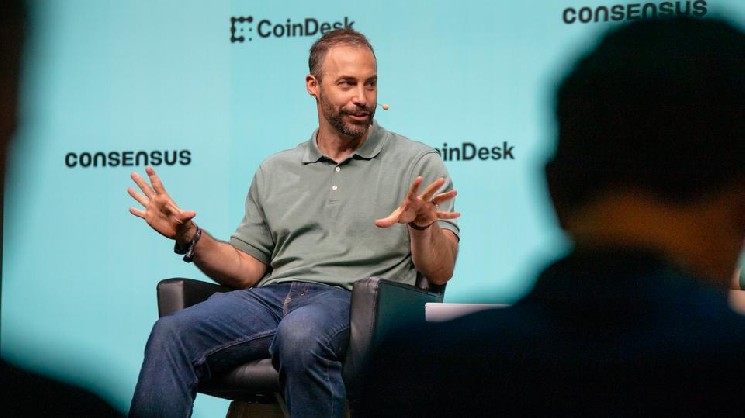
According to Alex Pruden, CEO of Project Eleven, the Bitcoin developer community should not wait for definitive timelines regarding quantum computing. Instead, they should prioritize implementing a post-quantum signature scheme. He shared these insights during his presentation at CoinDesk’s Consensus Miami conference on Wednesday.
Pruden emphasized that taking action now is more advantageous than waiting for certainty. “We have integrated some new cryptographic measures; although we may not need them immediately, having them ready is beneficial,” he explained while discussing the potential downsides of delaying action.
The risks associated with inaction are significantly greater. A sufficiently advanced quantum computer could exploit Shor’s algorithm—developed in 1994—to derive private keys from any exposed public key. This represents a critical vulnerability that classical computers cannot address.
Pruden estimated the value at stake to be around $2.3 trillion. “In essence, anyone with access to a powerful quantum computer could potentially seize everyone’s digital assets or Bitcoin linked to visible public keys,” he warned.
To move forward effectively, Pruden proposed introducing a new signature scheme for Bitcoin that does not depend on the classical mathematics underpinning its current elliptic-curve digital signature algorithm (ECDSA).
The National Institute of Standards and Technology has already standardized post-quantum schemes based on hash functions and lattices, which aligns with recent discussions within the Bitcoin community leaning towards hash-based solutions. The BIP-360 proposal from last year laid important groundwork for integrating a quantum-resistant Taproot output type into Bitcoin’s framework; additionally, Blockstream has successfully implemented a hash-based signature scheme within its Liquid Network.
“Transitioning from research into practical application is where our focus should lie,” Pruden asserted while emphasizing the importance of prioritizing development over mere theoretical exploration.
However, he cautioned that this migration process will be considerably more complex than previous upgrades like Taproot took five years to complete but still did not encompass all challenges involved in this upcoming transition. Unlike Taproot—which was optional—every bitcoin holder along with wallets and exchanges must engage in this essential post-quantum migration process.
The timing risk associated with this transition is significant: if quantum computing capabilities advance before users can migrate their assets securely, attackers might execute transactions ahead of others by paying higher fees within just one block time using newly derived private keys from compromised public ones.
Pushed about unresolved issues surrounding dormant bitcoins vulnerable to quantum threats, Pruden advised postponing those debates and concentrating instead on facilitating migration itself—a discussion involving over five million dormant coins attributed even back to Satoshi Nakamoto through early miner blocks’ so-called “Patoshi” pattern
.
“The question regarding Satoshi’s coins poses unique challenges,” noted Pruden as it juxtaposes two philosophical principles: Bitcoin’s fixed supply model against its commitment toward protecting digital property rights.” When asked about his personal stance on handling these dormant coins he suggested they might eventually be “recycled back into circulation” after block subsidies cease as an extension strategy for incentivizing mining activities moving forward.”
If placed under pressure during questioning about confiscation versus recycling options he’d likely lean towards confiscation but acknowledged ultimately it would fall upon community consensus alongside institutional market decisions.”
On whether developers within Core are adequately addressing these threats posed by emerging technologies such as Quantum Computing? His response reflected mixed sentiments noting “Core isn’t uniform; certain members acknowledge serious implications while others remain skeptical believing such advancements may never materialize.” He pointed out broader scientific consensus suggesting otherwise stating most physicists agree Quantum Computing developments are inevitable—and many predict accelerating timelines too!
This same physics driving concerns over existing cryptography vulnerabilities also lays groundwork potentially birthing next-gen cryptographic primitives citing examples like key-exchange protocols utilizing entanglement alongside certified randomness breakthroughs recognized recently via Turing Award honors last year!
FAQ
- What is meant by ‘post-quantum signature scheme’?
A post-quantum signature scheme refers to cryptographic methods designed specifically to resist attacks from future quantum computers which threaten traditional encryption methods used today. - Why should developers act now rather than wait?
The urgency lies in preventing potential losses due exposure caused by advances made possible through powerful upcoming technologies capable exploiting current vulnerabilities inherent across systems relying solely upon classical mathematical frameworks without adequate defenses established beforehand! - If I hold bitcoins currently stored at risk-prone addresses what actions can I take?
Your best course involves participating actively during planned migrations aimed securing your holdings against imminent threats posed evolving computational capabilities enabling exploitation previously unthinkable scenarios impacting financial security overall! - Might there ever exist an agreement concerning Satoshi’s dormant coins?
This remains contentious debate among stakeholders however no clear resolution appears forthcoming yet since diverging opinions persist surrounding both ethical implications & economic consequences arising therein further complicating matters substantially going forward!
</ul