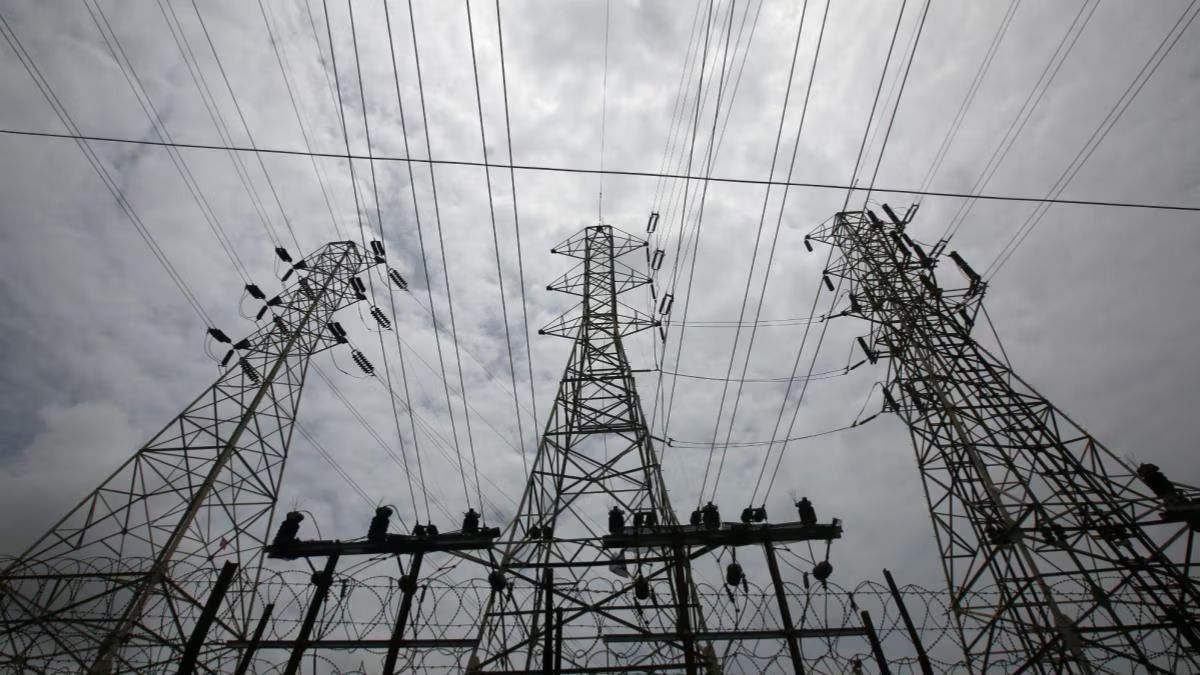
Power tariffs may rise across several states in the coming weeks amid rising summer demand as regulators seek to comply with a recent Supreme Court order.
This could add to the emerging inflation pressures due to the increase in LPG prices and imminent hike in retail auto fuel rates. State-run oil companies have artificially held these prices down despite rising crude oil costs, but they are soon expected to pass these costs on, now that state assembly elections are over.
In its August 2025 ruling, the apex court directed all states to implement cost-reflective electricity tariffs and prepare a clear time-bound roadmap for liquidation of “regulatory assets,” which are deferred costs arising when distribution companies (discoms) fail to recover the full cost of electricity supply. At last count, regulatory asset overhang was pegged at a staggering ₹3 lakh crore.
ALSO READGovt asks exporters to continue West Asia exports, assures support
The court also warned against “regulatory failure” and “regulatory capture,” raising serious concerns over the functioning of state electricity regulators.
Apex Court Sets a 2031 Deadline
Regulatory assets constitute the unrecoverable revenue gap due to the difference between the average cost of supply (ACS) – the expense incurred by a discom to deliver a unit of electricity to consumers – and the annual revenue requirement (ARR), which is the revenue collected by the discom as consumer tariffs and subsidy payments from the government.
If the ACS is greater than the ARR, the discom effectively makes a loss on the sale of every unit of electricity. To avoid suddenly burdening consumers with an immediate tariff increase to recover the gap, SERCs allow the discom to record the gap as a regulatory asset. In practice, these gaps arise when governments avoid raising electricity tariffs for political or populist reasons, despite rising costs of power purchase, transmission and distribution.
Nearly eight months after the court ruling, the response among states remains uneven and largely procedural, but now that state elections are over, many of them are expected to move fast.
Some have already submitted compliance reports and timelines.
Divergent Recovery
As per the data analysed by Centre for Energy, Environment and People, Delhi alone accounts for ₹38,552 crore in regulatory assets. Electricity tariffs in the national capital are now set to rise after the Appellate Tribunal for Electricity (APTEL) ordered the Delhi Electricity Regulatory Commission (DERC) to commence within three weeks the liquidation process.
Accordingly, DERC is expected to impose a regulatory asset surcharge on consumer bills, enabling recovery over a phased period of seven years. Tariffs in Delhi have not been revised since 2014-15.
Delhi had sought an extension until July 2026 to even begin the liquidation process, but APTEL rejected the plea in its April 20, 2026 order, terming repeated delays “malafide” despite undertakings to the Supreme Court, Delhi High Court and the tribunal, and directed immediate commencement of recovery.
ALSO READHVDC push: Govt mandates phased localisation to 60% by FY35
In contrast, Rajasthan has emerged as a rare case of measurable progress. The state’s regulatory assets, which stood at ₹53,824 crore in FY2023, are projected to decline to ₹33,298 crore by FY2027, marking a 38% reduction, driven by a structured recovery mechanism.
A key intervention was the introduction of a dedicated regulatory surcharge in October 2025, with rates ranging from ₹0.42 per unit for domestic consumers using below 100 units per month to ₹0.72 per unit for other categories. In just six months of FY2025–26, the state’s three discoms collected ₹3,341 crore, with a further ₹8,663 crore targeted in FY2026–27. The surcharge has since been revised to ₹0.56–₹0.86 per unit and ring-fenced specifically for regulatory asset liquidation, ensuring steady recovery and decline in liabilities. The impact is already visible in tariff dynamics. Carrying costs – interest on deferred dues are projected to decline from ₹0.68 per unit in FY2024 to ₹0.22 by FY2029, and further to ₹0.03 by FY2031, offering potential relief to consumers over time.
Tamil Nadu initially argued that a state takeover of dues exempted it from compliance, before committing to audits and tariff orders, while Maharashtra, after denying the existence of such assets, later acknowledged them and sought time until May 2026 to complete audits.
At the core of the issue is a persistent mismatch between cost and revenue. Discoms continue to defer tariff hikes due to political sensitivities, leading to the accumulation of liabilities. Delayed filings, weak enforcement by regulators and governance challenges have compounded the problem.
Anshuman Gothwal from Centre for Energy, Environment and People said, “Rajasthan discoms exemplify the effectiveness of ring-fenced mechanisms implemented within a clearly articulated, time-bound framework. Our analysis projects full liquidation within the Supreme Court-mandated timeline.”
Yet, the broader sector remains under stress. By the end of FY2024, outstanding debt of discoms across states had climbed to ₹7.5 lakh crore, while accumulated losses reached ₹6.77 lakh crore, underscoring the depth of financial strain. Structural issues – including inefficient power procurement, weak demand forecasting, high incidence of defective metering and slow reform implementation continue to undermine financial discipline and operational efficiency.
The divergence between Rajasthan and other states highlights the central challenge: while regulatory tools and legal backing exist, execution is constrained by political economy factors and institutional gaps. With power demand rising and investment requirements growing, the persistence of regulatory assets underscores a deeper systemic risk. Unless states enforce tariff discipline and implement structural reforms, the sector could remain trapped in a cycle of deferred costs, rising liabilities and periodic financial stress.
TOPICSpower discomsState Electricity BoardThis article was first uploaded on May three, twenty twenty-six, at eleven minutes past nine in the night.