The recent surge in Bitcoin’s value on Sunday night hit a wall near $79,400 and is now exhibiting signs of exhaustion. Several indicators suggest that the cryptocurrency may experience short-term weakness as it trades back around the $77,000 mark.
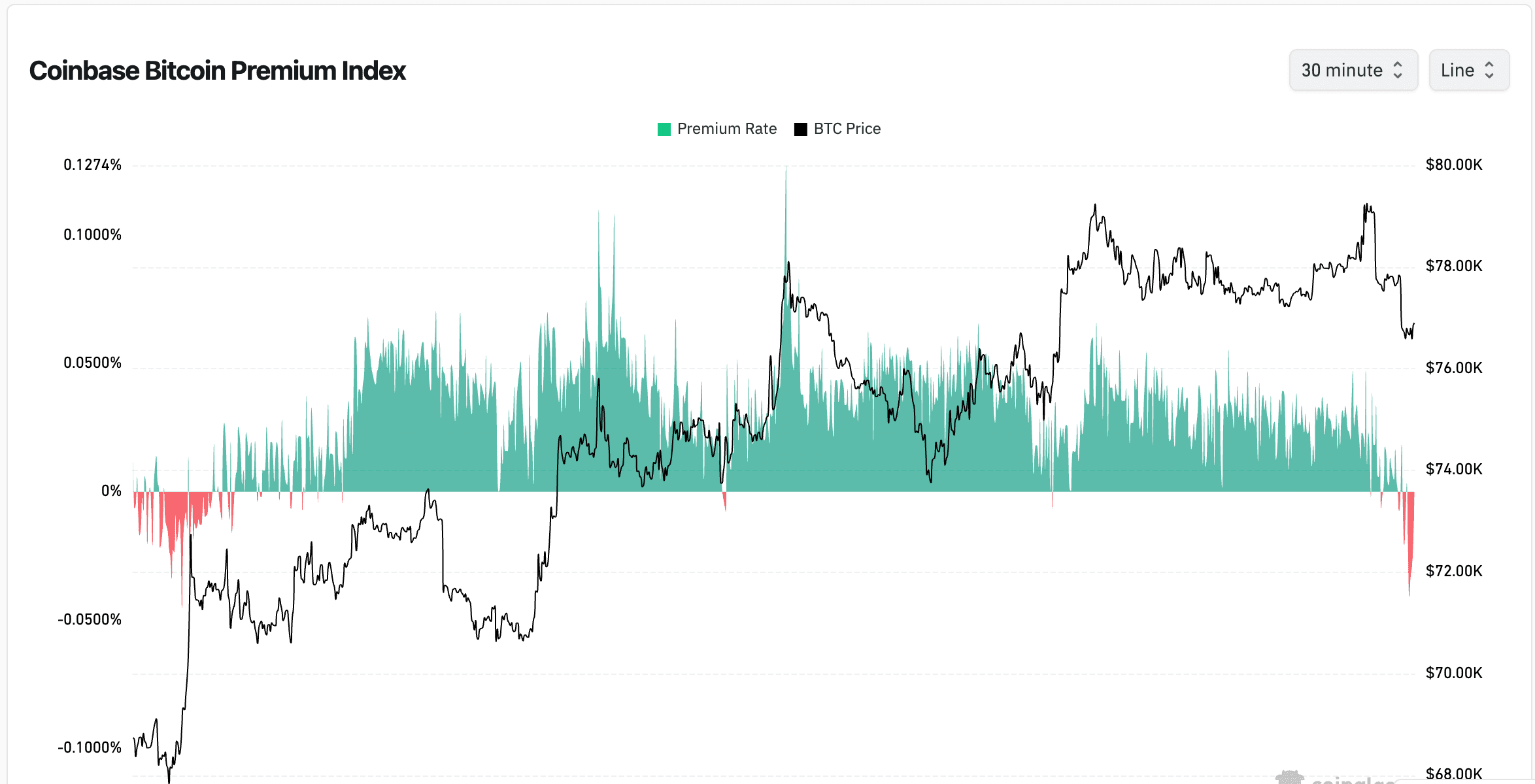
Notably, the Coinbase premium index has dipped into negative territory for the first time since April 8, according to data from Coinglass. This shift to -0.04% follows a remarkable 14-day period of positive readings—the longest streak since October—which indicated robust demand from U.S. investors and contributed to Bitcoin’s price increase from $66,000 to $79,000.
This index tracks the price disparity between Coinbase—a platform favored by U.S. institutions—and offshore exchanges like Binance. A transition into negative values suggests that institutional buyers are no longer making aggressive purchases, thereby increasing reliance on international market flows. Historically, when the Coinbase premium turns negative, it often coincides with price pullbacks or periods of consolidation.
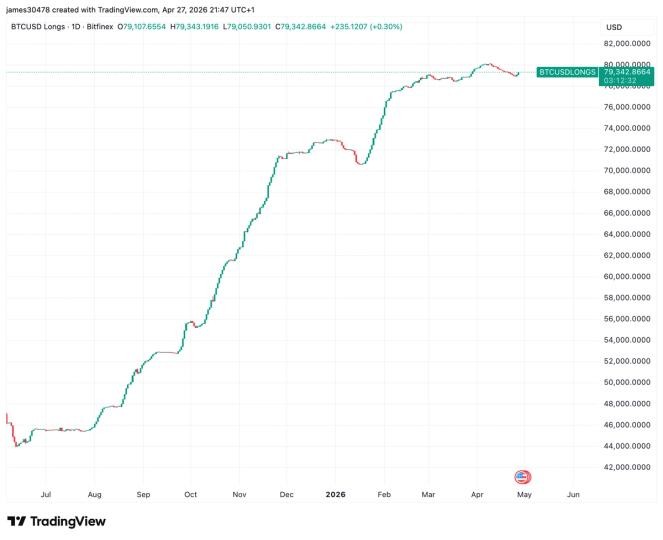
Simultaneously, a significant Bitfinex whale—an entity closely monitored for its influence on pricing—remains at nearly peak long exposure levels with holdings currently at 79,342 $BTC, just shy of its previous high of 80,100 $BTC. This particular player typically reduces their position once a local bottom is confirmed or when there’s clear upward momentum in prices.
The persistence of this exposure near cycle peaks despite Bitcoin’s attempt to reach $79K raises concerns about short-term bullish potential and increases risks for potential declines in value.
Moreover, Bitcoin was unable to reclaim its short-term holder realized price (STHRP) set at $79,200—a crucial metric representing the average acquisition cost for coins held less than 155 days by holders who tend to react more sensitively to market fluctuations. The longer Bitcoin remains below this threshold price point; recent buyers are likely inclined towards selling off their assets further pressuring prices downward.
Lastly but importantly noted is that as we enter into this year’s flagship Bitcoin conference—with prior gains already diminishing—historical trends suggest that further downturns could be anticipated following such events.
FAQ
- What does it mean when the Coinbase premium index turns negative?
A negative Coinbase premium indicates reduced buying activity among U.S.-based institutional investors compared to offshore markets like Binance. - Why is short-term holder realized price (STHRP) important?
The STHRP reflects how much recent buyers paid for their Bitcoins; if prices remain below this level too long,
it can lead them to sell off their holdings due to losses incurred. - How do large whales affect Bitcoin pricing?
Larger holders or “whales,” such as those tracked on Bitfinex,
wield significant influence over market movements based on their buying and selling patterns. - What historical trends should I consider during major conferences?
Past events have shown that after initial gains leading up
(or during) these conferences often result in subsequent declines post-event.