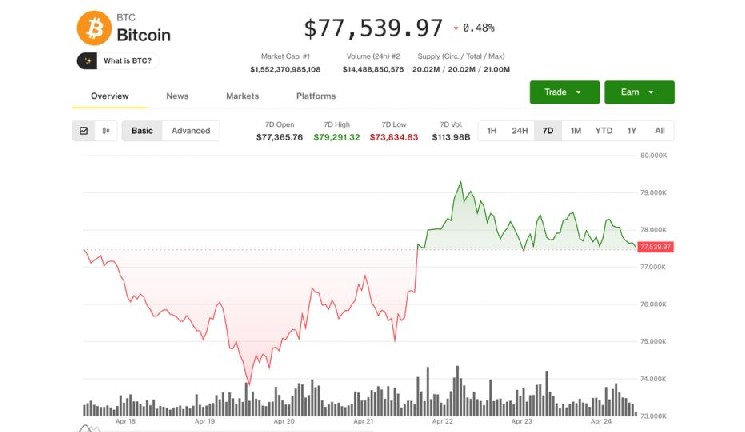
On Friday, Bitcoin maintained its position above $77,000, stabilizing after reaching its highest point since early February earlier in the week.
The leading cryptocurrency has seen an increase of approximately 13.6% in April, positioning it for its best monthly performance in a year according to data from CoinGlass. This rebound follows a challenging period during which the crypto markets experienced their longest losing streak since 2018, with consecutive monthly declines from October through February.
This turnaround is occurring alongside an improved macroeconomic environment. U.S. equities have shown strong recovery signs, with both the S&P 500 and Nasdaq indices climbing back to record highs after briefly entering correction territory earlier this year.
However, there are also specific factors within the crypto market contributing to this upward movement.
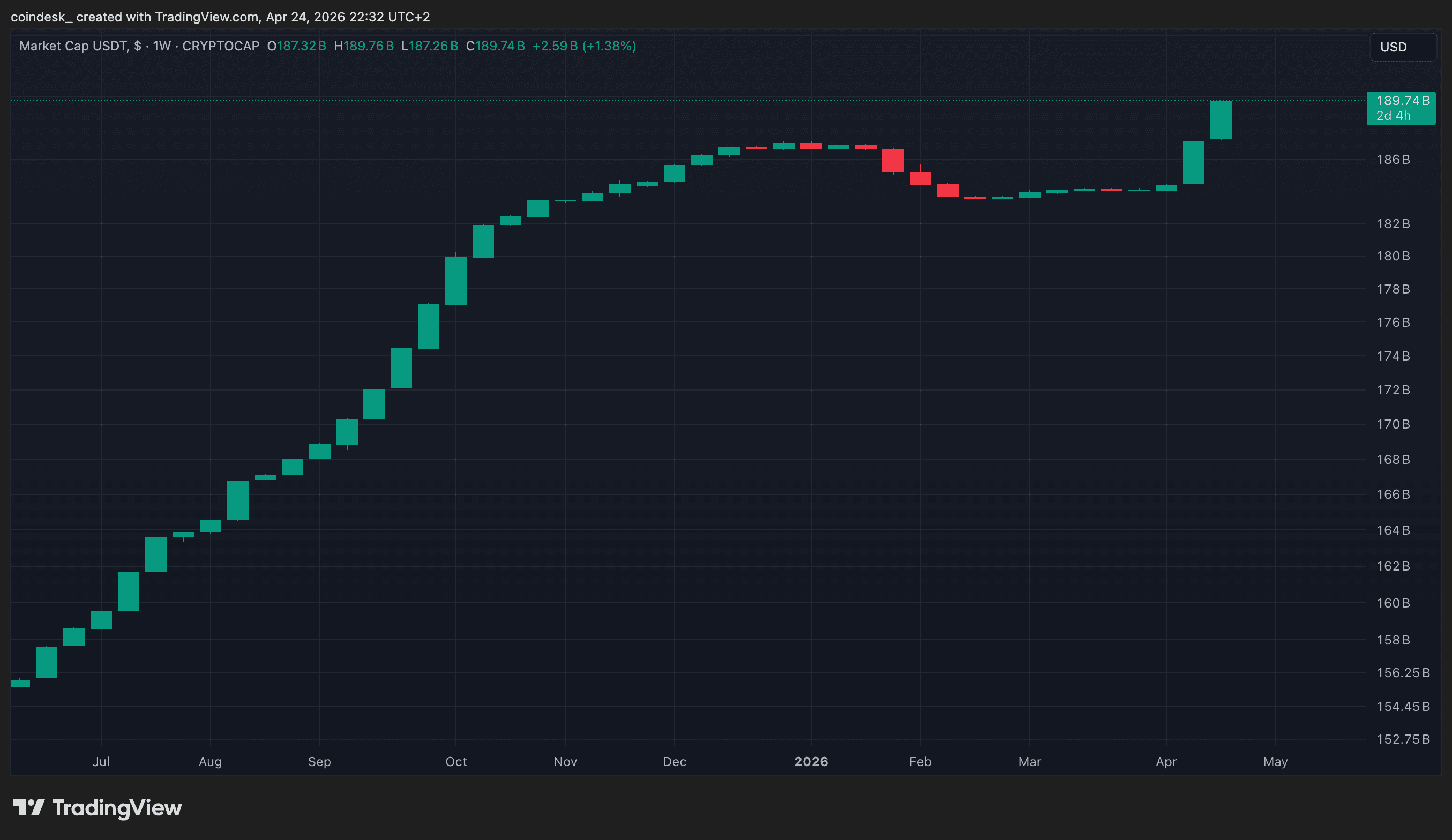
The supply of Tether’s USDT—the largest and most widely used stablecoin—has surged to nearly $150 billion, adding around $5 billion over the past two weeks following months of stagnation.
This increase is significant because stablecoins—cryptocurrencies pegged to fiat currencies like the U.S. dollar—serve as liquidity within crypto markets; they provide traders with capital needed for purchasing digital assets in the blockchain economy. Analysts often view growth in stablecoins as an indicator that capital is flowing into the crypto market—a positive sign for asset prices.
Markets ‘stopped caring’ about Iran war
Despite these developments, broader macroeconomic challenges remain unresolved. Geopolitical tensions in the Middle East and uncertainties surrounding conflicts involving Iran continue to keep oil prices elevated.
Nonetheless, markets appear willing to overlook these issues for now according to Jasper de Maere, an OTC trader at Wintermute.
“The equities and crypto markets seem disinterested in intricate headlines regarding conflict developments,” de Maere noted. “This indicates a certain level of fatigue and perhaps complacency.”
He pointed out that robust corporate earnings along with resilient equity markets are helping mitigate concerns related to rising energy costs and geopolitical risks.
FOMC test coming
In this context, Bitcoin hovers near its trading range ceiling while encountering resistance at around $79,000 where traders have begun taking profits.
This price point “is structurally important due to substantial institutional overhead supply positioned just above it,” stated Adam Haeems from Tesseract Group’s asset management division.
The potential for BTC breaking through this level will depend on what motivates such movements and who is behind them; shifts primarily driven by short covering tend not last once momentum diminishes whereas breakouts supported by sustained institutional demand could signify more lasting changes according to Haeems’ analysis.
If ETF inflows persist leading up towards April’s Federal Reserve meeting—which may determine whether current rally sustains—it could see $79k transition from being resistance into support thereby paving way towards higher trading ranges.
If inflows diminish however then Bitcoin might revert back downwards between ranges of $75k-$77k instead!
FAQ
- What factors contributed to Bitcoin’s recent price surge?
The recent surge can be attributed mainly due improvements across broader financial landscapes including recovering stock indices along side increased liquidity provided via growing stablecoin supplies like USDT which fuels investments into cryptocurrencies! - Please explain how stablecoins influence cryptocurrency market dynamics?<brStablecoins act essentially as liquid assets enabling traders easier access when purchasing various digital currencies thus their growth signals healthy influxes capital within overall ecosystem promoting stability & confidence among investors alike!